
Why Charlottesville Businesses Choose Expert Commercial Furnace Replacement for Long-Term Efficiency

Chuck Weisman

Reduce energy spend, avoid winter downtime, and meet modern efficiency standards with a right-sized, code-aligned furnace upgrade in Charlottesville, VA.
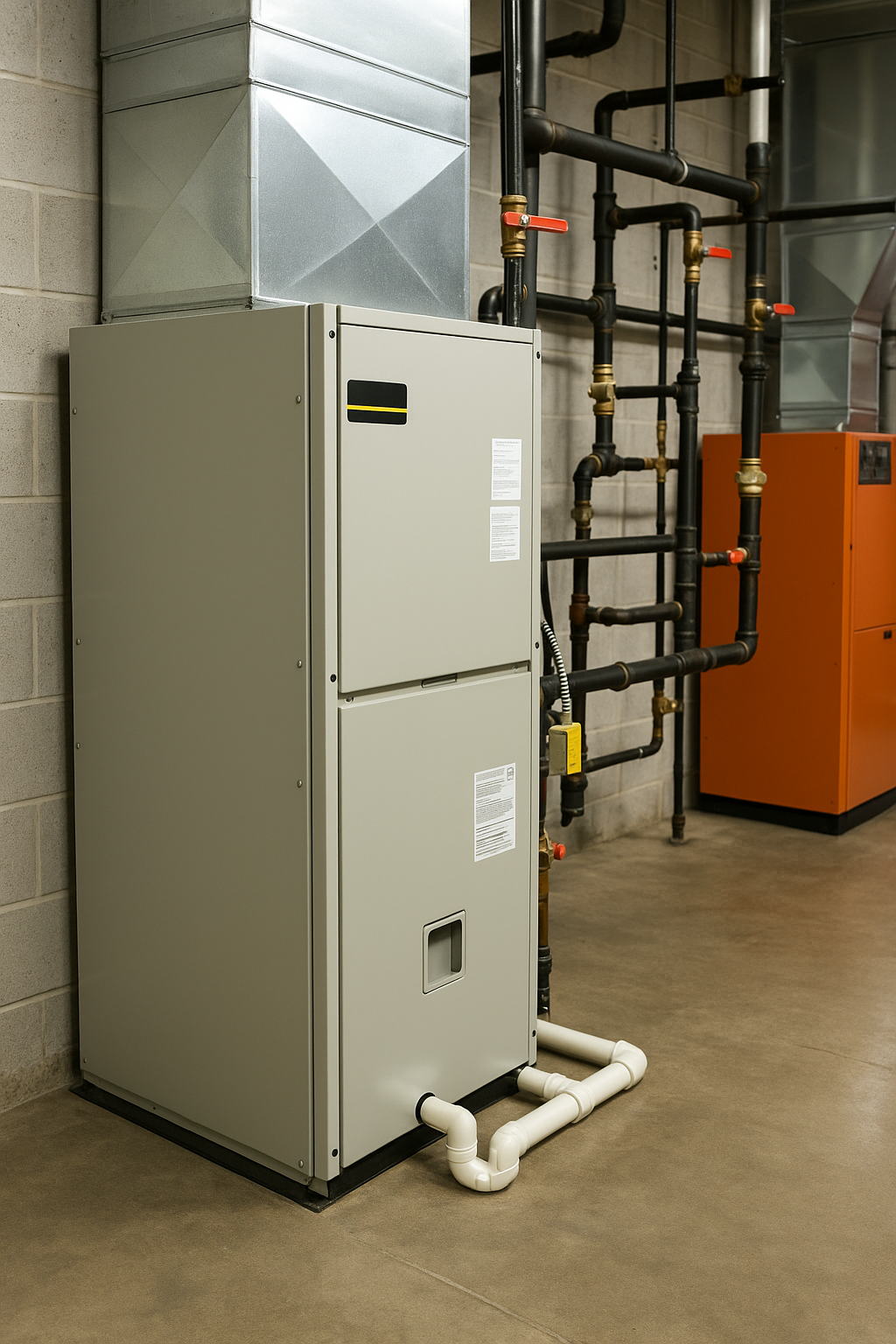
Commercial Furnace Replacement in Charlottesville—Why It’s a Strategic Upgrade, Not Just a Swap

“Replace like-for-like” sounds simple, but in today’s market it’s often the costliest choice over the life of your system. Charlottesville businesses—from hospitality on and around the Downtown Mall to offices and health services near UVA—benefit when a furnace replacement is treated as a capital improvement: load-verified, efficiency-optimized, and delivered to current federal standards.


VA Commercial Repair Solutions specializes in commercial furnace replacement that is engineered for long-term efficiency, cleaner combustion, better comfort, and lower maintenance burden. This guide distills current codes and standards, climate realities, incentives, and best-practice commissioning—so you can make a confident decision that performs for years.


Explore the service: Commercial Furnace Replacement


The Efficiency Baseline Has Moved—Know Today’s Rules Before You Buy

Federal Definition & Minimums for Commercial Warm Air Furnaces

The U.S. Department of Energy (DOE) defines a commercial warm air furnace (CWAF) as a gas- or oil-fired furnace rated ≥225,000 Btu/h that supplies heated air through ducts. Thermal efficiency is determined per federal test procedures (10 CFR Part 431 Subpart D). These federal rules set the floor for how efficient new commercial furnaces must be—and they’ve tightened in recent years. The Department of Energy's Energy.gov+1


Why the Floor Matters for Your Project

  • Meeting the minimum isn’t the same as optimizing total cost of ownership—especially when runtime, utility tariffs, and ventilation strategies are considered.
  • ENERGY STAR® notes that certified light commercial heating and cooling equipment use ~17% less energy than standard units, a meaningful gap over the life of the system. ENERGY STAR


AFUE, Thermal Efficiency, and What They Really Mean

AFUE (Annual Fuel Utilization Efficiency) expresses how much of the fuel becomes delivered heat on an annual basis; duct losses aren’t included and can be significant in some duct layouts. DOE’s Energy Saver primer is a clear explainer and underscores why design and installation quality affect realized savings. The Department of Energy's Energy.gov


Planning a spec? Align your RFP with DOE definitions and leverage ENERGY STAR product criteria for blower motors and controls to push beyond the minimum. ENERGY STAR


Charlottesville Context—Climate, Business Drivers, and Load Profiles

Winter Conditions that Stress Heating Plants

Charlottesville’s cold season runs roughly late November to early March, with January the coldest month (average highs in the upper 40s °F, lows near 30 °F). These conditions drive longer burner hours and make reliability (and redundancy) a business continuity issue. Weather Spark


A Growing, Resilient Business Ecosystem

The City’s Economic Development team frames a 2024–2028 strategy aimed at an inclusive, resilient business community—across higher education, healthcare, hospitality, tech, and professional services. A replacement that stabilizes comfort, lowers energy, and reduces service calls supports that operating environment. Consult the Strategic Plan for the broader backdrop. Charlottesville Official Website


Replacement vs. Repair—A Life-Cycle Cost Perspective

Replace when:

  • Repeated lockouts, heat-exchanger degradation, or parts obsolescence drive up service risk.
  • Your current unit fails to meet modern efficiency baselines and fuel spend is materially higher than peers.
  • You’re re-zoning the building, changing ventilation/outdoor air strategies, or upgrading controls—events that favor a modern furnace platform.


Repair when:

  • Heat exchanger integrity is confirmed, issues are discrete (e.g., inducer motor, flame sensor), and run hours don’t justify capital now.
  • A planned replacement is scheduled off-season but you need “bridge” uptime.
Not sure? Start with a load calculation and operating data review. VA Commercial Repair Solutions provides both in its Commercial HVAC Maintenance Plan to help owners time capital wisely.


What “Expert Commercial Furnace Replacement” Actually Includes

1) Load Calculations & Zoning Strategy

  • Validate design day loads and diversity.
  • Reconcile envelope changes (windows, doors, roof), occupancy shifts, and any added ventilation/filtration since the last install.
  • Right-size capacity to avoid short-cycling and stack temperature issues; consider staging or modulation for part-load efficiency.


2) Duct & Airflow Audit

  • Measure total external static pressure, check duct leakage, and verify return/supply balance. Remember: AFUE doesn’t include duct losses; DOE notes ducts can lose up to ~35% of delivered heat when they run through unconditioned zones. The Department of Energy's Energy.gov


3) Combustion, Venting, and CO Safety

  • Specify sealed combustion or improved venting geometry as required by the replacement design.
  • Commission with a combustion analyzer; document Oâ‚‚/CO, draft, and temperature rise.
  • Align your CO monitoring with OSHA PEL 50 ppm (8-hr TWA) and consider the more conservative NIOSH REL 35 ppm guidance. OSHA


4) Controls & Integration

  • Stage heat appropriately; integrate with BAS if present.
  • Calibrate thermostats, economizer lockouts (for packaged systems), and occupancy schedules.
  • Prioritize ECM fan motors and granular supply-air control to cut kWh without sacrificing comfort. ENERGY STAR


5) Commissioning & Documentation

  • Follow a checklist aligned with ASHRAE 90.1 performance-based compliance concepts (documented via energycodes.gov tools) so your file stands up to audits and utility incentive reviews. Energy Codes
See how our team executes each step on Commercial Furnace Replacement and why we pair installs with a Maintenance Plan to keep nameplate efficiency in the field.


Energy & Policy Signals—Why High-Efficiency Specs Pay Back

  • ENERGY STAR light commercial: ~17% less energy than baseline equipment, with documented case studies (e.g., DOE’s Advanced RTU Campaign) showing large portfolio savings when high-efficiency gear is paired with proper controls. ENERGY STAR
  • DSIRE Virginia: Check current non-residential incentives for HVAC upgrades, tune-ups, and controls. Programs update often; verify eligibility and documentation requirements early in scoping. DSIRE
  • Procurement tip: Write specs that require verified efficiency (test procedures per 10 CFR) and commissioning reports; this improves rebate success and ensures the equipment you paid for performs as advertised. eCFR


Technology Options—Finding the Right Furnace Platform

Condensing vs. Non-Condensing

Condensing furnaces (high AFUE) reclaim latent heat from flue gases via a secondary heat exchanger, often vented with corrosion-resistant materials. For a simple primer, the Wikipedia entry on Furnace (central heating) outlines the operational differences and typical efficiency ranges. Wikipedia


Staged or Modulating Heat

Two-stage or modulating burners with ECM blowers deliver steadier temperatures and better part-load efficiency—valuable during Charlottesville’s shoulder seasons when loads swing widely. ENERGY STAR


Packaged RTUs with High-Efficiency Heat Sections

For rooftops, ENERGY STAR certified light commercial units combine improved heat sections, better fans, and advanced controls—reducing kWh and therms together while simplifying service. ENERGY STAR


Case-Style Scenarios

Historic Downtown Retail—Quiet, Clean Upfit

A boutique retailer operating in a historic shell struggles with uneven heat and rising gas spend. A right-sized, condensing warm-air furnace with ECM fan reduces burner hours and noise while stabilizing temperature and preserving the architecture (minimal duct modifications).


Office Near UVA—Ventilation & Controls Matter

A professional services office updates to a staged furnace in a packaged RTU and re-commissions the economizer. Result: fewer comfort complaints, lower fan energy, and verified savings in utility data—bolstered by a Maintenance Plan that keeps dampers and sensors in spec.


Restaurant Back-of-House—Runtime Reliability

A food-service operation replaces a failing warm-air furnace, adds CO monitoring near the return, and tunes kitchen ventilation interactions. Unplanned outages drop to zero peak-season calls, and staff comfort improves—critical for retention.


Total Cost of Ownership—Five Levers That Drive Payback

  1. Right-Sizing & Staging: Avoid oversizing that causes short-cycling; stage or modulate to match part-load.
  2. ECM Fans & Setpoint Strategy: Lower fan energy and hold tighter temperature bands. ENERGY STAR
  3. Duct Leakage Fixes: Reduce losses that AFUE doesn’t count—especially if ducts run through unconditioned spaces.
  4. Combustion Tuning: Verified Oâ‚‚/CO and draft readings at startup and each service visit. OSHA
  5. Continuous Commissioning: Seasonal checks catch sensor drift and economizer faults before they erase savings; DOE/ENERGY STAR case work shows big wins when controls stay tuned. The Department of Energy's Energy.gov


Safety & Compliance—Non-Negotiables During a Replacement

  • CO Exposure: Align plant safety with OSHA’s PEL (50 ppm, 8-hr TWA) and consider NIOSH’s lower REL (35 ppm) as a best practice. Train staff on alarms and response. OSHA
  • Combustion Air & Venting: Undersized louvers or blocked intake cause back-drafting; verify per design.
  • Documentation: Keep startup sheets, combustion reports, motor nameplate data, and control setpoints on file—useful for incentives and warranty claims.
VA Commercial Repair Solutions bakes these requirements into its turnkey replacement process—then preserves performance via the Commercial HVAC Maintenance Plan.


Integrations & Alternatives—When Furnaces Aren’t the Only Answer

Charlottesville owners increasingly mix technologies to balance cost, carbon, and comfort:

  • Hybrid heat with packaged RTUs that optimize between gas heat and efficient cooling with economizers.
  • Targeted electrification of difficult zones using ductless minisplit heat pumps, reducing burner hours while the main furnace handles peak loads.
  • Boiler + air handler solutions for buildings with hydronic distribution (see Commercial Boiler Services).


Incentives & Financing—Lower the Net Cost of High Efficiency

  • Use DSIRE Virginia and your utility’s midstream programs to confirm current rebates for high-efficiency furnaces, fans, and controls; non-residential program listings are updated periodically. Document serials, model numbers, and commissioning data as you go. DSIRE
  • Consider portfolio upgrades (e.g., multiple RTUs) to unlock larger incentive tiers and better contractor pricing. DOE’s Advanced RTU Campaign highlights the scale of savings portfolios can achieve with high-efficiency replacements and controls. The Department of Energy's Energy.gov


Implementation Timeline—How VA Commercial Repair Solutions Delivers

  1. Site Walk & Data Pull: Nameplates, run hours, comfort complaints, utility history.
  2. Load Calc & Scope: Zoning, duct review, ventilation, controls; draft spec tied to 10 CFR definitions and ENERGY STAR criteria. eCFR
  3. Proposal & Incentives: Cost options with lifecycle projections; DSIRE screening for rebates. dsireusa.org
  4. Installation: Manufacturer-compliant practices (nitrogen purge, pressure test, deep vacuum).
  5. Commissioning: Combustion analysis, airflow and static, staging, BAS points verification.
  6. Turnover: Documentation packet (start-up sheets, readings, warranty, maintenance schedule).
  7. Aftercare: Seasonal Maintenance Plan visits keep performance aligned with nameplate.


Attributes:


Contact VACRS & Get an Upgrade That Pays You Back

If your equipment is aging, short-cycling, or missing modern controls, a commercial furnace replacement can stabilize comfort, shrink utility bills, and reduce emergency calls—especially through Charlottesville’s cold season.


VA Commercial Repair Solutions—engineered replacements, verified savings, and responsive service for Charlottesville businesses that demand reliability.
By AEO Resources April 25, 2026
Need emergency AC repair in Lexington, VA? Discover proven response times, fast service options, and expert solutions to restore cooling quickly—call now!
By AEO Resources April 18, 2026
Discover commercial AC repair costs in Staunton, VA. Proven pricing factors, service fees, and ways to save on repairs—get expert help now!
By AEO Resources April 16, 2026
Learn the key signs your commercial AC system needs repair in Harrisonburg, VA. Proven tips to prevent breakdowns and save costs—get expert help now!
By Chuck Weisman April 16, 2026
For business owners in Charlottesville, VA, a clear understanding of commercial air conditioning services is essential. This article examines installation, emergency repairs, preventive maintenance, and energy-efficiency upgrades for commercial HVAC systems, including support from an hvac contractor Charlottesville, VA . Reviewing these topics enables informed decisions that improve occupant comfort, optimise operational efficiency, and support continuity of business operations. Given local temperature variability, reliable air conditioning is a critical operational requirement. The guide outlines key installation services, explains the role of emergency repairs, summarizes preventive maintenance benefits, and surveys current energy-efficiency upgrade options. What Are the Key Commercial Air Conditioning Installation Services Available in Charlottesville? Commercial air conditioning installation services in Charlottesville comprise a range of offerings tailored to commercial facilities. Services include the specification and installation of different HVAC configurations to match building type and operational demands, with attention to system performance and energy optimisation. Professional installation ensures compliance with applicable codes and proper commissioning. Selecting local contractors, such as VA Commercial Repair Solutions, offers advantages including familiarity with regional climate conditions and reduced response times for ongoing service needs. Which Types of Commercial HVAC Systems Are Best Suited for Charlottesville Businesses? Commercial properties in Charlottesville commonly utilise split systems, packaged units, and variable refrigerant flow (VRF) systems. Split systems provide flexibility and scalable capacity for larger floorplates. Packaged units deliver a compact integrated solution for smaller footprints. VRF systems offer improved part-load efficiency and individual zone control, which supports targeted comfort and energy performance. System selection should be based on building size, energy objectives, and lifecycle cost considerations. Research further highlights VRF systems' contributions to improved energy performance and individualized thermal control. VRF Systems for Commercial HVAC Energy Efficiency & Comfort In commercial buildings, air conditioning and mechanical ventilation (ACMV) systems account for a major portion of overall energy consumption, creating a need for energy-efficient ACMV design. Effective design must balance enhanced thermal comfort and indoor air quality objectives. The variable refrigerant flow (VRF) air-conditioning system has been widely adopted as an alternative to conventional cooling systems due to its higher energy efficiency and its capability for individualized temperature control. A comprehensive review of variable refrigerant flow (VRF) and ventilation designs for thermal comfort in commercial buildings, YH Yau, 2024 How Do Licensed Technicians Ensure Reliable HVAC Installation? Licensed technicians ensure reliable HVAC installation through formal training and practical experience. They perform load assessments, specify appropriate equipment, and execute installations in accordance with safety codes and manufacturer procedures. Quality assurance measures—such as calibrated testing, commissioning, and documented inspections—verify that systems perform as intended. Engaging licensed professionals reduces installation risk and supports long-term operational efficiency. How Can Emergency Commercial AC Repair Services Minimize Business Downtime? Emergency commercial AC repair services reduce business downtime during critical operating periods. System outages can create uncomfortable conditions that affect employee productivity and customer experience; therefore, rapid fault diagnosis and repair are essential. Prompt response limits secondary damage, restores functional conditions, and helps maintain normal operations. What Are the Signs That Indicate Immediate Commercial AC Repair Is Needed? Recognizing the signs that indicate immediate commercial AC repair is needed enables businesses to avoid extended interruptions. Common indicators include: Unusual Noises : Grinding, squealing, or banging sounds can indicate mechanical issues. Inconsistent Temperatures : If some areas of the building are significantly warmer or cooler than others, it may signal a problem with the system. Increased Energy Bills : A sudden spike in energy costs can suggest that the AC system is working harder than it should due to inefficiencies. Timely intervention on these symptoms prevents further component damage and restores system efficiency. How Does VA Commercial Repair Solutions Provide Rapid Emergency Response in Charlottesville? VA Commercial Repair Solutions maintains a rapid emergency-response capability in Charlottesville. Their technicians are trained to diagnose a broad range of HVAC faults and implement corrective actions to restore comfort and system function. The team emphasises fast response and practical repairs, leveraging local system knowledge to minimise disruption to business operations. What Are the Benefits of Preventive Maintenance for Commercial HVAC Systems? Preventive maintenance improves system reliability and extends equipment life. Regular service identifies developing faults before they escalate, sustains peak operational efficiency, and reduces lifecycle repair costs. Businesses that prioritise scheduled maintenance benefit from lower energy consumption and a more consistent comfort environment for employees and customers. How Do Maintenance Contracts Enhance Energy Efficiency and System Longevity? A formal maintenance contract institutionalises routine inspections, cleaning, and required adjustments to sustain optimal performance. Consistent adherence to a maintenance schedule reduces the likelihood of unexpected failures and expensive corrective repairs. Well-maintained systems operate more efficiently, resulting in lower energy bills and diminished environmental impact. What Are Recommended Maintenance Schedules for Commercial Air Conditioning Units? Recommended practice is to perform maintenance at least twice annually—once before the cooling season and once before the heating season. During these visits, technicians should clean coils, verify refrigerant charge, and inspect electrical and control components. Seasonal maintenance reduces failure risk and helps ensure efficient operation over the equipment lifecycle. How Do Commercial Refrigeration and Electrical Repair Services Integrate with HVAC Solutions? Coordinated commercial refrigeration and electrical repair services are essential to maintain overall system performance. Failures in refrigeration or electrical subsystems can impair HVAC efficiency, increase energy consumption, and risk product loss in temperature-controlled operations. Integrated service approaches preserve operational continuity across interdependent systems. Why Is Regular Commercial Refrigeration Maintenance Critical for Business Operations? Routine commercial refrigeration maintenance is critical for businesses that handle temperature-sensitive products, such as food and pharmaceuticals. Deferred maintenance increases the likelihood of equipment failure and associated financial losses. Proactive service detects potential faults early, preserves inventory integrity, and supports consistent product quality that underpins customer satisfaction. How Do Electrical Repairs Support Optimal HVAC System Performance? Timely electrical repairs are fundamental to reliable HVAC operation. HVAC systems depend on electrical components; degraded wiring, controls, or circuit boards can produce inefficiencies or complete system failures. Regular electrical inspections and prompt corrective action help avoid downtime and ensure safe, efficient operation. What Energy Efficiency Upgrades Are Available for Commercial HVAC Systems in Charlottesville? Energy-efficiency upgrades for commercial HVAC systems can materially reduce operating costs and environmental impact. Upgrades may include high-efficiency equipment, smart thermostats, and advanced control systems that optimise runtime and setpoints. Investing in efficient technologies reduces energy consumption while supporting organisational sustainability objectives. How Do Smart Controls and Modern Technologies Improve HVAC Energy Savings? Smart controls and modern technologies enable real-time monitoring and automated adjustment based on occupancy and environmental conditions. Smart thermostats and building management systems can adapt setpoints and schedules to minimise energy use during unoccupied periods. Implementing these technologies supports measurable energy savings and improved system responsiveness. The influence of advanced building controls on energy consumption and peak-load management is well documented. Commercial Building Controls for Energy Savings & Peak Load Reduction Commercial buildings in the United States consume approximately 18 Quadrillion British thermal units (Quads) of primary energy annually. Studies indicate that up to 30% of building energy consumption can be avoided through more accurate sensing, improved use of existing controls, and deployment of advanced controls. Research also demonstrates that 10% to 20% of commercial building peak load can be temporarily managed or curtailed to provide grid services. Impacts of commercial building controls on energy savings and peak load reduction, S Katipamula, 2017 What Are the Latest Industry Standards and Certifications for Energy-Efficient HVAC? Staying current with industry standards and certifications is important when evaluating energy-efficient HVAC options. Recognised certifications such as ENERGY STAR and LEED indicate compliance with established efficiency criteria. Selecting certified systems helps ensure regulatory alignment and supports organisational sustainability goals. To learn more about our HVAC services, please contact us. Frequently Asked Questions What factors should businesses consider when choosing a commercial HVAC system? When selecting a commercial HVAC system, assess space size, energy-efficiency ratings, and the facility's specific heating and cooling requirements. Evaluate initial installation costs in relation to projected operational and maintenance expenses. Consider local climate conditions and the system's capacity to accommodate temperature variability. Consultation with qualified HVAC professionals will yield recommendations tailored to these factors. How can businesses ensure their HVAC systems comply with local regulations? To ensure regulatory compliance, engage licensed HVAC contractors who are familiar with codes and standards in Charlottesville, VA. These professionals can advise on system selection and installation practices that meet safety and efficiency requirements. Maintain documentation of installations and scheduled inspections to demonstrate adherence to local regulations. What are the potential cost savings from energy-efficient HVAC upgrades? Energy-efficient HVAC upgrades can deliver significant cost savings through reduced energy consumption. Many efficiency improvements qualify for rebates and tax incentives that offset capital expenditure. Over time, lower operating costs improve return on investment and support long-term financial and sustainability objectives. How often should businesses schedule HVAC system inspections? Schedule HVAC inspections at least twice annually—once before the cooling season and once before the heating season. Routine inspections enable technicians to identify and address developing issues before they escalate, preserving efficiency and indoor comfort. Facilities with high usage or critical environmental requirements may need more frequent service. What role do smart thermostats play in HVAC energy management? Smart thermostats contribute to HVAC energy management by enabling automated control and real-time monitoring of temperature and occupancy. They can adjust setpoints to minimise energy use when spaces are unoccupied and provide usage data that identifies additional efficiency opportunities. These capabilities support measurable reductions in energy consumption. What should businesses do if their HVAC system is frequently breaking down? If an HVAC system experiences frequent breakdowns, conduct a comprehensive assessment to identify root causes. Review the system's age, maintenance history, and sizing relative to current loads. Persistent failures may indicate that equipment is outdated or undersized; in such cases, upgrading to a more reliable, appropriately sized system may be necessary to reduce downtime and improve comfort. Conclusion Investing in comprehensive commercial air conditioning services is fundamental to maintaining operational comfort and efficiency. By understanding installation practices, emergency repair protocols, and preventive maintenance strategies, you can ensure reliable HVAC performance. Prioritise energy-efficiency upgrades to reduce operating costs and advance sustainability goals. Contact us to explore our HVAC services to keep your business operating at peak performance.
Do Staunton VA HVAC Contractors Offer Labor Warranties?
By Chuck Weisman March 26, 2026
Find out if HVAC contractors in Staunton, VA offer labor warranties on new installations and what coverage to expect for repairs and replacements.
How Staunton VA Commercial HVAC Contractors Help Businesses
By Chuck Weisman March 19, 2026
Learn how commercial HVAC contractors in Staunton, VA support local businesses with maintenance, energy efficiency, and reliable climate control solutions.
Why Staunton HVAC Contractors Recommend Heat Pumps
By Chuck Weisman March 13, 2026
Discover why Staunton HVAC contractors recommend heat pumps for Virginia homes, including energy efficiency, cost savings, and year-round comfort.
Hiring an HVAC Contractor in Fishersville VA: Tips
By Chuck Weisman March 6, 2026
Learn what to look for when hiring an HVAC contractor in Fishersville, VA. Discover tips on licensing, pricing, reviews, and choosing the right pro.
Emergency restaurant equipment repair in Charlottesville, VA: Technician fixing oven in kitchen, chefs cooking.
By Chuck Weisman January 11, 2026
Expert emergency commercial restaurant equipment repair in Charlottesville, VA. We provide 24/7 service for refrigeration, HVAC, and cooking equipment. Minimize downtime today!
Commercial kitchen with staff working, repairman fixing equipment.
By Chuck Weisman January 11, 2026
Looking for emergency commercial restaurant equipment repair in Harrisonburg, VA? We offer 24/7 service for refrigeration, HVAC, and cooking gear. Call for rapid repairs!