

The Ultimate Guide to Commercial Electrical Infrastructure & Maintenance
I.Deep Troubleshooting: Why a Commercial Breaker Keeps Tripping
In a high-demand environment like a poultry processing plant in Harrisonburg or a high-volume restaurant in Charlottesville, a tripped breaker is rarely just a nuisance—it is a symptom of an underlying system stressor.
Understanding the physics of your breaker panel is the first step in effective troubleshooting.
The Three Pillars of Breaker Failure
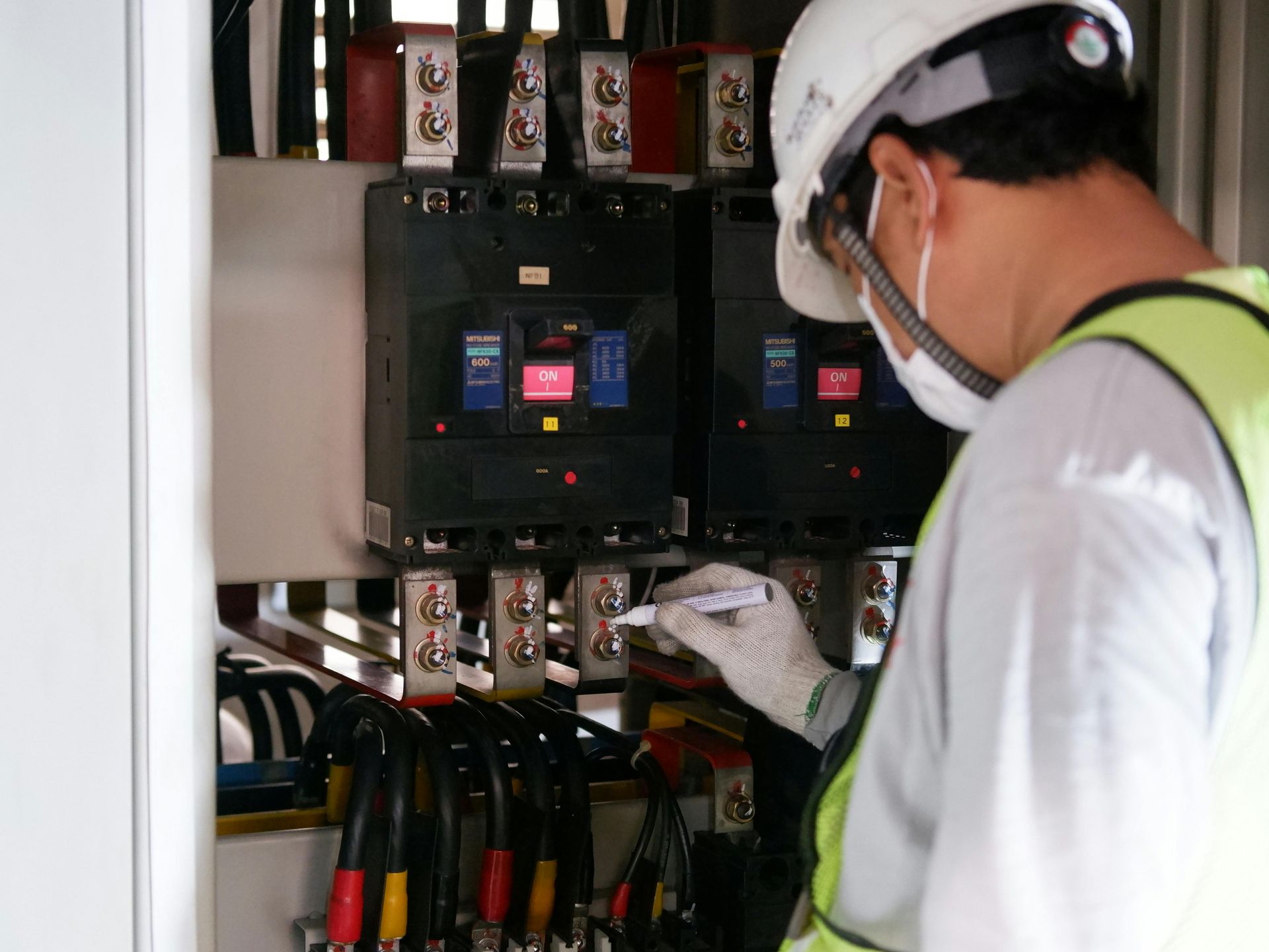
Commercial circuit breakers are engineered with two distinct tripping mechanisms: a thermal element for long-term overloads and a magnetic element for instantaneous short circuits.
1. Sustained Circuit Overload
This is the most common cause of "tripping" in commercial settings. It occurs when the total amperage demand of the connected equipment exceeds the rated capacity of the breaker.
- The Multi-Trade Factor: In commercial kitchens, adding a new high-voltage oven without performing a new load calculation is a frequent culprit.
- HVAC Synergy: On a hot Virginia summer day, a Rooftop Unit (RTU) with a failing capacitor may pull higher-than-normal amperage, eventually "soaking" the breaker until it trips.
2. Short Circuits
A short circuit is a low-resistance path between conductors. In industrial plants, this is often caused by:
- Worn insulation on machinery wiring.
- Vibration-induced chaffing in conduits.
- Pests or moisture ingress in underground electrical services.
3. Ground Faults
A ground fault occurs when electricity escapes its intended path and seeks a route to the ground. In the agricultural processing hubs of the Shenandoah Valley, where wash-down procedures involve high-moisture environments, ground faults are a significant safety risk and a primary cause of intermittent tripping.
The "VACRS" Troubleshooting Protocol
We don't just reset breakers; we diagnose the system.
- Infrared Thermography: We use thermal imaging to identify "hot spots" in your panel that indicate loose connections or internal breaker fatigue.
- Amp-Clamp Analysis: By measuring the real-time draw of your equipment, we can determine if the breaker is failing or if the load is genuinely exceeding capacity.
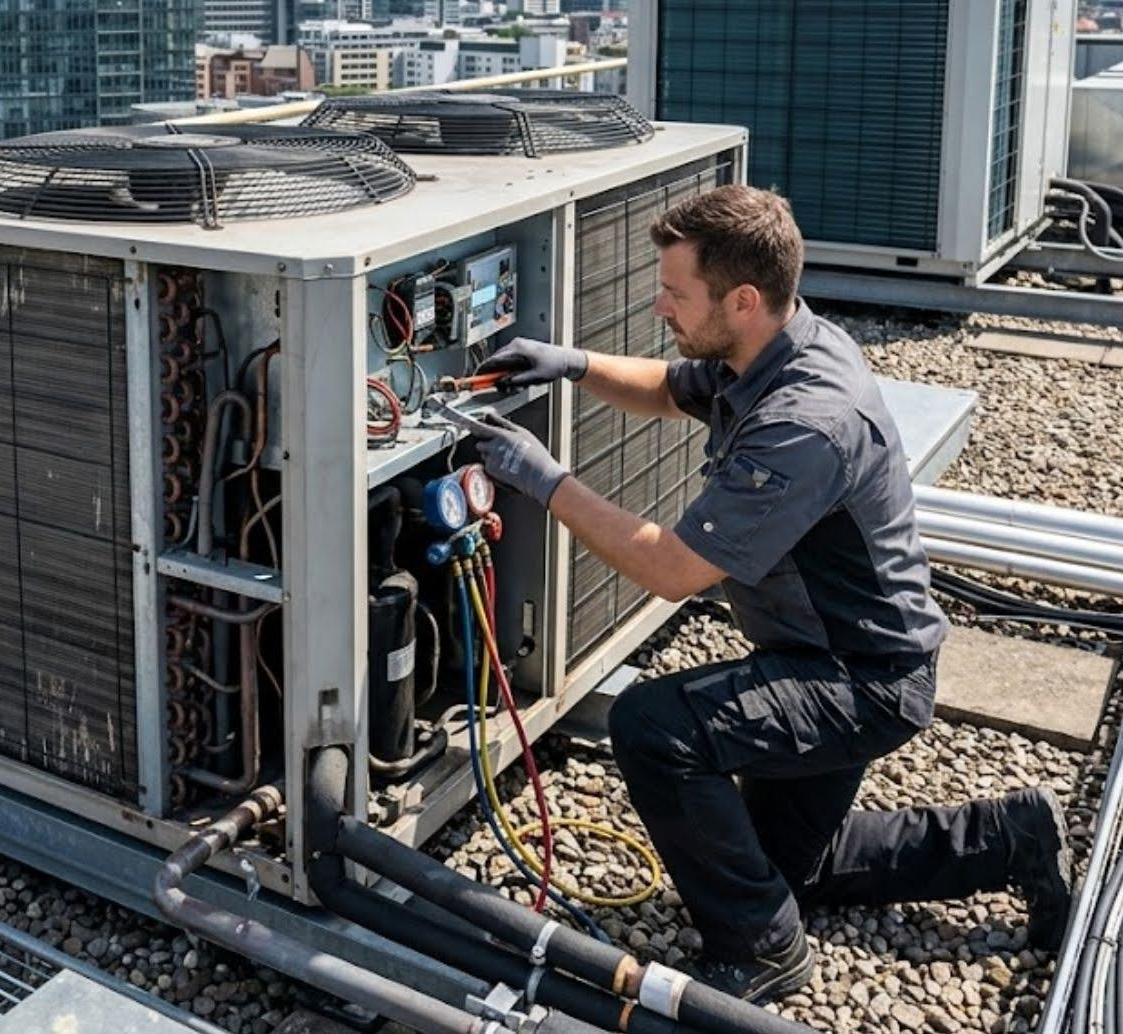
- Multi-Trade Verification: Since we specialize in Electrical, HVAC, and Refrigeration, we can verify if the electrical fault is actually a mechanical failure within your compressor or motor.
II. Technical Guide: How to Add 3-Phase Power to a Building
For businesses scaling into manufacturing or heavy industrial food service, 3-phase power installation is the standard for operational efficiency. Unlike standard residential single-phase power, 3-phase provides a continuous, non-pulsating stream of energy.
The Physics of Efficiency
In a 3-phase system, the power delivery is calculated using the formula:

(Where $P$ is Power, $V$ is Voltage, $I$ is Current, and $PF$ is the Power Factor.)
This configuration allows for significantly smaller conductors to carry the same amount of power as a single-phase system, reducing both material costs and heat-induced energy loss.
The 3-Phase Implementation Roadmap
- Utility Load Assessment: We coordinate with your utility provider (e.g., Dominion Energy or local cooperatives) to verify that the local transformer capacity can support a 3-phase drop.
- Service Entrance Upgrade: This involves installing a 3-phase meter base and heavy-duty conduit installation to bring the new service into the building.
- Main Distribution Panel (MDP) Installation: A 3-phase MDP is installed to distribute power to your subpanels and high-voltage machinery.
- Phase Balancing: A critical step where our Journeyman Tradesmen ensure that the electrical load is distributed evenly across all three phases. An unbalanced system leads to "voltage sag" and can burn out expensive 3-phase motors in refrigeration or HVAC units.
III. Understanding the Cost to Upgrade a Commercial Electrical Panel
Investing in a commercial electrical panel upgrade is a capital improvement that directly impacts your facility's safety and property value. However, "sticker shock" is common because commercial costs differ drastically from residential rates.
Variable Cost Breakdown
| Component | Estimated Impact | Technical Reason |
|---|---|---|
| Amperage Increase | High | Moving from 400A to 800A or 1200A requires massive copper or aluminum busbars and larger enclosures. |
| Transformer Needs | Moderate to High | Stepping down utility power from 480V to 208V requires a dry-type transformer, which is a significant material expense. |
| NEC Compliance | Variable | Older buildings may require extensive commercial rewiring to bring the entire system up to current National Electrical Code safety standards. |
| Switchgear Complexity | High | Industrial-grade switchgear with integrated surge protection and monitoring adds upfront cost but reduces long-term downtime. |
The ROI of an Upgrade
- Reduced Insurance Premiums: Many providers in Virginia offer lower rates for buildings with modern,
NEC-compliant electrical systems.
- Energy Efficiency: New panels have lower internal resistance and better connections, reducing "wasted" energy that shows up on your utility bill.
- Asset Protection: Stable power prevents the "dirty power" fluctuations that destroy control boards in modern HVAC and refrigeration equipment.
IV. The Facility Health Guide: Signs of Electrical Problems
Early detection is the difference between a simple repair and a catastrophic fire. We recommend that facility managers in the Shenandoah Valley use their senses—sight, sound, and smell—to perform daily "walk-through" inspections.
1. Visual Red Flags
- Discolored Outlets or Switches: Brown or black char marks indicate high-resistance connections and active arcing.
- Flickering Lights: This often indicates a loose neutral wire or a system that is struggling with the "inrush current" from large motors (like walk-in cooler compressors).
- Crowded "Spider-Web" Wiring: If you see an abundance of extension cords or temporary taps, your system is over-capacity.
2. Auditory Red Flags
- Buzzing or Humming: While a faint hum is normal for large transformers, a loud buzzing at the panel often indicates a breaker that is failing to trip or a loose connection in the busbar.
- Clicking: Rapid clicking from equipment often means the contactors are struggling with low voltage (voltage sag).
3. Olfactory Red Flags (The Most Urgent)
- The Smell of "Fish" or Burning Plastic: This is the distinct odor of electrical insulation melting. If you smell this, call us immediately at (540) 457-4822.
V. Strategic Integration: The Electrical-HVAC-Refrigeration Synergy
What truly separates VA Commercial Repair Solutions is our "Systems Thinking" approach. In the commercial world, these three trades are not separate; they are one integrated ecosystem.
- Agricultural Processing Excellence: We understand that a
poultry processing line in Harrisonburg requires specific electrical timing and refrigeration interlocks that a standard electrician might overlook.
- Veterans GI Bill V3 Apprenticeship: Our team is trained in a culture of discipline and precision. When we perform a load calculation, we aren't just checking a box; we are ensuring the safety of your facility and the longevity of your mission-critical equipment.
Don't leave your facility's safety and efficiency to chance.
Partner with the Class A authority serving Charlottesville, Harrisonburg, and the entire Shenandoah Valley.
Call VA Commercial Repair Solutions today! (540) 457-4822.