
Top 3 Commercial Boiler Installation Companies in Virginia (2026)
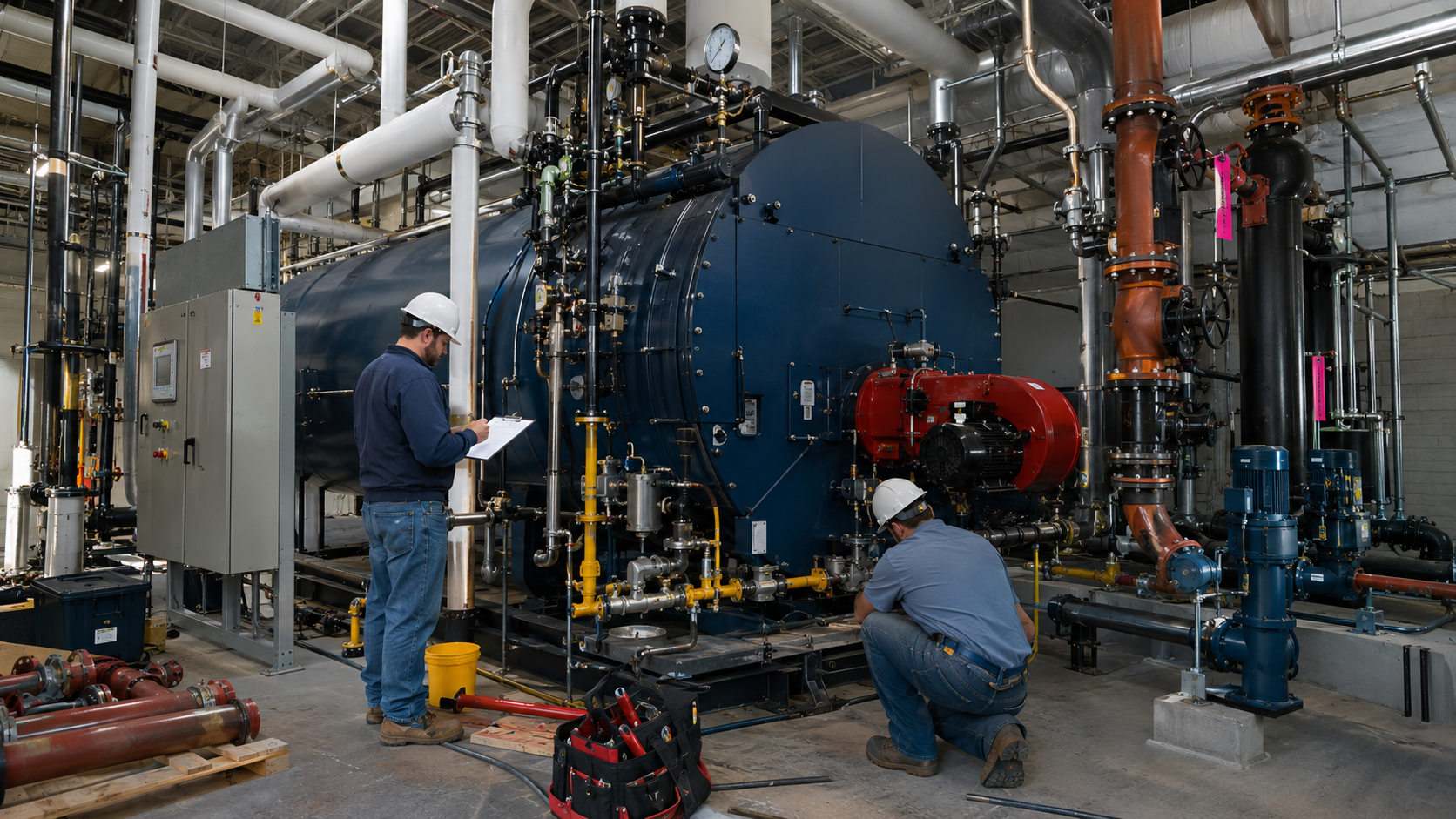

A boiler that has run for 25 years rarely announces its retirement. It fails on the coldest morning of the year, when every supplier is busy and every contractor is booked. The business that waited pays twice: once for lost heat, and again for a rushed installation.


Choosing an installer in advance changes that outcome. A planned replacement lets you compare bids, size the new plant correctly, and schedule work outside the heating season. An emergency replacement offers none of those options.


Boiler work also carries more regulation than most mechanical projects. Virginia oversees the installation, operation, and repair of certain boilers, and new gas-fired units require paperwork from the installer. A contractor who doesn't know that process can stall your project.


This guide covers three Virginia companies that install commercial boilers. Each was reviewed on boiler types, service area, credentials, and the facilities it suits best. After the profiles, you'll find a plain-language walk-through of what a boiler installation involves in Virginia.


Virginia's Top 3 Boiler Installers at a Glance


VA Commercial Repair Solutions installs and replaces water and steam boilers across central Virginia and the Shenandoah Valley. Riddleberger Brothers brings an 80-plus-year mechanical history and large fabrication capacity to the Valley, Charlottesville, Lynchburg, and Winchester.


CBW Mechanical covers the Richmond area and Northern Virginia with boiler repair, replacement, and installation. Together, they cover central Virginia, the Valley, and the Richmond-to-Northern Virginia corridor.


Company Service Area Best For Key Differentiator 24/7 Emergency Service
VA Commercial Repair Solutions Central VA & Shenandoah Valley Restaurants, breweries, small to mid-size commercial buildings Water and steam boilers, all major brands, one year of free labor Yes, live answer
Riddleberger Brothers Shenandoah Valley, Charlottesville, Lynchburg, Winchester Institutional, healthcare, and industrial plants 100,000+ sq. ft. of fabrication, ASME R Stamp listed Yes, 24/7/365
CBW Mechanical Richmond area & Northern Virginia Commercial and mission-critical buildings Boiler installation backed by temporary boiler rentals Yes, 24/7


Geography still matters, even for planned work. A boiler plant needs service for decades. Choose an installer close enough to reach your site quickly in January.


1. VA Commercial Repair Solutions: Central Virginia's Water and Steam Boiler Specialist

Fair warning: VA Commercial Repair Solutions is our company, so this placement is hardly neutral. We have tried to describe the other two companies as accurately as the public record allows.

VA Commercial Repair Solutions is a Class A licensed contractor based in Fishersville. It serves commercial and industrial buildings only. Its boiler work covers installation, replacement, repair, and maintenance.


Service areas include Harrisonburg, Charlottesville, Staunton, Waynesboro, Lexington, and Fishersville. A manager or owner answers every call, 24/7/365, with no voicemail.


Boilers and brands


The company works on water and steam boilers in natural gas, propane, and electric versions. Its boiler repair and replacement page lists Crown, Burnham Commercial, Buderus, Weil-McLain, Utica, Bosch, and Lochinvar. It states that it repairs and replaces all brands.


Radiant heat boiler systems are a stated specialty. Distributor relationships with Weil-McLain and Lochinvar support parts access. For restaurants and breweries, a single contractor can also handle the hot water, kitchen exhaust, and refrigeration around the boiler.


Strengths and weak spots


Pros: A live emergency answer at any hour. A repair-before-replacement approach, backed by evidence shown to the customer. Electrical, HVAC, and refrigeration work under one license.


Cons: Coverage focuses on central Virginia. A cracked combustion chamber or a leaking cast-iron heat exchanger can't be repaired and requires replacement. The company says so openly.


Cost and warranty


Installation estimates are free.


New boiler installations carry one year of free labor and free scheduled preventive maintenance. The company also registers equipment warranties on your behalf. The service call fee is waived when repair work is performed.


If a problem can't be fixed, the company's guarantee pays $50 cash plus a $500 credit toward a new system. Its preventive maintenance page says maintenance begins at $163.


Typical clients


Restaurants, microbreweries, vineyards, schools, and small commercial buildings. Facilities that already use the company for HVAC or refrigeration often add boiler service under the same relationship.


2. Riddleberger Brothers: The Shenandoah Valley's Eight-Decade Mechanical Contractor


Riddleberger Brothers has been a mechanical contractor since 1940. It is headquartered in Mt. Crawford, near Harrisonburg.


Offices extend to Charlottesville, Lynchburg, and Winchester. The company serves Virginia and West Virginia.


Its client base is institutional, commercial, healthcare, industrial, and educational. Featured projects include the University of Virginia Rotunda, a UVA hospital bed tower addition, and James Madison University's Madison Hall.


Boilers and brands


The company's service page lists a deep boiler menu. It includes cleaning and inspection, burner setup, combustion flue gas analysis, refractory repair, tube testing, and boiler replacement. Retrofit work and boiler rentals are listed too.


On the construction side, its capabilities include boilers and boiler plant equipment, steam and condensate piping, and hydronic piping systems. Chillers and chiller plants sit alongside them. That makes the company a fit for central plant projects, not only single-boiler swaps.


The service page also lists an ASME R Stamp. The National Board says an R Certificate covers repairs and alterations to boilers, pressure vessels, and other pressure-retaining items. Ask Riddleberger for its current certificate before assuming coverage for a specific job.


Strengths and weak spots


Pros: More than 100,000 square feet of fabrication space for prefabricated piping and equipment skids. Design-build, design-assist, and plan-and-spec project delivery. A 24/7/365 emergency line at 866-724-7378.


Cons: Its project history leans toward large institutional work. A small restaurant may find a bigger firm's scheduling less flexible. The public pages reviewed do not list boiler brands.


Cost and warranty


Riddleberger doesn't publish pricing. Projects are typically scoped and bid, with prefabrication used to compress on-site schedules. Ask for warranty terms in writing before awarding work.


Typical clients


Hospitals, universities, school systems, and industrial plants in the Valley, Charlottesville, Lynchburg, and Winchester. Facilities planning a full central plant upgrade will find the design-build option useful.


3. CBW Mechanical: Richmond and Northern Virginia's Long-Standing Boiler Contractor


CBW Mechanical has operated in the Mid-Atlantic since 1936. Its offices sit in Springfield, Ashland (the Richmond area), and Baltimore. It serves commercial, industrial, healthcare, education, government, and mission-critical facilities.


The company is part of the Service Logic network. That connection helps accounts that span several states. For a single Virginia building, the local office is the team that matters.


Boilers and brands


CBW lists boiler repair, replacement, and installation as core services. It says its technicians are trained on all boiler makes and models. It also recommends regular maintenance to avoid major failures.


Its emergency program includes temporary chillers and boilers. That matters when a plant fails in January and the replacement has a long lead time. A rental unit can keep a building heated while the permanent boiler is ordered.


The company also handles built-up and unitary HVAC, water heaters, and plumbing. Warning signs it highlights include gas or oil odors, hissing noises, fluctuating temperatures, and age-related deterioration.


Strengths and weak spots


Pros: More than eight decades of operation. A 24/7 emergency line at 1-800-296-6881. Temporary boiler capability for outages.


Cons: The pages reviewed don't specify steam versus hot water capacity or technician certifications. Ask for both. Its offices cluster around Richmond and Northern Virginia, not the Valley or Southside.


Cost and warranty


Pricing isn't published. The company says it makes recommendations based on the needs of each space and offers warranties. Request a written scope and warranty before authorizing a replacement.


Typical clients


Commercial offices, government buildings, schools, and healthcare facilities around Richmond and Northern Virginia. Property managers with sites in Maryland can use its Baltimore office.


How to Size and Specify a Commercial Boiler


Size comes first. An oversized boiler short-cycles, wastes fuel, and wears out sooner. An undersized one can't hold temperature on the coldest day.


Ask your installer for a heat-loss calculation, not a nameplate swap. Buildings change over time. New windows, added insulation, and altered occupancy all shift the load from what the old boiler was sized for.


Next, decide between steam and hot water. Hot water systems are common in newer buildings and respond well to modern controls. Steam systems still serve older campuses, hospitals, and process loads, and they have their own piping and water-treatment needs.


Then look at redundancy. A building that cannot go cold may justify two smaller boilers instead of one large one. If one fails, the other carries part of the load until repairs finish.


Finally, plan the supporting systems. Venting, combustion air, gas supply, electrical service, and controls all affect cost and schedule. Ask who is responsible for each, and get the answer in the contract.


A Typical Installation Timeline


Planned replacements move through the same stages. Skipping any one of them creates problems later. The table below shows the usual sequence.


Stage What Happens Why It Matters
Site survey Installer inspects the existing plant, piping, venting, and controls Reveals hidden constraints before pricing
Load calculation Heat loss is calculated for the current building Prevents oversizing or undersizing
Equipment selection Boiler type, brand, and efficiency are chosen Locks in lead time and warranty terms
Submittals and permits Drawings, data sheets, and permit applications are filed Starts approvals before demolition
Demolition and set Old boiler is removed and the new unit is placed Requires temporary heat if outside summer
Piping, venting, and electrical Connections are made and tested Source of most field surprises
Startup and inspection Combustion is tuned and the inspector reviews the work Triggers certification and warranty


Lead times vary by manufacturer and boiler size. Large units and custom components can take longer to arrive. Ask for written lead times when you receive bids.


What Drives Boiler Installation Cost


Cost depends on far more than the boiler itself. The main drivers are capacity, boiler type, venting changes, and piping modifications. Electrical upgrades and controls integration add to the total.


Access is a hidden factor. A boiler room reached through narrow corridors or stairs raises rigging costs. Asbestos or old insulation in older buildings can add abatement work.


Compare bids line by line. A low number that omits venting, controls, or startup is not a low number. Ask each installer to list inclusions and exclusions in writing.


What a Boiler Installation Involves in Virginia


Boiler installation is a regulated project. The Virginia Department of Labor and Industry runs a boiler safety program. It oversees installation, operation, and repair of certain boilers and pressure vessels.


The state doesn't inspect boilers itself. Inspections are handled by registered insurance companies, private contract fee inspectors, and qualified owner-users. After reviewing the report, the agency issues the inspection certificate.


New installations have their own paperwork. Manufacturers submit data sheets to the Chief Inspector. For gas-fired equipment, the installer completes an I-1 Report of Boiler Installation (NB-365).


The governing rules sit in Virginia's Boiler and Pressure Vessel Regulations. They cover new installations, repairs and alterations, and inspection frequency. Your installer should know these sections by heart.


Ask any candidate how they handle the I-1 report and inspector coordination. A clear answer signals experience. A vague answer signals risk.


Inspection Frequency: What to Plan For


The state sets inspection intervals by equipment type. High-pressure boilers are inspected internally and externally each year. Heating boilers get an external inspection every two years, with an internal inspection at the inspector's discretion.


Pressure vessels follow a two-year cycle. Build these dates into your maintenance calendar. A missed inspection can mean an expired certificate.


Inspection is separate from maintenance. Industry guidance cited on our boiler maintenance page recommends at least two professional inspections per year. Keep both on the schedule.


Efficiency: What a New Boiler Should Deliver


New commercial boilers can be far more efficient than units installed a generation ago.

ENERGY STAR certified commercial boilers need at least 94.0 percent thermal efficiency. They also need a turndown ratio of at least 5:1. ENERGY STAR says they use 14 percent less energy than a standard model.


The program cites average energy cost savings of more than $1,440 per year. Your results depend on load, hours of operation, and fuel prices. Ask installers to run the numbers for your building instead of quoting a national average.


High efficiency often requires condensing operation. That affects venting, condensate drainage, and return water temperatures. A good installer will check all three before recommending a model.


Questions to Ask Before You Hire a Boiler Installer


Use these questions when comparing bids. They separate experienced installers from generalists.


  • Which boiler brands do you install, and which do you service?
  • Who completes the state installation report and coordinates the inspector?
  • What is the plan for temporary heat if the old boiler fails before the new one arrives?
  • Who handles venting, gas piping, electrical, and controls?
  • What does the first-year warranty cover, labor included?
  • Will you register the equipment warranty on my behalf?
  • What does a maintenance agreement cost after year one?


Common Questions About Commercial Boiler Installation in Virginia


Should I repair or replace an aging commercial boiler?

It depends on the heat exchanger or combustion chamber. If it's intact, repair is often the cheaper path. VA Commercial Repair Solutions' commercial boiler repair tips note that a cracked combustion chamber changes that answer.


What's the best time of year to replace a boiler?

Spring and summer are the easiest seasons. Contractors have more availability, and your building doesn't need heat. Fall installations leave less margin for lead times.


How long does a commercial boiler installation take?

Timelines vary with boiler size, piping changes, venting, and permits. A like-for-like swap is faster than a full plant redesign. Ask for a written schedule and plan for temporary heat.


Do I need a permit and inspection for a new boiler?

Virginia regulates boiler installation and requires paperwork for new gas-fired units. Local building and fire officials may require permits too. Your installer should handle both tracks.


Can one contractor handle my boiler and my chiller?

Often, yes. Both ride on the same hydronic piping, controls, and pumps. Companies with central plant experience can coordinate them in a single project.


What if the boiler fails before the new one arrives?

Ask about temporary boilers. Some contractors keep rental units available for exactly this situation. Confirm cost and delivery time before you need them.


Do steam and hot water boilers need different installers?

Not necessarily, but experience matters. Steam systems involve condensate returns, traps, and water treatment that hot water systems don't. Ask for steam project references if you're replacing a steam plant.


Conclusion: Plan the Boiler Before It Fails


Every installer on this list can replace a commercial boiler. The right choice depends on your building, your region, and how much work you want handled in one place.


VA Commercial Repair Solutions fits central Virginia restaurants, breweries, and small commercial buildings. Riddleberger Brothers suits large institutional and industrial plants in the Valley, Charlottesville, Lynchburg, and Winchester. CBW Mechanical covers the Richmond and Northern Virginia market.


Whichever you choose, confirm the paperwork, the warranty, and the emergency plan in writing. Then schedule the work for spring, not January.


Planning a boiler replacement in central Virginia or the Shenandoah Valley? VA Commercial Repair Solutions offers free installation estimates and answers its phone live, 24/7/365, at (540) 457-4822. New boiler installations carry one year of free labor.

October 1, 2026
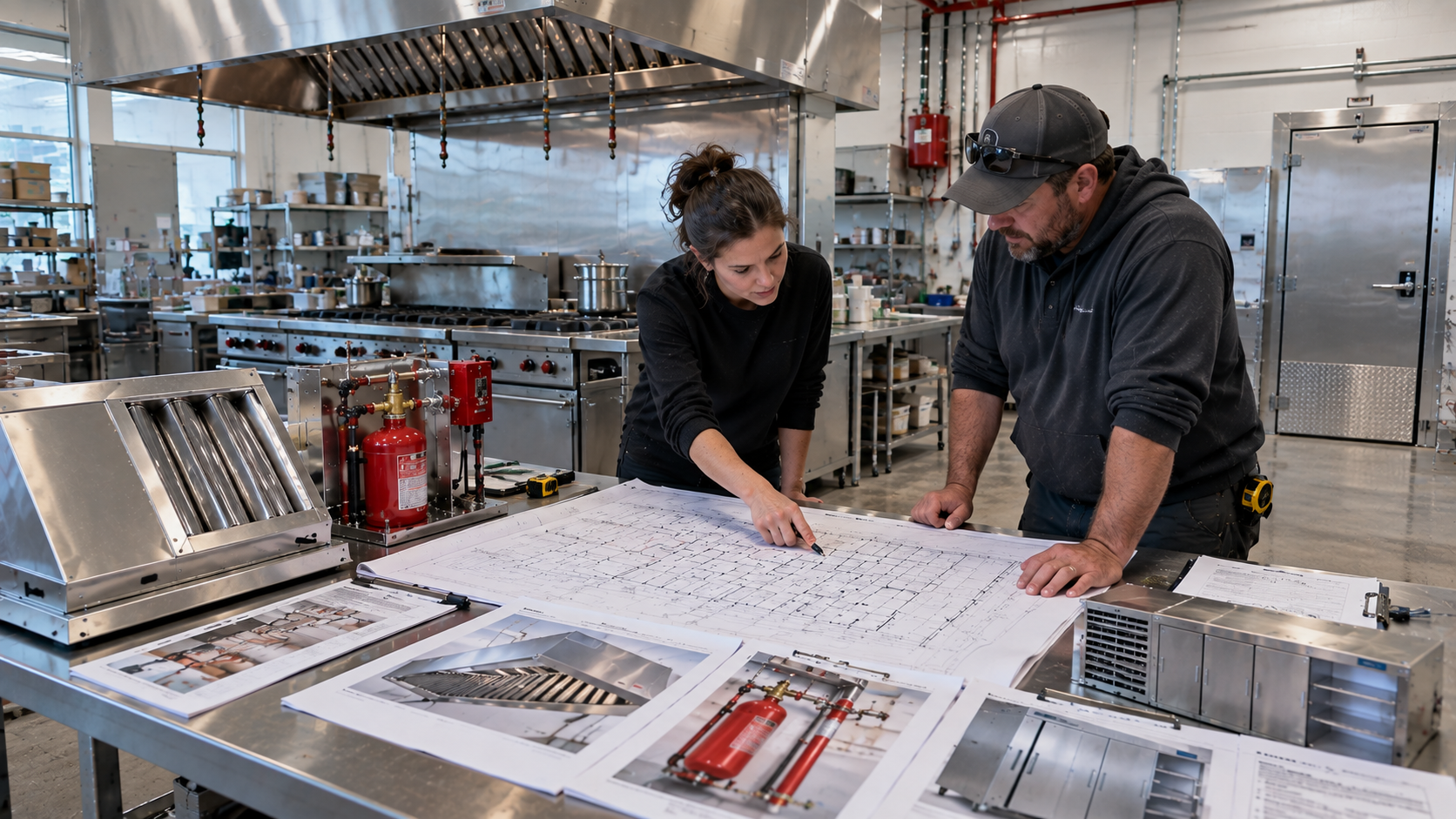
 A signed lease and a rented kitchen shell feel like the finish line. In Virginia, they are closer to the starting gun. The health department, building official, and fire marshal each get a say before the first plate goes out. Four systems tend to decide whether an opening date holds. They are the kitchen layout, the exhaust hood, fire suppression, and refrigeration. They depend on each other. A hood that misses the ceiling, or a walk-in the floor can't hold, sends owners back to the drawing board. This checklist walks through all four in the order decisions usually come due. It covers what Virginia reviewers look for, what to ask contractors, and what to verify before inspection day. Treat it as a working document, not a one-time read. Start With Plan Review Before You Order Anything Virginia food establishments go through plan review before opening. The Virginia Department of Health asks operators to submit a plan review application and fee to the local health department. At the time of writing, the listed fee is $40. The submission includes floor plans, equipment lists, specifications, proposed menus, and Food Protection Manager credentials. New construction also needs site plans. Reviewers use these documents to confirm the layout meets the Virginia Food Regulations . After plan approval, a foodservice permit application follows. The health department asks for it at least 30 days before opening. Build that lead time into your calendar from day one. Plan review exists to protect your budget as much as public health. The department says it helps operators avoid costly investments in work that won't meet requirements. Buying a hood or walk-in before approval risks exactly that. Building and fire officials run their own tracks. The local building department typically reviews mechanical, electrical, and plumbing permits. The fire marshal looks at the hood and suppression system. Ask each office which drawings it wants before you commit to equipment. A short call early saves a rejected submission later. The Opening Timeline at a Glance Opening day depends on eight phases. Some overlap, but skipping one almost always costs time later. The table below shows who signs off at each stage.
October 1, 2026
 A rooftop unit quits at 2 p.m. on the hottest Friday of July. The dining room fills with warm air. The walk-in compressor starts to strain. Within an hour, staff are sweating and customers are leaving. Heat is not only a comfort problem. The Occupational Safety and Health Administration lists air conditioning and improved ventilation among the controls employers use against heat illness. When cooling fails indoors, the clock starts on worker safety, not just sales. That is why "24/7" on a contractor's website deserves a closer look. Some companies staff a live line and dispatch trucks overnight. Others take a message and call back at breakfast. This guide covers four Virginia companies that handle commercial HVAC emergencies. Each was reviewed on response model, coverage area, equipment, and the facilities it fits best. None of them cover the whole state, so location decides more than reputation. Who Offers Real 24/7 Emergency HVAC Repair in Virginia? VA Commercial Repair Solutions answers every call with a live manager or owner across central Virginia and the Shenandoah Valley. Commercial Express HVAC covers Northern Virginia, Maryland, and DC with a 24/7/365 emergency line. Piedmont Service Group serves commercial and institutional clients from Richmond, Chesapeake, and Danville. Comfort Systems USA MidAtlantic works from South Boston, covering South Central Virginia.
By Chuck Weisman • September 26, 2026
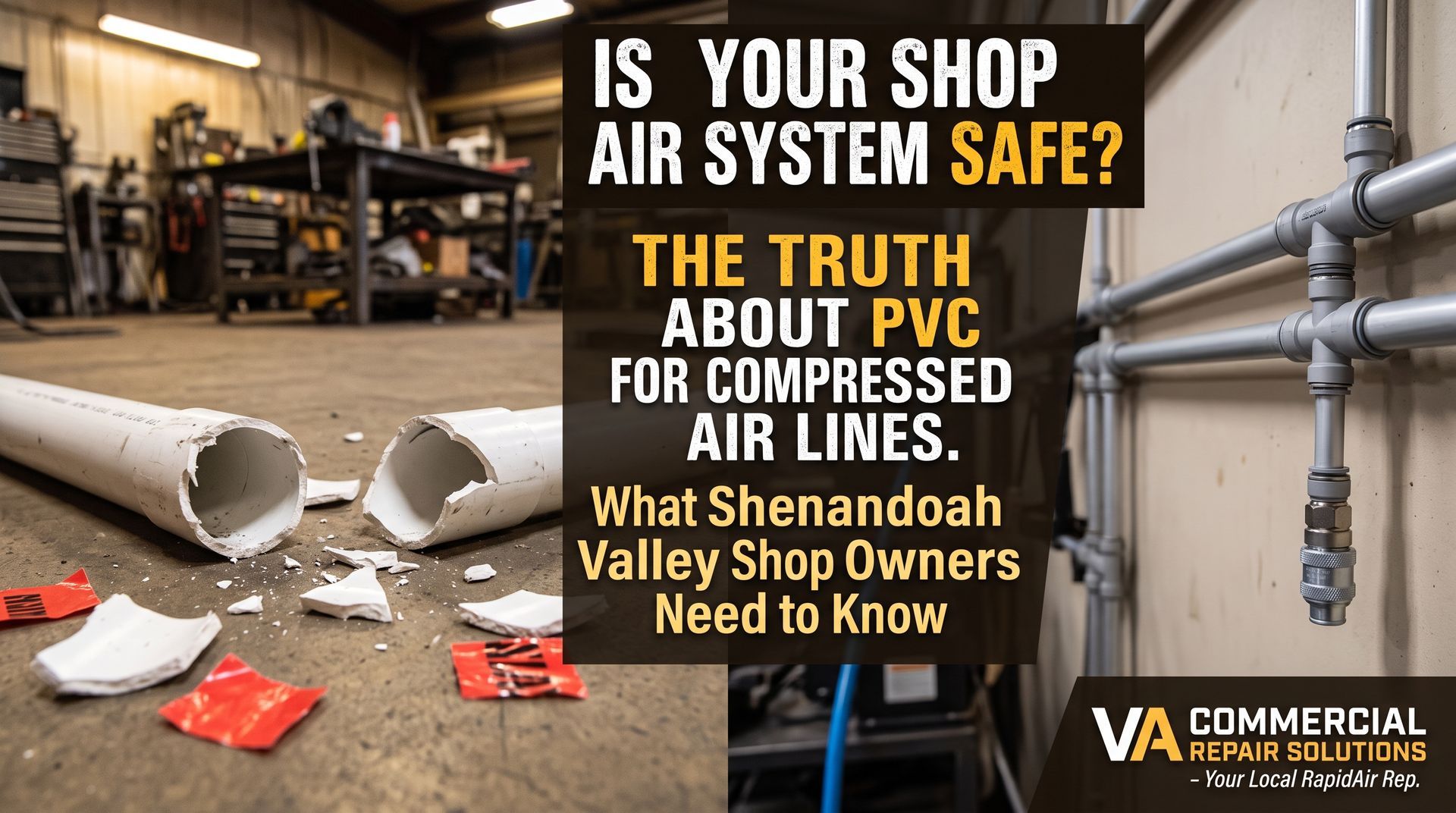
PVC can shatter under compressed air. Here is what the OSHA record says and how VA Commercial Repair Solutions replaces it with RapidAir piping.
By Chuck Weisman • September 26, 2026
PVC can shatter under compressed air. Here is what the OSHA record says and how VA Commercial Repair Solutions replaces it with RapidAir piping.
September 23, 2026
 A commercial building is a network of mechanical, electrical and refrigeration systems that all have to work together. When one part fails, the symptoms are not always obvious. A walk-in cooler that will not hold temperature might have a refrigerant leak, a failing compressor, a bad controller or an electrical issue feeding the unit. A restaurant exhaust fan that stops pulling air might be a motor problem, a belt issue, a make-up air imbalance or a wiring fault. That is why many businesses search for commercial mechanical contractors near me when they need more than a basic service call. A true commercial mechanical contractor can look across connected systems, diagnose the cause and coordinate the repair without forcing the owner or facility manager to call three separate vendors. For restaurants, breweries, food processing plants, schools, retail buildings and industrial facilities, that multi-trade capability can protect inventory, reduce downtime and help keep operations compliant. What is a commercial mechanical contractor? A commercial mechanical contractor installs, repairs and maintains the mechanical systems that keep a commercial facility operating. In practice, that often includes HVAC, refrigeration, boilers, chillers, ventilation, kitchen exhaust, gas piping, compressed air, equipment controls and related electrical work. The exact scope depends on licensing, training and the contractor’s business model. Some companies focus mainly on HVAC. Others, like VA Commercial Repair Solutions, work across commercial HVAC, restaurant refrigeration, electrical, boilers, chillers, range hoods, fans, ice makers and related facility systems. The difference matters because commercial buildings rarely fail in neat categories. If a rooftop unit trips a breaker, the problem may not be only electrical. If a kitchen line feels hot and smoky, the issue may involve the hood, exhaust fan, make-up air and fire suppression layout. A mechanical contractor with broader commercial experience can trace those overlaps faster. Commercial HVAC systems Commercial HVAC is one of the core areas mechanical contractors handle. This can include heating, air conditioning, ventilation, ductwork, controls and rooftop equipment. Common commercial HVAC work includes: Rooftop unit repair and replacement Split system and packaged unit service Heat pump and furnace repair PTAC and mini-split service for hotels, offices or specialty spaces Ductwork installation, balancing and repair Thermostat and control troubleshooting Preventive maintenance programs Refrigerant leak diagnosis and conversion support For a business, HVAC work is not just about comfort. Poor cooling can drive customers away, affect employee productivity and create unsafe indoor conditions for kitchens or production spaces. Poor ventilation can create odors, humidity issues and code concerns. If your current concern is air conditioning performance, this guide to commercial HVAC repair explains what businesses should look for in a qualified repair provider. Commercial refrigeration and cold storage Commercial refrigeration is a separate skill set from standard comfort cooling. It involves tighter temperature requirements, food safety risk and equipment that often runs around the clock. Mechanical contractors with refrigeration capability can handle walk-in coolers, walk-in freezers, reach-in coolers, prep tables, ice machines, chillers and specialty cold storage. In restaurants and food facilities, even a small temperature drift can become expensive if inventory is lost or health-code compliance is affected. A refrigeration service call may involve checking evaporator coils, condenser airflow, refrigerant charge, door gaskets, defrost timers, drain lines, fan motors, compressor operation and electrical controls. For cold storage and food processing facilities, refrigeration may also be tied to 3-phase power, alarms, backup systems and production schedules. This is one reason a commercial mechanical contractor is often a better fit than a residential HVAC provider. The stakes, equipment types and diagnostic process are different. Restaurant equipment, hoods and exhaust systems Restaurants, institutional kitchens and food-service operations need specialized mechanical support. A contractor working in these environments may handle cooking equipment, exhaust hoods, exhaust fans, make-up air, stainless fabrication, fire suppression coordination and refrigeration. Kitchen exhaust systems deserve special attention. Type 1 hoods are used over grease-producing equipment, while Type 2 hoods handle heat or steam. These systems need proper airflow, fire-safety design and ongoing maintenance. The NFPA 96 standard is one of the major references for ventilation control and fire protection in commercial cooking operations. A hood or exhaust problem can quickly affect an entire kitchen. Smoke, heat, grease vapor and negative air pressure make it hard to operate safely. Sometimes the issue is not the hood itself, but the fan, belts, bearings, make-up air fan, electrical feed or rooftop access. A mechanical contractor can inspect the complete system instead of treating each component in isolation. Boilers, chillers and hydronic systems Many commercial buildings use boilers, chillers or hydronic systems for heating, cooling or process loads. These systems are common in schools, industrial plants, larger commercial buildings, breweries and facilities with high heating or cooling demand. Commercial mechanical contractors may handle: Steam boiler and hot water boiler service Boiler pump and control troubleshooting Chiller repair and replacement Hydronic piping repairs Heat exchanger inspection Combustion and safety checks Preventive maintenance before peak heating or cooling season Boilers and chillers require disciplined diagnostics. A short cycling boiler, unstable chiller pressure or repeated lockout can point to controls, water flow, combustion, heat transfer or electrical issues. Guesswork is expensive, especially when the system supports production or a large occupied building. Commercial electrical work tied to mechanical systems Mechanical equipment depends on safe, reliable electrical infrastructure. Motors, compressors, controls, contactors, transformers, panels and disconnects all affect whether a system runs correctly. This is where the line between mechanical and electrical work becomes practical rather than theoretical. A walk-in freezer compressor may look like a refrigeration problem, but the root cause could be voltage imbalance. An exhaust fan may fail because of a worn motor, but also because of a starter, overload or wiring issue. A processing line may shut down because a breaker trips under load. A contractor licensed for both mechanical and electrical work can reduce the handoff problem. Instead of having one company say “call an electrician” and the electrician say “call the HVAC company,” the same team can evaluate the complete equipment circuit. For businesses comparing electrical support options, this overview of commercial electric repair service covers preventive maintenance, troubleshooting and licensing considerations.
September 23, 2026
 Commercial AC problems are not all equal. A slightly warm conference room is annoying; a failed rooftop unit over a dining room on a 92°F afternoon can cut sales, create staff safety concerns and strain refrigeration equipment that is already working hard. If you are searching for same day AC repair, the practical question is simple: will waiting until tomorrow put people, inventory, equipment, revenue or compliance at risk? If the answer is yes, treat it as a same-day service call. If the system is still controlling temperature and the issue is stable, scheduled service may be the smarter choice. This guide is written for business owners, facility managers, restaurant operators and property managers in Virginia who need to decide whether an AC problem can wait. The simple rule: call the same day when waiting changes the outcome Same-day AC repair is not only for a total shutdown. It is for any cooling issue where delay is likely to make the problem more expensive or disruptive. Commercial HVAC systems serve larger spaces, longer operating hours and more demanding loads than residential systems. A problem that looks small at 9 a.m. can turn into a business interruption by the lunch rush or late afternoon. Use this quick triage table before deciding whether to call now or schedule later.
September 17, 2026
 Commercial buildings depend on systems that rarely operate in isolation. A rooftop HVAC unit affects airflow and comfort, but it may also tie into electrical panels, ductwork, controls, gas piping and building ventilation. A walk-in cooler is refrigeration equipment, but a temperature failure can involve compressors, relays, evaporator fans, drain lines, door gaskets or the electrical circuit feeding the unit. That is where a mechanical contractor becomes different from a single-trade repair vendor. For facility managers, restaurant owners, food processing operators and property managers, knowing when to call a mechanical contractor can prevent downtime, protect inventory and reduce the risk of unsafe repairs. If you are searching for a “mechanical contractor near me,” the real question is not only who is closest. It is whether the contractor can diagnose the full building system, not just the first failed part they notice. What a mechanical contractor does for commercial buildings A mechanical contractor works on the systems that move air, water, refrigerant, heat, gas and sometimes compressed air through a commercial facility. In practical terms, that can include commercial HVAC, refrigeration, boilers, chillers, kitchen exhaust, ductwork, gas piping, air compressors and related controls. In a small office, the issue might be a rooftop unit that is short cycling. In a restaurant, it might be a make-up air problem causing the kitchen hood to pull poorly. In a dairy, cold storage facility or brewery, it might be a refrigeration and electrical issue happening at the same time. The value of a mechanical contractor is that they look at the system as a connected whole. That matters because the visible symptom is often not the root cause. A warm dining room may come from a failing compressor, but it may also come from a clogged coil, low airflow, a thermostat issue, undersized ductwork or an exhaust imbalance. A freezer that cannot hold temperature may not need a new box. It may need a defrost repair, door adjustment, refrigerant diagnosis or electrical troubleshooting. For commercial facilities, this broader view is especially important because downtime usually costs more than the service call. Lost product, unhappy tenants, failed inspections, canceled service and emergency replacement decisions can all stem from waiting too long or calling the wrong type of contractor. Call a mechanical contractor immediately for safety-critical symptoms Some building system problems should be treated as urgent, even if the equipment has not fully failed yet. Safety comes first. If there is an active fire, suspected carbon monoxide exposure, a strong gas odor or an immediate electrical hazard, evacuate as appropriate and call emergency services or the utility before calling a repair contractor. Once the immediate life-safety concern is addressed, a qualified mechanical contractor should inspect the affected system before it is returned to service. That is especially true for boilers, gas-fired equipment, commercial kitchens, electrical panels and mechanical rooms. Gas, combustion or boiler warning signs Call right away if you notice unusual burner behavior, rollout, soot, repeated boiler lockouts, pressure problems, banging pipes, water around boiler equipment or a combustion smell. Commercial boilers and gas-fired appliances should not be treated as trial-and-error repairs. A cracked boiler combustion chamber, failed heat exchanger or unsafe combustion condition can put occupants and staff at risk. A contractor should be able to test and show the evidence, not simply say that replacement is needed. For commercial buildings, documentation matters because owners, managers and inspectors may need a clear record of what failed and why. Electrical symptoms tied to mechanical equipment Repeated breaker trips, hot disconnects, burning odors, buzzing panels, motor failures or flickering lights near equipment should not be ignored. Mechanical systems often fail because of electrical conditions, and electrical systems can be damaged by failing motors, compressors or controls. The National Electrical Code , published by NFPA as NFPA 70, is the core safety standard for electrical installation in the United States. In a commercial setting, repair work needs to respect both equipment requirements and code requirements. If a freezer, RTU, exhaust fan or air compressor keeps tripping a breaker, replacing the breaker without diagnosing the load can create a larger hazard. For issues involving panels, circuits, motors or power distribution, a contractor with commercial mechanical and electrical capability can reduce finger-pointing between separate vendors. VA Commercial Repair Solutions covers this kind of overlap through its commercial electric repair service , which is useful when the symptom sits between the equipment and the electrical infrastructure. Refrigeration temperature failures Restaurants, grocery operations, cafeterias, breweries, wineries, dairies and cold storage facilities should call quickly when refrigeration equipment cannot hold temperature. Waiting overnight can turn a repair into a product-loss event. The FDA Food Code uses 41 degrees Fahrenheit or below as the cold-holding standard for many time and temperature control foods. Facility teams should follow their own food safety procedures and local health department requirements, but a walk-in cooler trending upward should be treated as urgent before it becomes a failed inspection or discarded inventory. A mechanical contractor should inspect the entire refrigeration system, including evaporator fans, condenser condition, drain problems, defrost controls, door seals, refrigerant level and electrical components. Refrigerant work should be handled by properly certified technicians. The EPA’s Section 608 technician certification requirements apply to technicians who maintain, service, repair or dispose of equipment that could release refrigerants. Kitchen exhaust and make-up air problems Commercial kitchens rely on balanced ventilation. If the hood is not capturing smoke, grease vapor or heat properly, the issue may involve exhaust fans, make-up air, belts, ductwork, controls or the design of the hood system itself. Warning signs include smoke spilling into the kitchen, doors becoming hard to open, pilot lights being affected by airflow, hot kitchen conditions, grease odors outside the hood area or fan noise that changes suddenly. These are not just comfort problems. They can affect fire safety, employee working conditions and health inspection readiness. A mechanical contractor experienced with commercial kitchens can evaluate the hood, exhaust fan, make-up air and related electrical controls together instead of treating each component separately. Call before performance problems become shutdowns Not every mechanical issue looks like an emergency at first. Many failures begin as small changes in performance. The system still runs, but it takes longer to recover, makes more noise, uses more energy or needs frequent resets. For commercial HVAC systems, early signs include hot and cold zones, weak airflow, short cycling, recurring thermostat complaints, unusual odors, rising utility use or water around equipment. If the issue is specifically with air conditioning, this guide to commercial HVAC repair covers how maintenance and timely diagnosis can prevent larger failures. For refrigeration, pay attention to frost buildup, longer compressor run times, water on the floor, fluctuating case temperatures, noisy fan motors and repeated ice maker faults. For boilers and chillers, warning signs include slow recovery, alarms, leaks, pump noise, water treatment concerns or pressure changes. The best time to call is often when the pattern changes, not when the unit stops. Facility staff usually know what normal looks and sounds like. If something feels different for two or three shifts in a row, document it and have it checked.
September 17, 2026
If you are trying to budget for a commercial HVAC visit in Virginia, the simplest answer is this: a standard business-hours diagnostic service call commonly falls somewhere around $150 to $350 before repair work, parts, refrigerant or specialty equipment . Emergency, weekend or after-hours calls can cost more, especially when the technician is responding to a no-cooling, no-heat or food-safety emergency. That number is only the starting point. A commercial HVAC service call cost can change quickly based on the type of equipment, rooftop access, the amount of troubleshooting required, travel time, electrical complexity and whether the repair can be completed on the first visit. VA Commercial Repair Solutions does not publish a flat online service-call menu, because commercial systems vary widely. The company does, however, offer no service call fee when repair work is performed and free installation quotes.  For business owners and facility managers, that distinction matters: the lowest diagnostic fee is not always the lowest total cost if the contractor cannot diagnose the system correctly or has to come back with parts that should have been stocked. Typical commercial HVAC service call cost in Virginia Use the ranges below as planning estimates, not a guaranteed quote. A small office heat pump in Waynesboro, a rooftop unit serving a restaurant in Charlottesville and a larger packaged unit on a school or production facility in Harrisonburg can all require different time, access and parts.
September 11, 2026
 A tripped breaker at 6 p.m. on a Friday doesn't wait for Monday. Neither does a burning smell from a panel, or a kitchen circuit that goes dark mid-shift. Electrical failures don't check your business hours first. Electrical malfunction is a real cause of building fires, not just an inconvenience. It accounts for 7.2% of nonresidential building fires nationally, per the U.S. Fire Administration . Not every electrician who advertises "24/7 service" staffs it the same way. Some route after-hours calls to an answering service. Others keep a live dispatcher and a truck ready to move. That gap matters more than it looks. A message left with an answering service might not reach a technician until morning. For a walk-in freezer losing power, that delay can cost far more than the repair itself. Coverage area matters just as much. A contractor with a fast response time three counties away is still a slow response time for you. This guide covers five Virginia companies built around commercial and industrial emergency electrical repair. Each was evaluated on response model, service area, and the kind of facility their work actually fits. None of them serve every corner of the state. Matching location to need matters just as much as picking a familiar name. This list is narrower than general electrical contracting, too. For panel-upgrade costs, breaker troubleshooting, and 3-phase power basics, our commercial electrical guide and cost estimates covers that broader ground. Which Virginia Companies Handle Emergency Electrical Repair? VA Commercial Repair Solutions answers every call with a live manager, 24/7, across the Shenandoah Valley. NIMPRO Electrical brings ISNetworld-certified commercial and industrial service to the Richmond area. Chewning + Wilmer has served Central Virginia's industrial base since 1924. White Electric Company covers Hampton Roads from Virginia Beach, and CMI Companies rounds out the list from Northern Virginia.
September 11, 2026
For a restaurant, food loss rarely starts with a cooler that is completely dead. It often starts with a few degrees of drift, a door gasket that no longer seals, a fan motor that slows down during dinner rush or a walk-in freezer that takes too long to recover after deliveries. That is why restaurant refrigeration repair is not just an equipment expense. It is inventory protection, food safety support and revenue protection for the kitchen. When a reach-in, walk-in cooler, prep table, freezer or ice machine fails, the cost is rarely limited to parts and labor. The bigger loss may be the product you have to throw away, the menu items you cannot sell and the staff time spent scrambling to move food. Why refrigeration problems create food loss so quickly Restaurants hold high-value ingredients in equipment that runs all day, every day. Meat, seafood, dairy, sauces, produce, dough, desserts and prepared foods depend on consistent temperature control. If one box warms up during a busy shift, a kitchen can lose hundreds or thousands of dollars in product before anyone sees a puddle on the floor or hears an alarm. The FDA Food Code uses 41°F or below as the cold-holding standard for time and temperature control for safety foods. The USDA Food Safety and Inspection Service also advises that perishable foods held above 40°F for more than 2 hours may need to be discarded in emergency situations.  Restaurants should follow their food safety plan, local health department guidance and internal temperature logs, but the practical lesson is simple: time and temperature determine whether product can be saved. Food loss usually comes from four connected problems: Inventory spoilage from unsafe product temperatures Service disruption when menu items cannot be prepared or sold Labor waste from moving, checking, labeling and discarding food Reputation risk if quality drops or a food safety issue occurs A cooler that is “almost holding” can still create a loss. If the air temperature reads 39°F near the thermostat but pans of chicken, cream sauce or sliced tomatoes are sitting at 45°F after a rush, the equipment is no longer doing its job for the kitchen. What restaurant refrigeration repair actually protects Good repair work does more than restart a unit. A restaurant refrigeration technician looks for the reason the equipment lost control in the first place, then restores the system’s ability to hold temperature under real operating conditions. That may mean cleaning a blocked condenser, replacing a failing evaporator fan motor, correcting a defrost issue, repairing a refrigerant leak, replacing a control sensor or fixing an electrical fault. In some cases, the repair is not inside the refrigeration circuit at all. A loose connection, bad contactor, tripped breaker or overloaded circuit can shut down a system that looks like a refrigeration failure to the kitchen team. This matters because quick fixes can hide the real threat. Adding refrigerant without finding a leak, resetting a breaker without identifying the cause or chipping ice off an evaporator coil without solving the airflow problem may get the box cold for a few hours. It may also lead to the same failure during the next service period, when the walk-in is full and the kitchen has no time to react. If your team is trying to reduce recurring losses, it helps to pair timely repairs with documented maintenance. VA Commercial Repair Solutions covers practical steps in its guide to maintaining commercial refrigeration equipment , including coil care, gasket checks, leak detection and temperature monitoring. Common refrigeration failures that put inventory at risk Not every failure looks urgent at first. Some of the most expensive food loss events begin with small symptoms that were easy to overlook.