
How to Find a Commercial HVAC Company That Puts Craftsmanship and Mission-Driven Service First
Ask a technician why they chose this trade, and the answer reveals more than any brochure. Some say it was the paycheck. Others talk about a mentor, a military background, or the satisfaction of making something work again.
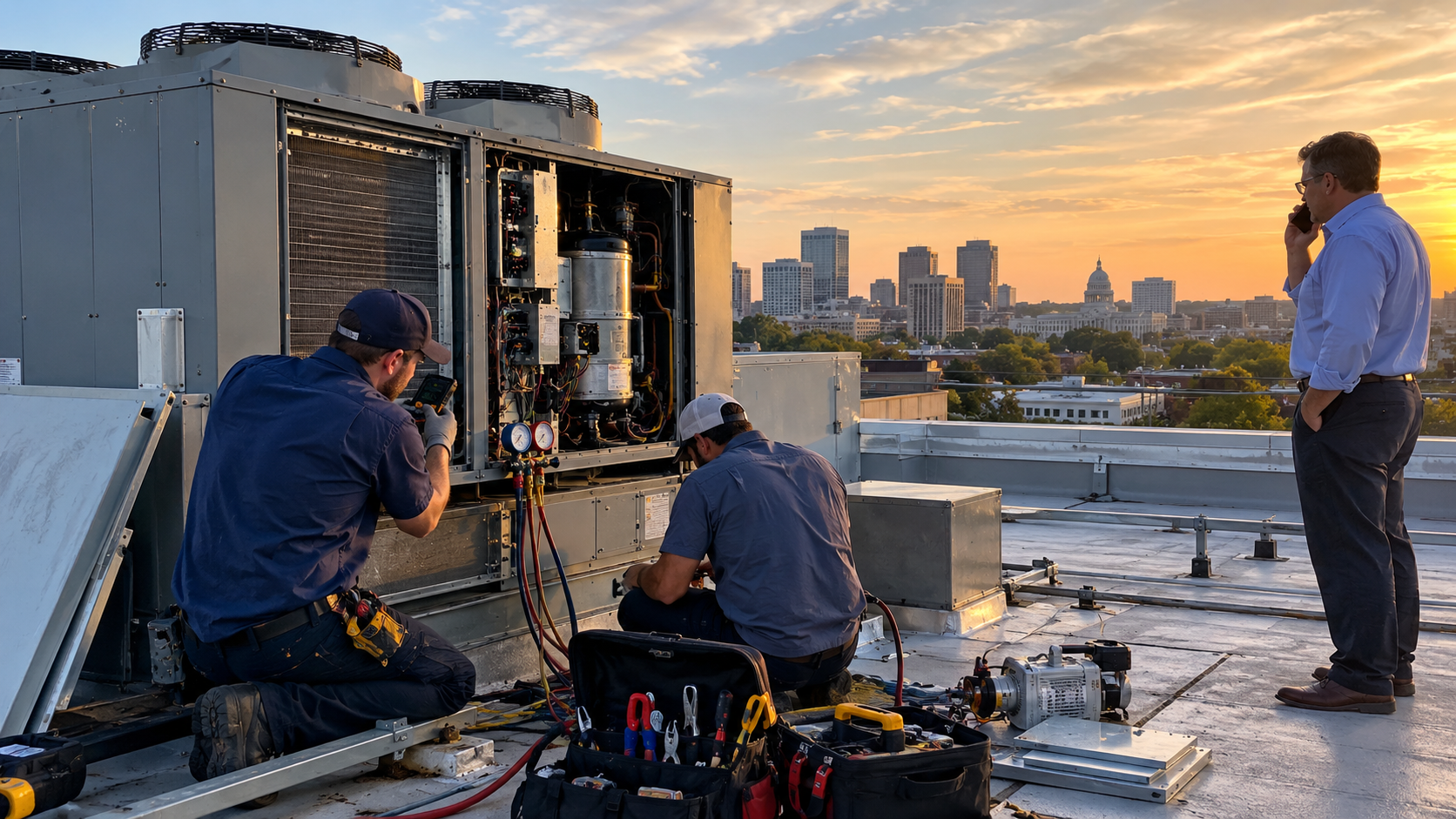
That difference shows up on your roof. You can see it in how a condensate line is pitched and how a panel is labeled. You can also see it when someone recommends a repair although a sale would pay more.
Craftsmanship and purpose are not marketing words. They are habits you can learn to spot.
This guide shows how to find a commercial HVAC company built on both. You will get a vetting process, a scorecard, and a list of questions that expose a company's real priorities. Use them before the next breakdown, while you still have time to choose carefully.
What craftsmanship actually looks like in HVAC
Craftsmanship is the gap between equipment that merely runs and a system that runs well for twenty years. It is mostly invisible on the day of installation. It reveals itself in year three, when a poorly built system starts to fail.
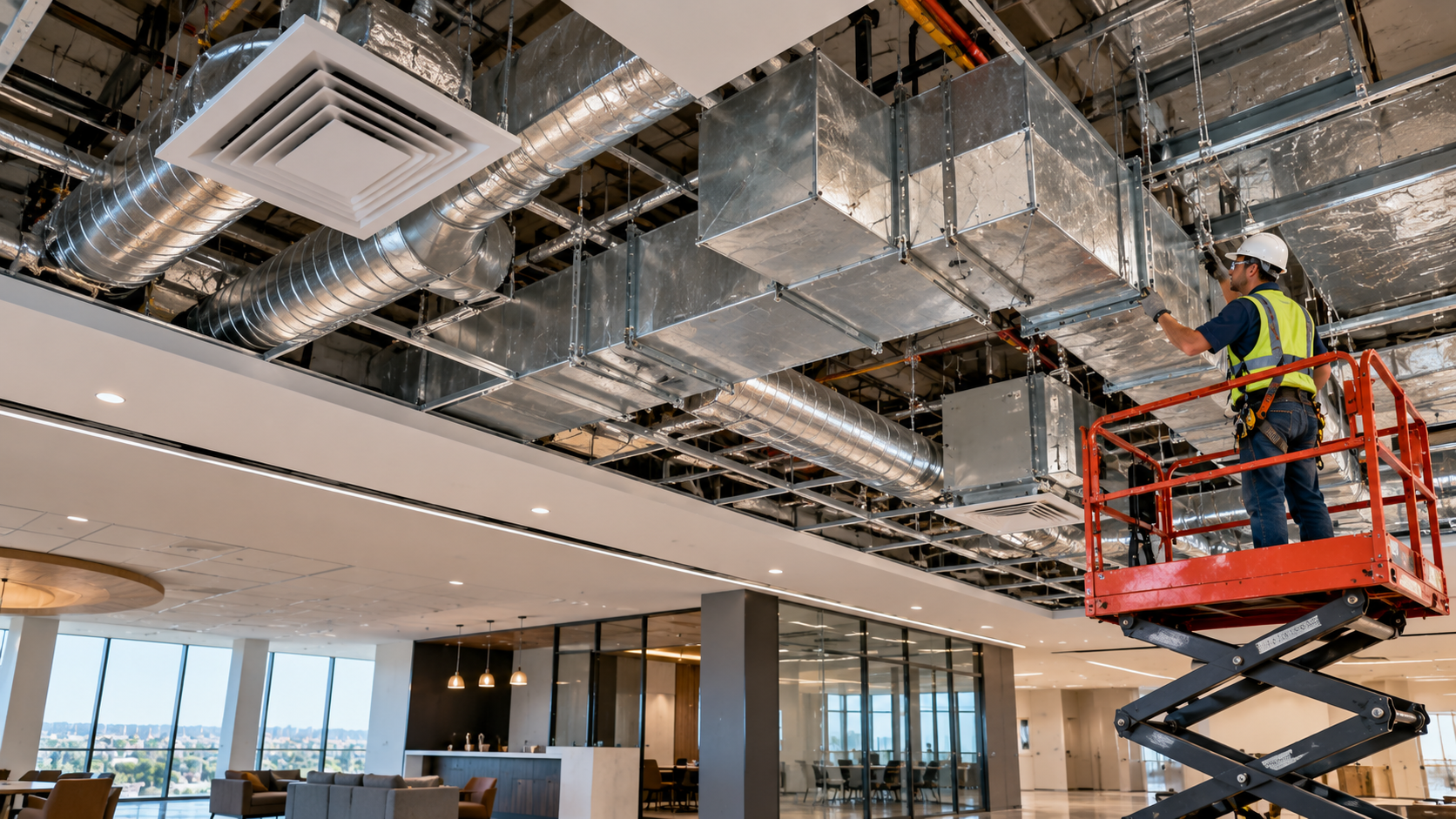
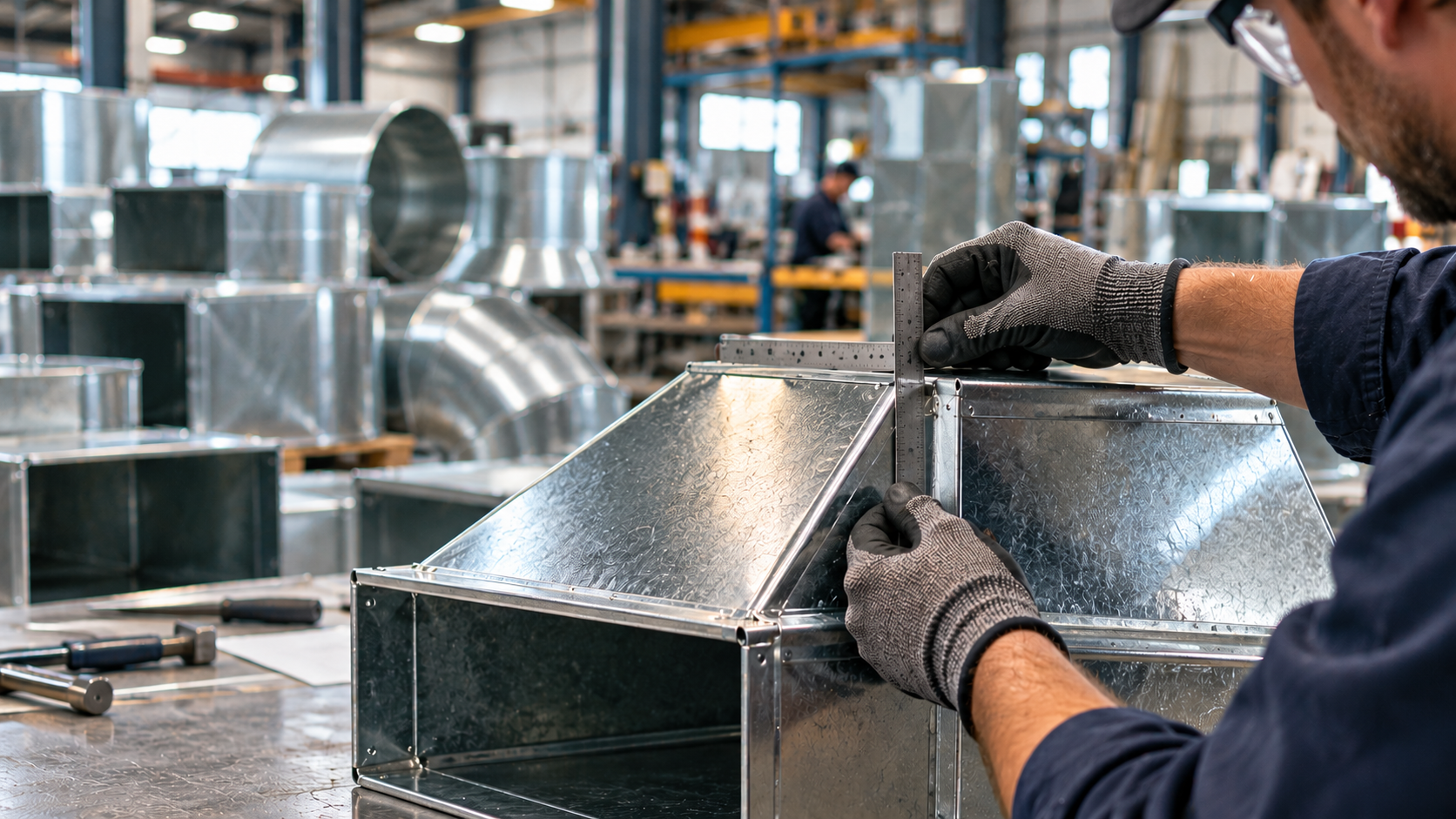
Start with who does the work. A company that fabricates its own ductwork, supports, and custom metal controls its quality from the first cut. A company that subcontracts everything controls only the invoice.
Look next at documentation. A skilled team records refrigerant charges, amp draws, pressures, and temperatures at every visit. Those numbers let anyone diagnose a trend instead of guessing at a symptom.
Finally, look at the standard behind the work.
The ANSI/ASHRAE/ACCA Standard 180 sets minimum HVAC inspection and maintenance requirements. Its stated purpose is to preserve a system's comfort, energy efficiency, and indoor air quality. It applies to new and existing commercial buildings.
You do not need a contractor who recites the standard. You do need one who can explain how its maintenance visits compare to it.
Signs of real craftsmanship you can check
Concrete evidence beats confident talk. Look for these signals during your search:
- In-house fabrication. The company builds ductwork, hoods, or custom metal in its own shop.
- Written scope for every visit. Each maintenance checklist lists tasks, readings, and findings, not just "serviced unit."
- Labor warranties. The company stands behind installs with free labor for a stated period.
- Servicing what it installs. The installer returns for callbacks and keeps responsibility for the work.
- Brand-neutral repair. Technicians repair all major brands, so advice does not depend on one supplier.
- Visible training. The company invests in apprenticeships and certifications, not only in hiring experienced techs.
What "mission-driven" should mean in practice
Many companies claim a mission. Few can show it in the way they price, staff, and recommend.
A real mission shows up in decisions that cost the company money. Recommending a repair over a replacement is the clearest example. A contractor that earns more when you buy new has a built-in conflict, so ask how its technicians are paid.
Pay structure matters. Technicians paid on commission have a reason to upsell. Technicians paid hourly or by salary can give a neutral opinion, because their income does not change with your decision.
A mission also shows up in how a company treats people. Does it train apprentices and develop career-changers? A company that invests in its people usually invests in its work.
Virginia has a formal route for that last point. The Department of Veterans Services runs the Virginia Values Veterans program, known as V3. In July 2024, the state reported more than 3,500 partner employers and over 142,000 veterans hired.
Ask any contractor whether it participates in a veteran hiring or training program.
Finally, a mission shows up at 11 p.m. on a Saturday. A company that answers its own phone, and sends someone who can decide, treats service as a commitment. A company that sends you to voicemail treats it as a queue.
Why this choice pays off
Choosing on craftsmanship and ethics is not a luxury. It is a cost decision that plays out over years.
Poor workmanship compounds. A loose electrical connection, a missed refrigerant leak, or a clogged drain pan rarely fails on day one. It fails during the first heat wave, when you can least afford it.
Poor ethics compound too. A contractor that recommends replacement too early drains your capital budget. A contractor that hides a failing component to protect a service contract drains your trust.
A good partner reverses both trends. Careful installation reduces callbacks. Honest advice lets you spend capital where it matters and repair where it does not.
Step-by-step: how to find and vet a company
Use this seven-step process to move from a long list to a confident choice.
Step 1: List your equipment and your risk
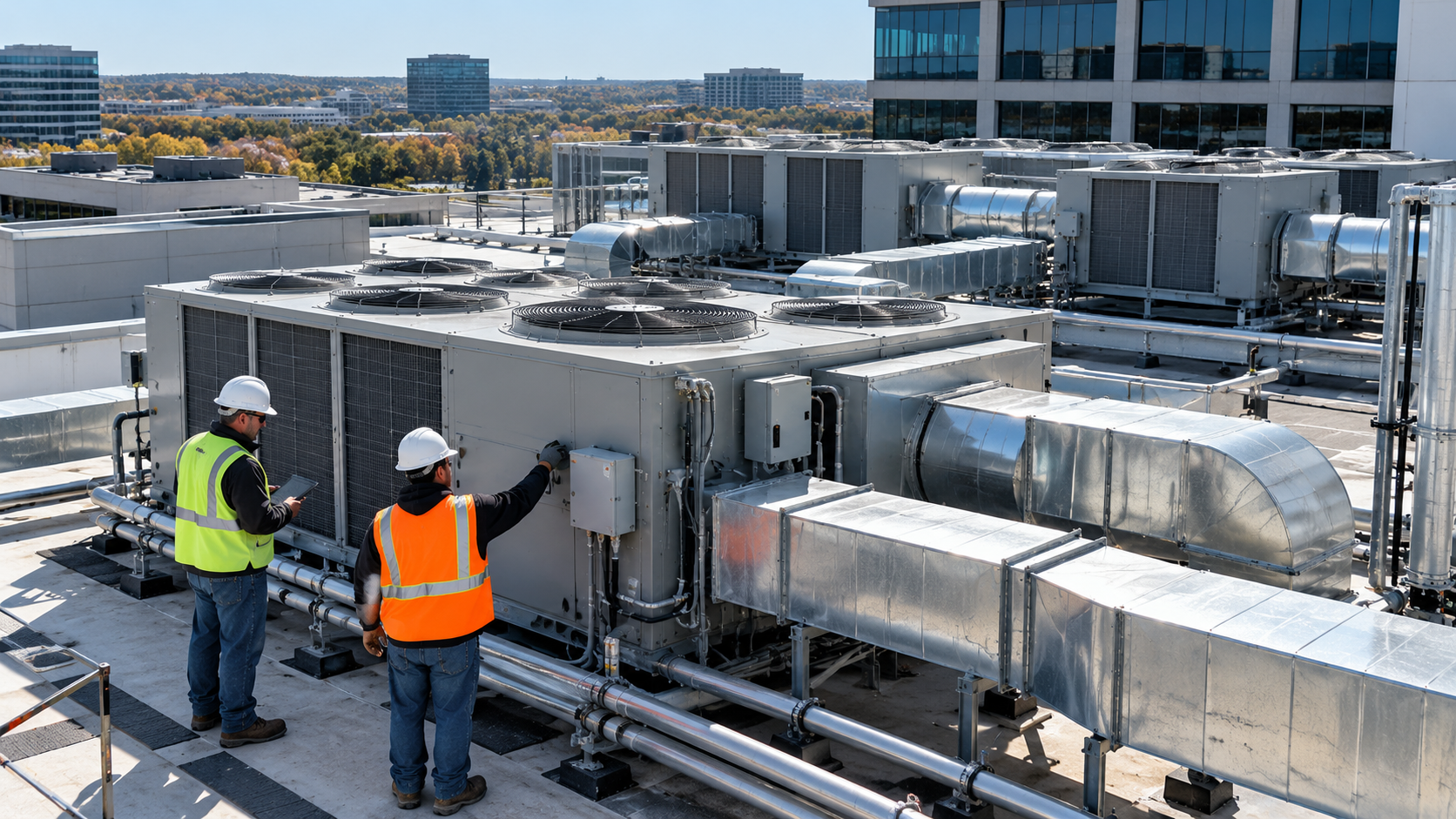
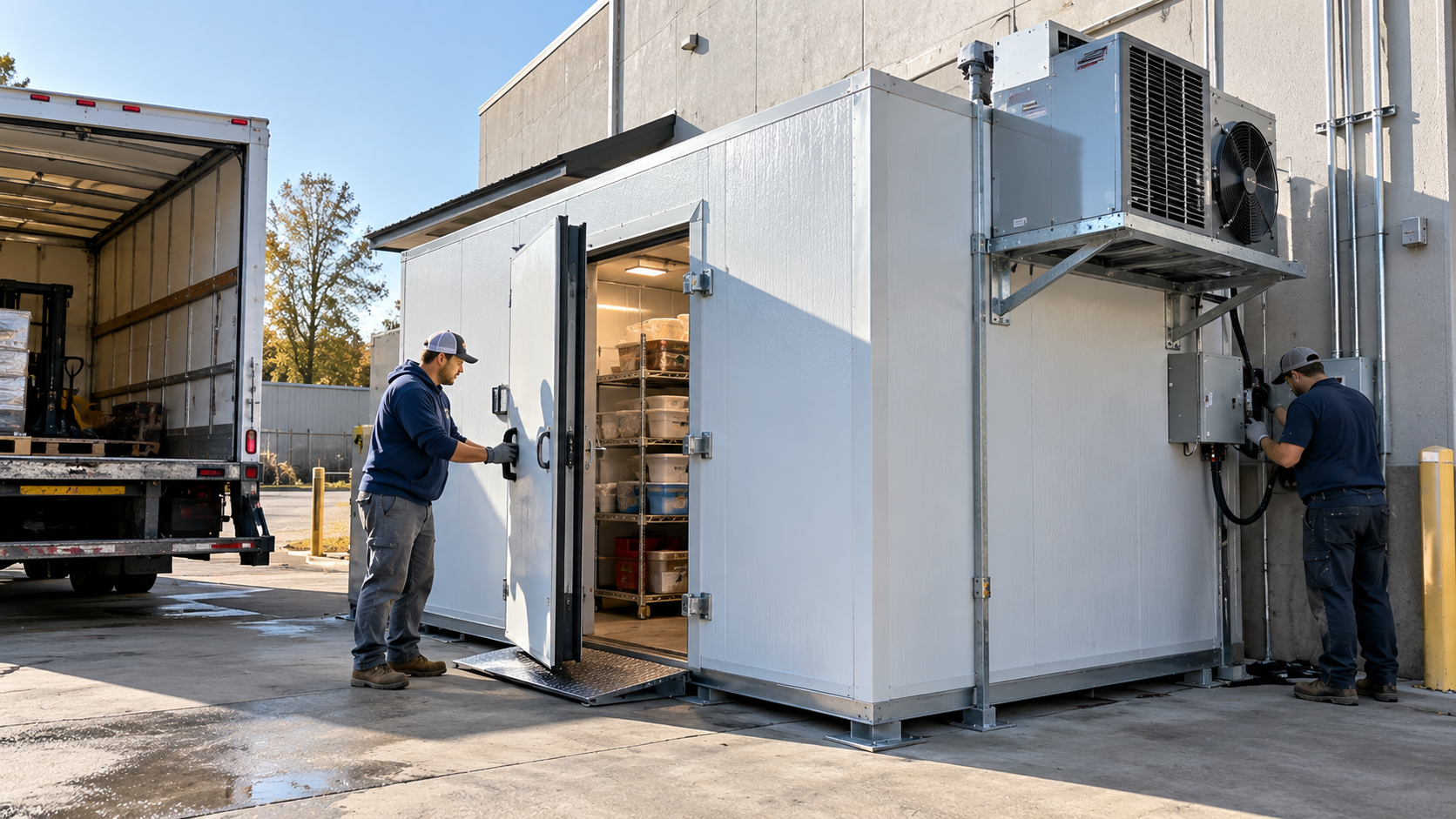
Write down every system the contractor must handle. Include rooftop units, walk-in coolers, exhaust hoods, boilers, and controls. Then note what fails first when each one goes down.
A restaurant cannot tolerate a dead walk-in for a day. An office can tolerate a dead rooftop unit longer. Your risk list decides how much response speed and specialization you need.
Step 2: Verify license and insurance
Confirm that the company holds the right Virginia contractor license for the work. Check that the license class fits the size of your project. The state's Department of Professional and Occupational Regulation maintains a public license lookup.
Ask for current proof of liability and workers' compensation insurance. A license does not prove skill, but its absence proves risk. Do this step before any other conversation goes deep.
Step 3: Look for proof of craftsmanship
Ask to see examples of recent work, including photos of fabrication or installation details. Ask whether the company builds its own ductwork or custom metal. Ask how it commissions a new system before handing it over.
Good contractors enjoy this question. They will walk you through their process, because they are proud of it.
Step 4: Test their ethics before you need them
Ask a direct question: "When would you recommend replacing instead of repairing?" A thoughtful answer names specific failures, such as a shorted compressor or a cracked heat exchanger. A vague answer, or an automatic yes, is a warning.
Then ask how technicians are paid and whether they carry sales quotas. Ask what the company does when it cannot fix something. The answers show you how it behaves under pressure.
Step 5: Call the emergency line
Call the after-hours number at an awkward time. Note how many rings it takes, who answers, and whether that person can dispatch. This test costs you two minutes.
Do not rely on a promise of "24-hour service" alone. Many companies advertise it, but the experience varies widely. A real person with authority is the standard to look for.
Step 6: Compare proposals line by line
Request written proposals from at least two firms. Compare scope, equipment specifications, labor warranties, and maintenance terms. Do not compare totals until the scopes match.
For maintenance contracts, our guide on comparing HVAC maintenance companies covers plan contents, pricing structures, and red flags. A cheap plan that skips refrigerant checks and electrical tests is not a bargain.
Step 7: Start small, then expand
You do not have to hand over everything on day one. Begin with a seasonal tune-up or a single repair. Watch how the company documents, communicates, and follows up.
If the first job goes well, widen the relationship. If it does not, you have lost little.
A scorecard for comparing candidates
Use the table below during calls and site visits. Score each answer as strong, acceptable, or a warning sign.
| Question | Strong answer | Warning sign |
|---|---|---|
| How do you decide between repair and replacement? | Names specific failure types and shows measurements | "Replace anything over ten years old" |
| How are technicians paid? | Hourly or salary, with no commission | Commission or sales quotas |
| Who answers after hours? | A live person with authority | Voicemail or an answering service only |
| Do you fabricate or subcontract? | In-house shop for ductwork and custom metal | Everything subcontracted |
| What warranty comes with installs? | Written labor and parts warranty | Parts only, or "ask us later" |
| Do you service what you install? | Yes, with ongoing maintenance options | Installs only, no service line |
| How do you train new technicians? | Apprenticeships and ongoing certification | No formal program |
| Can I contact recent clients? | Yes, with similar facilities | References unavailable |
Questions to ask on the first call
Keep a short list ready, so the call stays focused. These questions work for nearly any commercial facility:
- What licenses and certifications does your company hold, and can I see them?
- Do technicians carry commission or sales quotas?
- What repairs can you not make, and what do you do in those cases?
- Do you repair all brands, or only the ones you sell?
- What is your response time for an after-hours failure?
- What does a preventive maintenance visit include, and do I receive written findings?
- Do you register equipment warranties on my behalf?
- Can you share references from facilities like mine?
- How do you train and develop your technicians?
Write down the answers during the call. Compare them side by side later, when memory fades. Patterns in tone often matter as much as the content.
How to read a maintenance proposal
A good proposal reads like a plan. A weak one reads like a price list.
Look for specific tasks tied to specific equipment. A line such as "inspect, clean, and test" means little without detail. Prefer proposals that list refrigerant checks, electrical measurements, belt and bearing inspections, and filter schedules.
The U.S. Department of Energy's Federal Energy Management Program publishes an O&M best practices guide for building maintenance programs. It is a useful reference for what a thorough program covers. Use it to test whether a bidder's plan is complete.
Also check what happens when the plan finds a problem. Does the company send a written estimate and explain every option, including repair? Transparent reporting shows respect for your budget.
Ask how often each task occurs. Quarterly visits suit restaurants and cold storage, where equipment runs hard year-round.
Semiannual visits may be enough for a low-risk office. The right cadence depends on run hours and risk, so avoid one-size-fits-all plans.
Red flags to watch for
Some warning signs appear early. Treat them as reasons to slow down.
Pressure tactics are the first. A contractor who says a price expires today, or that your system is dangerous without proof, is selling fear. Ask to see the evidence, in the form of readings, photos, or failed parts.
Vague scopes are the second. If a proposal cannot name the equipment, the tasks, and the frequency, it cannot be enforced. You will not know what you bought until something breaks.
Unavailable people are the third. If you cannot reach a manager or an owner before signing, you will not reach one after.
Constant criticism of competitors is the fourth. Confident firms let their work, their references, and their documentation do the talking.
What the first 90 days should look like
A strong contractor does not simply show up when something breaks. It builds a picture of your facility first.
In the first month, expect an equipment walk-through and a written inventory. The inventory should list model numbers, ages, and condition notes. It should also flag the assets most likely to fail.
In the second month, expect baseline readings and a maintenance calendar. Seasonal visits should be scheduled before the first heat wave and before the first freeze. Warranty registrations should be filed so claims are easy later.
By the third month, you should know who to call and who will answer. You should also hold a written emergency plan. If that is missing at day 90, the relationship needs a reset.
How VA Commercial Repair Solutions measures up
We are the team behind this site, so weigh this section accordingly. We describe ourselves using the same questions we ask you to apply to everyone.
VA Commercial Repair Solutions was founded in 2008 in Fishersville, Virginia. Founder Chuck Weisman started the company after leaving a larger firm over disagreements about ethics and direction. The principals bring more than 50 combined years of experience.
On repair versus replacement, the company's position is repair first. If it cannot fix a problem, it pays $50 in cash plus a $500 credit toward new equipment. It also shows customers the evidence behind its recommendations, using tools such as meters and gauges.
On pay and character, technicians are paid hourly or by salary, not commission. The company also says its technicians are background-checked and drug-tested. Service calls carry no fee when repair work is performed.
On availability, a live manager or owner answers every call, 24/7/365. There is no voicemail. The company reports an 85% first-visit completion rate.
On craftsmanship, it fabricates ductwork in-house and holds a Class A contractor license. It services what it installs, and it repairs all brands. New HVAC, boiler, refrigeration, hood, and exhaust fan installations carry one year of free labor.
People are a large part of the story. You can read the leadership background on the company's about page. The shop manager spent seven years in U.S. Naval aviation, working on F-14 and F-18 air conditioning and electrical systems.
A technician trained as an airplane electrician in the U.S. Air Force also works on the team. That veteran presence is deliberate. The company runs a veterans apprenticeship program that pairs paid on-the-job training with classroom instruction.
Veterans can use GI Bill benefits, and apprentices can earn certifications such as EPA 608. Clients benefit from technicians trained in the company's standards.
None of this replaces your own vetting. Call the references, ask for the license, and test the phone line. A company that built its reputation on honesty will welcome the scrutiny.
Frequently asked questions
How do I know if a commercial HVAC contractor is trustworthy?
Check the license, insurance, and references first. Then ask when they recommend repair over replacement and how technicians are paid. Consistent, specific answers signal a trustworthy company.
Is the cheapest proposal ever the best choice?
Rarely. A low price often hides a narrower scope, fewer visits, or no labor warranty. Compare scopes line by line before you compare totals.
Should I choose a specialist or a generalist?
It depends on your equipment. A generalist can maintain rooftop units well. Walk-in coolers, exhaust hoods, ice makers, and boilers often need a contractor who services that equipment daily.
Why does after-hours response matter so much?
Equipment fails at inconvenient times. A restaurant loses stock in hours, and a production line loses revenue by the minute. A live answer at midnight shortens every outage.
What if I already have a contractor I am unsure about?
Run the same scorecard on your current provider. If the answers disappoint, request a trial service call from a second company. Compare documentation, communication, and follow-through before you switch.
Conclusion: choose the company, not just the quote
The best commercial HVAC partner combines skilled hands with a clear conscience. Check credentials, ask pointed questions, and watch how a company behaves before it has your signature.
Use the scorecard to compare candidates. Test the phone line, ask about pay, and look for in-house skill. Choose the company whose answers stay consistent from the first call to the last.
Ready to put a contractor to the test? Call VA Commercial Repair Solutions at (540) 457-4822, and a live person will answer 24/7. Ask your hardest questions, and see how the answers hold up.
Opening a Restaurant in Virginia: Kitchen Design, Hood, Fire Suppression and Refrigeration Checklist