Commercial Furnace Repair Tips

VA Commercial Repair Solutions

If your commercial furnace is giving you trouble, it may be time for a repair. A proactive approach to repair is the best way to ensure that the system continues to work at optimum efficiency. To help you identify and fix small problems quickly, here are some helpful tips. Check the evaporator coils (the coil inside the furnace) and capacitors. Also, check the fuel delivery. These are the most important initial steps to determining the problem and repairing it before the problem escalates into a major one.

Commercial Furnace Repair Tips

Check evaporator coils

Commercial Furnace Repair Tips

If you suspect that your furnace may be suffering from overheating or has a leaking valve, you should check the evaporator coils. The fins on the evaporator are made of thin metal, and they can bend easily. To clean them properly, you should use hot soapy water, a plastic bristle brush and a shop vac. You may also use a commercial coil cleaning solution.

Before beginning, turn the air conditioner off at the thermostat or circuit breaker. Remove the panel and clean the evaporator coil with a plastic brush. Make sure that you direct the airflow in the opposite direction from the direction of the airflow. Be sure to wear eye protection while cleaning the coils. If you can't afford to pay a professional, use a shop vac to clean the evaporator coils yourself.

Another way to check the evaporator coils is by checking the static pressure drop across the coil. The static pressure drop is the same as the CFM of air flowing across the coil. If the pressure drop is lower than the set limit, it means the air supply to the evaporator coil is not sufficient. For example, a five-ton system should have about 2,000 CFM of air flowing across the coil, that is 400 CFM  & 12,000 BTUs per ton.

Check fan motor

Commercial Furnace Repair Tips

If your furnace is constantly running, the fan may be having problems. This may be a symptom of an electrical problem with the fan motor. If you're unable to determine the source of the problem, try determining how much voltage is dropped across the motor's contact points. You can also look for a loose wire or a corroded electrical connector. If the fan motor is not turning, it may be because it's overheating or there's a short in the motor's windings.


When performing a commercial furnace repair you'll need to check the fan motor. It is an industry-standard to inspect all components to determine whether it's operating correctly. This includes the blower motor. A properly functioning fan motor will allow the heating system to run more efficiently and save energy. If the fan motor is malfunctioning, the heater will stop working, resulting in higher energy bills. A technician can determine whether the blower motor needs to be replaced and replace it if necessary.


To test the fan motor, raise the thermostat to a higher temperature. Then, check the power switch to make sure it's set to the appropriate position. If it doesn't turn on, set the system switch to the "HEAT" or "AUTO" position. If you're experiencing an overheating problem, raise the thermostat to the highest setting. If it doesn't turn on, raise the thermostat and check the power switch.

Check capacitors

When doing commercial furnace repair, check the capacitors. These parts may be easy to overlook but are essential for heating and cooling your building. Capacitors hold a charge even when the unit is not powered on. You must discharge these capacitors according to the manufacturer's instructions. The voltage ratings for capacitors are usually listed on the side of the unit. If you find that the capacitors you have are not functioning at voltage and microfarad rating, they must be replaced.


You can test the blower motor for a bad capacitor to determine if you need to replace it. You may notice that the blower is running slowly or inconsistently. The blower motor may also be overheating and acting strangely. If you suspect a capacitor problem, you should contact a professional. You may not be aware that a bad capacitor is affecting your family's comfort. To ensure a safe and effective operation of your commercial furnace, inspect the blower motor's capacitors.


Another way to test the blower's capacitors is to turn on the furnace and listen closely for humming noises. You can hear these noises by turning up the blower or by opening the access panel. If you do hear humming noises, you should schedule a professional inspection. These components are easy to replace and are inexpensive. You can replace them yourself, but you should ensure you consult a professional before trying to perform the repair on your own.

Check fuel delivery

A company providing commercial furnace repair should be reliable. They should have trained, professional staff who are HAZMAT-certified. If you have a company vehicle, they should use trucks that have special fuel delivery systems. They should also have a trained driver who is able to fuel equipment safely and efficiently. This way, you can avoid the risk of spills and leaks. A service can check your tank to make sure it is working properly and inspect for damage. In case there is a leak in your furnace, they can replace the tank.

Check ductwork

Commercial Furnace Repair Tips

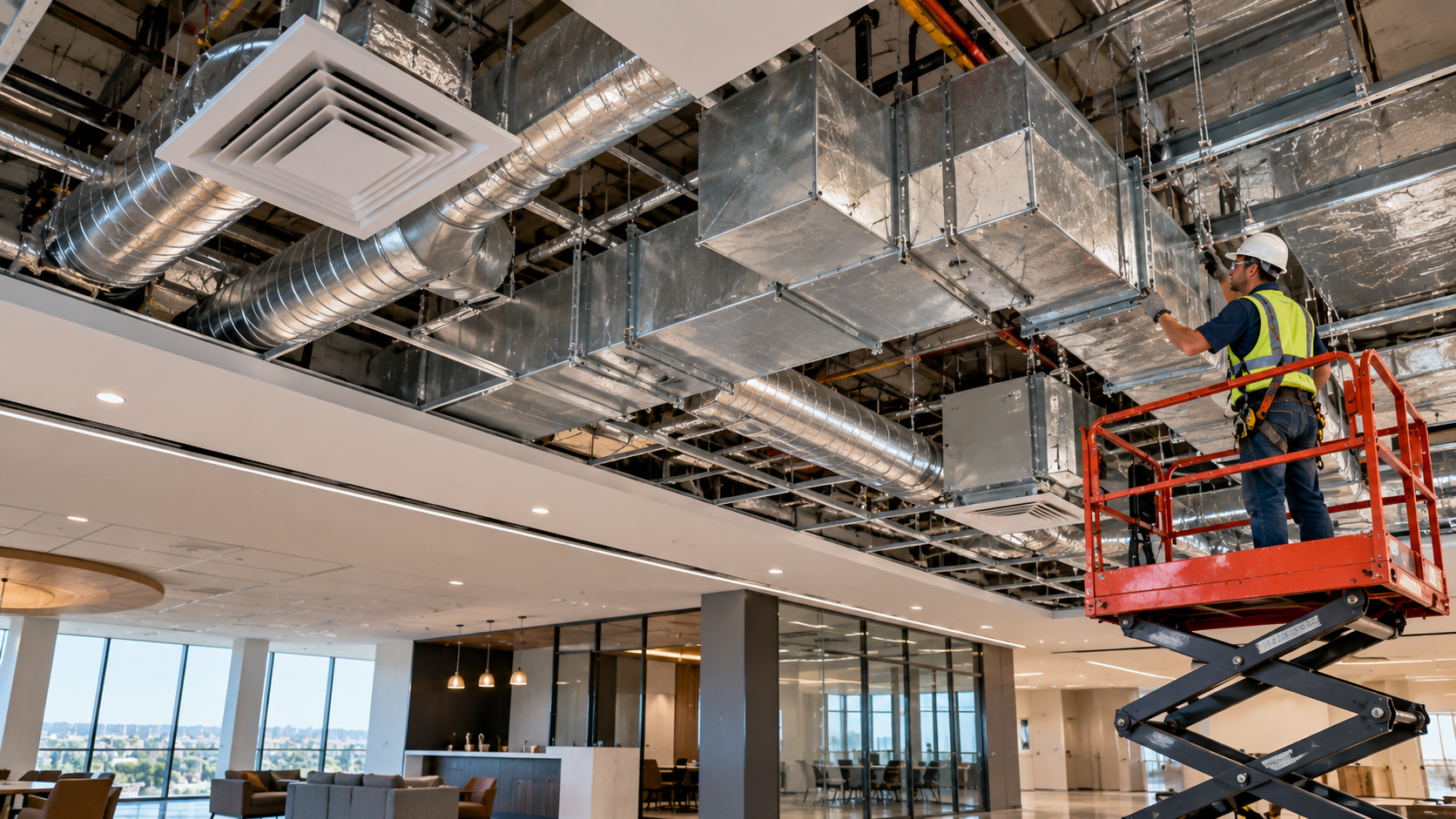
A leaking ductwork can be a serious problem. Not only does it pull in dust from the outside, but it also circulates it throughout the building. While dust is not harmful, it can negatively affect air quality, which can be problematic for people with respiratory problems and allergies. Therefore, a professional should check the ductwork before attempting any commercial furnace repair. Here are some of the common signs of leaking ductwork:


Older HVAC systems can be problematic. They lose up to 40% of their efficiency over time. Rusted ductwork may require replacing the whole ductwork system. The older the commercial property, the more likely the ductwork is to be damaged. It can be difficult to access and may cost more than you'd expect. If you're unsure whether your ductwork is damaged, you can always hire an HVAC specialist to check it for you.


Leaky ducts also cause uneven cooling in your home or business. The leaking air makes certain areas too hot, while others stay too cold. This can cause discomfort for residents and strain your HVAC unit. If left unchecked, it can also lead to a lower unit lifespan. For these reasons, you should check your ductwork if you need a commercial furnace repair. Consider contacting a professional HVAC specialist in your area.

Check the Electrical System

Commercial Furnace Repair Tips

Whether you're looking to upgrade an existing commercial HVAC system or install a new one, a proper evaluation of the electrical system is vital to the performance of your heating and cooling. Moreover, it will ensure that your electrical system can support the extra load that your new system puts on it. Checking the electrical system is a great way to optimize the value of your investment. Here are some tips to help you evaluate the system.


Before calling a commercial HVAC technician, make sure that the unit is powered on. A malfunctioning furnace can cause a series of problems, including frozen pipes or complaints from building occupants. Some problems can be easily resolved by the owner, but some require the assistance of a technician. Whenever you are looking for commercial HVAC repair, be sure to check the electrical system. Check to see if it's connected to the power supply and running.


If the power disconnect switch is turned off, check your electrical system. Some electrical equipment may be overloaded and lead to a power outage. Check the circuit breaker to ensure it's set in the "On" position. You may also need to open the valve for the gas supply. Once you're sure of this, you can call a commercial HVAC technician to inspect your equipment. They'll also check the fuel supply and test the electrical system to ensure that there's enough fuel in the tank.

July 28, 2026
 Commercial refrigeration failure is one of the costliest equipment problems a food-service business can face. A walk-in cooler that stops working overnight can mean thousands of dollars in spoiled inventory by morning. A broken ice machine brings service to a halt faster than almost any other single failure. The problem is that most HVAC contractors don't actually service commercial refrigeration. Walk-in coolers, ice machines, and commercial chillers require different certifications, training, and tools than standard commercial AC. Call an HVAC company for a refrigeration problem and you often get someone learning your equipment on your dime. This guide identifies the four best commercial refrigeration and ice maker repair companies in Virginia. We evaluated each on refrigeration-specific experience, equipment coverage, certifications, geographic reach, and how they serve commercial operators in practice. Virginia's Top 4 Commercial Refrigeration Companies at a Glance VA Commercial Repair Solutions is the dedicated specialist for the Shenandoah Valley and central Virginia. They cover refrigeration, ice makers, walk-in coolers, and kitchen equipment under one Class A license. Elite Service & Enterprises serves Hampton Roads with a commercial-only cross-trade model that covers refrigeration, HVAC, and electrical in-house. Oasis Heating, A/C & Refrigeration covers Northern Virginia's light commercial refrigeration needs alongside their core HVAC practice. Reliance Repairs focuses on commercial ice machine and refrigeration repair across Northern Virginia and the Washington DC area.
July 28, 2026
An HVAC system rarely fails without warning. Most breakdowns follow a pattern of declining performance — reduced airflow, inconsistent temperatures, unusual sounds — that diagnosis catches early. Knowing how to read those signals lets you triage problems faster and hand off the right information to a technician. This guide walks through the steps of commercial HVAC diagnosis. Some checks you can perform yourself. Others require a licensed technician with specialized tools and EPA certification. We'll be clear about which is which throughout. Commercial HVAC diagnosis matters because misdiagnosis is expensive. A technician who swaps parts without isolating the root cause delivers a short-term fix. It often leads to repeat failure within weeks. According to the U.S. Department of Energy , a well-maintained commercial HVAC system can be 15–40% more efficient than a neglected one. Systematic diagnosis is how you protect that efficiency — and your budget. What Effective HVAC Diagnosis Actually Means Good diagnosis is not guessing. It's eliminating causes methodically until you identify the actual failure point. The best technicians work through a logical sequence. Check the control system before the hardware. Check simple hardware before complex hardware. Rule out maintenance issues before ordering parts. That same sequence is what this guide follows. Work through the steps in order. Don't skip ahead to the refrigerant circuit if you haven't checked the thermostat. Many expensive service calls trace back to a dead battery or a tripped breaker. Step 1: Start with the Control System Most HVAC "failures" aren't mechanical at all. They're control system issues — a wrong thermostat setting, the wrong operating mode, dead batteries, or a tripped circuit breaker. These cause a significant share of unnecessary service calls across the industry. Start at the thermostat. Verify it's set to the right mode (cooling, not heating). Confirm the setpoint is lower than the current room temperature. Confirm the fan is set to Auto, not On. If it's a battery-powered thermostat, swap the batteries before anything else. Then go to the electrical panel. Look for a tripped breaker on the circuit feeding the HVAC system. Reset it once. If it trips again, stop. A recurring trip signals an overload, short circuit, or ground fault — not a simple reset situation. Also check the disconnect switch near the outdoor condenser unit; these are frequently left in the "off" position after maintenance. Step 2: Inspect the Air Filters A dirty air filter is the most common preventable cause of commercial HVAC inefficiency. ENERGY STAR estimates that clogged filters make HVAC systems work harder, driving up energy costs and accelerating component wear. In commercial kitchens, restaurants, and manufacturing environments, filters clog far faster than the manufacturer's default schedule assumes. Check your filters monthly. Remove the filter and hold it up to a light source. If you can't see light through it, it needs replacing. Also check whether the filter has collapsed or pulled away from its frame. A compromised filter allows debris to bypass it and land directly on the evaporator coil. For commercial systems running multiple zones, check every filter, not just the accessible ones. A single clogged filter in a multi-zone system can restrict enough airflow to trigger alarms across the whole building. Step 3: Check the Outdoor Condenser Unit The outdoor condenser is where your system expels heat from the building. If it can't reject heat effectively, the whole system suffers — regardless of how well everything else functions. Clearance: The condenser unit needs at least 24 inches of unobstructed space on all sides. Vegetation, stored equipment, or debris against the unit restricts airflow and forces head pressure up. High head pressure strains the compressor and reduces cooling capacity. Coil condition: Look at the coil face for bent fins, debris embedded between the fins, or a visible dirt coating on the surface. A heavily fouled condenser coil can meaningfully reduce system efficiency. Coil cleaning requires professional tools and should never be attempted with a pressure washer — the fins are fragile aluminum and bend easily. Fan operation: With the system running, confirm the condenser fan is spinning. A failed fan motor causes the system to overheat and trip the compressor's thermal overload protection. The unit will appear to run but produce no cooling. Disconnect box: Inspect the condenser disconnect box for burn marks or discoloration around the terminals. Do not open or touch the internal components unless you are a licensed electrician. Step 4: Listen and Smell for Warning Signs Your HVAC system communicates through sound and odor. Unusual outputs from a running system are diagnostic data, not background noise. Grinding or squealing: Points to a failing bearing — typically in the blower motor or the condenser fan motor. Bearings wear predictably over time. Acting on a bearing symptom early is far cheaper than replacing a seized motor after it fails. Banging or rattling: Suggests loose components in the blower assembly, a bent fan blade, or a refrigerant line vibrating against sheet metal. If the banging is loud, turn the system off. Loose parts can cause secondary damage to adjacent components. Burning smell: A burning electrical odor means a wire, motor winding, or capacitor is overheating. Shut the system off immediately and call a technician. Running a system with an active electrical fault can cause a fire. Musty or mildew odor from vents: This typically indicates mold or biofilm growth in the drain pan or on the evaporator coil surface. According to the EPA , mold in HVAC systems can degrade indoor air quality and trigger health complaints in building occupants. Musty odors from vents should not be ignored. Step 5: Check for Refrigerant and Evaporator Issues The refrigerant circuit is the core of any cooling system. Problems here produce specific, recognizable symptoms that distinguish them from other failure types. Warm air from vents: If the system is running but blowing warm or room-temperature air, suspect a refrigerant issue, a failed compressor, or a severely fouled evaporator coil. Ice forming on refrigerant lines or the evaporator: Ice on the suction line (the larger insulated line running between indoor and outdoor units) usually means low refrigerant charge or severely restricted airflow. Turn the system off and let it thaw fully before restarting. Do not chip or pry ice from coils — you will damage the fins. Hissing or bubbling near refrigerant lines: Can indicate a leak point where refrigerant is escaping. EPA Section 608 regulations require that refrigerant handling — leak repair, evacuation, and recharge — be performed by a technician holding EPA Section 608 certification. This is not a DIY repair under any circumstances. If you suspect a refrigerant issue, shut the system off and call a licensed commercial HVAC technician. They'll locate the leak with an electronic detector, repair it at the source, and evacuate the system. Then they recharge it with the correct refrigerant type and quantity. Step 6: Inspect the Indoor Air Handler The air handler circulates conditioned air through your ductwork. Problems here affect airflow volume and temperature consistency across every zone the system serves. Drain pan: Check for standing water. A clogged condensate drain line is one of the most frequent service issues for commercial systems in Virginia's humid climate. Standing water in the drain pan grows mold quickly and eventually triggers a float switch that shuts the system off — or overflows onto equipment and finished ceilings. Blower wheel: If you can safely access the blower compartment, inspect the blower wheel for debris accumulation. A clogged blower wheel loses significant airflow efficiency and puts mechanical strain on the motor. Heavy buildup is a sign of a filter that was missed or bypassed. Evaporator coil: Look for visible dirt accumulation or ice. Coil cleaning requires specific tools and chemicals — it's a technician task. Attempting to clean an evaporator coil yourself with household cleaners can damage the fins and void equipment warranties. Step 7: Evaluate Ductwork and Airflow Distribution Duct problems can mimic equipment failures convincingly. A disconnected section or stuck damper can make the system look like it's failing when the central equipment is fine. Walk the facility and compare temperatures zone by zone. If some rooms are significantly warmer or cooler than others while the system runs, suspect ductwork before assuming equipment failure. Check visible ductwork for disconnected joints, tears or holes in flexible duct, and crushed or kinked sections. Also verify damper positions. Manually operated dampers are sometimes left closed after maintenance visits or seasonal adjustments. ENERGY STAR research indicates that duct leaks in commercial buildings can waste large portions of conditioned air. Often, that lost air never reaches the occupied space. Resealing duct connections is a cost-effective repair with a measurable impact on energy costs and comfort. Step 8: Know When to Stop and Call a Professional Some HVAC checks are safe to perform without trade experience or special tools. These include replacing filters, clearing condenser zones, resetting breakers, checking thermostat settings, and noting sounds. Most diagnostic steps beyond that require a licensed technician. Call a commercial HVAC contractor immediately when any of the following apply: A reset circuit breaker trips again without running the system You hear grinding, loud banging, or burning sounds from any component You smell burning from anywhere in the system The system runs but produces no cooling or heating You suspect a refrigerant issue (warm air, icing on lines, hissing) Standing water is visible in the drain pan or dripping from the unit The compressor cycles on and off in rapid succession (short cycling) Any electrical component shows burn marks, discoloration, or visible damage Attempting DIY repairs on refrigerant circuits, electrical panels, or compressors voids equipment warranties. Refrigerant handling without EPA Section 608 certification violates federal regulations and carries civil penalties. When an HVAC System Can't Be Repaired Not every HVAC failure is repairable. Some conditions require equipment replacement regardless of the technician's skill or the repair budget available. VA Commercial Repair Solutions — with 17+ years in central Virginia — identifies four failure types that can't be repaired: A failed compressor that tests open (ohms to infinity) or shorted to ground. The compressor is the heart of the refrigerant circuit. There is no field repair. A refrigerant leak in an aluminum evaporator coil. Copper coils can be brazed and repaired; aluminum coils cannot. A leaking aluminum coil means coil replacement. A failed heat exchanger made of cast iron. Steel heat exchangers can be welded and repaired; cast iron cannot. A cracked boiler combustion chamber. This is a code violation as well as a mechanical failure — replacement is mandatory. A good contractor shows you the evidence — meter readings, inspection results — not just asserts that replacement is needed. If a contractor recommends replacement without showing you why, ask to see the data. What to Tell Your Technician Before They Arrive The more precise information you provide, the faster the diagnosis. Before calling a commercial HVAC contractor, document these data points: Operating symptoms: What is the system doing, and what is it failing to do? Is it running but not cooling? Running briefly and shutting off? Not starting at all? When it started: Did the problem appear suddenly, or has performance been declining over days or weeks? Sudden failures often indicate electrical or mechanical events. Gradual decline points to maintenance issues — dirty coils, low refrigerant charge, failing capacitors. Any recent changes: Was the system serviced recently? Were filters changed? Was any construction or renovation work done near the equipment? Error codes or indicator lights: Modern commercial HVAC controls display fault codes when the system trips. Write down any codes showing on the thermostat or control board before the technician arrives. Fault codes narrow the diagnosis significantly. System age and service history: How old is the equipment? When was it last serviced? Has it needed repair before, and for what? Common Questions About HVAC System Diagnosis How do I know if my problem is electrical or mechanical? Electrical failures often appear as complete non-starts, tripped breakers, burn marks near components, or a burning smell. Mechanical failures produce sounds — grinding, squealing, banging — or visible damage like a bent fan blade. That said, the two often compound each other. A seized mechanical component puts electrical load on the motor winding, causing both failure types simultaneously. How long does a commercial HVAC diagnosis take? A qualified commercial technician can typically complete an initial diagnosis in one to two hours for standard equipment. Complex failures — refrigerant issues, building automation faults, multi-zone duct problems — may need a return visit with specialty equipment. Can I diagnose my commercial HVAC system myself? The steps in this guide cover what's safe to check without a license or specialized tools. Filter inspection, thermostat checks, condenser clearance, and sound/odor identification are all within reach. Anything involving refrigerant circuits, electrical panel access, or compressor testing requires a licensed technician. What is the most common cause of commercial AC failure in Virginia's climate? In Virginia's humid summers, four causes dominate. Dirty air filters create coil icing and compressor strain. Dirty condenser coils cut heat rejection capacity. Refrigerant leaks from worn fittings or coil corrosion are also common. So are failed capacitors or contactors — electrical parts that wear faster in Virginia heat. Regular preventive maintenance catches all four before they become failures. When does repair make more sense than replacement? If repair costs under 50% of replacement on a system less than 10 years old, repair wins. A system over 10 years old, with repeated repairs, or on a phased-out refrigerant usually calls for replacement. A trustworthy contractor will give you both numbers and let you decide. What does short cycling mean, and why is it a problem? Short cycling means the compressor starts and stops rapidly — typically less than two minutes per cycle. It indicates refrigerant issues, electrical faults, an oversized system, or a failing compressor. Short cycling causes extreme wear on the compressor and dramatically shortens equipment life. It should be diagnosed promptly. Conclusion: Diagnosis First, Repair Second Effective HVAC repair starts with effective diagnosis. A technician who replaces components without isolating the root cause delivers a short-term fix that often leads to repeat failure. Working through each system layer — control, filters, outdoor unit, sounds, refrigerant, air handler, ductwork — finds the real problem. For commercial facilities in Virginia, the stakes are high. Downtime costs money, failed health inspections cost permits, and equipment damage from a misdiagnosed repair compounds the original problem. Systematic diagnosis reduces all three risks. VA Commercial Repair Solutions completes 85% of calls in a single visit — the best first-visit rate in central Virginia. Schedule a service call today — Class A licensed, live phone 24/7. Can't fix it? They pay you for the trip.
July 28, 2026
A commercial AC failure during a Virginia summer isn't an inconvenience. It's a revenue crisis. Restaurant kitchens hit dangerous temperatures. Hotels lose bookings. Server rooms face equipment damage within hours. Most HVAC contractors you'll find online serve homeowners. Commercial systems run under heavier continuous loads and require a different licensing tier. Choosing a residential contractor for a commercial problem wastes time and often makes things worse. This guide covers the five best commercial AC and HVAC repair companies in Virginia. We evaluated each on service depth, contractor credentials, geographic coverage, and what they actually deliver for commercial operators. Virginia's Top 5 Commercial HVAC Companies at a Glance VA Commercial Repair Solutions covers the Shenandoah Valley and central Virginia with 24/7 live-person answering and a repair-before-replacement guarantee. Southern Air is Virginia's largest MEP contractor — 100% employee-owned since 1946 with 10 locations across three states.  James River Air has led Richmond commercial HVAC since 1967 with 150 technicians and 80+ service trucks. Elite Service & Enterprises is Hampton Roads' commercial-only specialist, covering HVAC, refrigeration, and electrical under a single Class A license. Oasis Heating, A/C & Refrigeration rounds out the list as Northern Virginia's combined HVAC and commercial refrigeration option since 1998.
rooftop ladder lawsuit
By Chuck Weisman July 7, 2026
A missing or unsafe rooftop ladder can cost far more than the ladder itself. See the real risks, real numbers, and a real court case.
Rooftop safety access ladders
By VA Commercial HVAC July 7, 2026
Rooftop access ladders keep workers safe and buildings up to code. Learn why they matter and how VA Commercial Repair Solutions installs them right.
Commercial AC Maintenance Services in Staunton VA
By Chuck Weisman May 24, 2026
Learn what comprehensive commercial AC maintenance in Staunton, VA typically includes, from inspections and cleaning to system testing and tune-ups.
Person analyzing data on multiple glowing monitors in a dark office
By Chuck Weisman May 20, 2026
Facing an HVAC emergency in Virginia? Discover the best platforms for emergency commercial HVAC repair in VA, plus what to ask before you hire anyone.
Technician providing Preventive Maintenance Services for Commercial HVAC Systems in Virginia
By Chuck Weisman May 20, 2026
Preventive maintenance services for Commercial HVAC systems in VA help businesses reduce downtime, improve energy efficiency, and extend equipment lifespan.
Two workers in hard hats stand on a rooftop with HVAC units and a city skyline behind them.
By Chuck Weisman May 20, 2026
Discover the best commercial HVAC services with our 2026 guide. Explore top HVAC companies in the USA, & get expert insights on HVAC installation & maintenance.
Signs Your Commercial AC Needs Maintenance Staunton VA
By Chuck Weisman May 13, 2026
Learn the warning signs your commercial AC system needs maintenance in Staunton, VA, including poor airflow, uneven cooling & higher energy costs.