
Best Specialty & Industrial Contractors for Microbreweries, Vineyards & Agricultural Facilities in Virginia
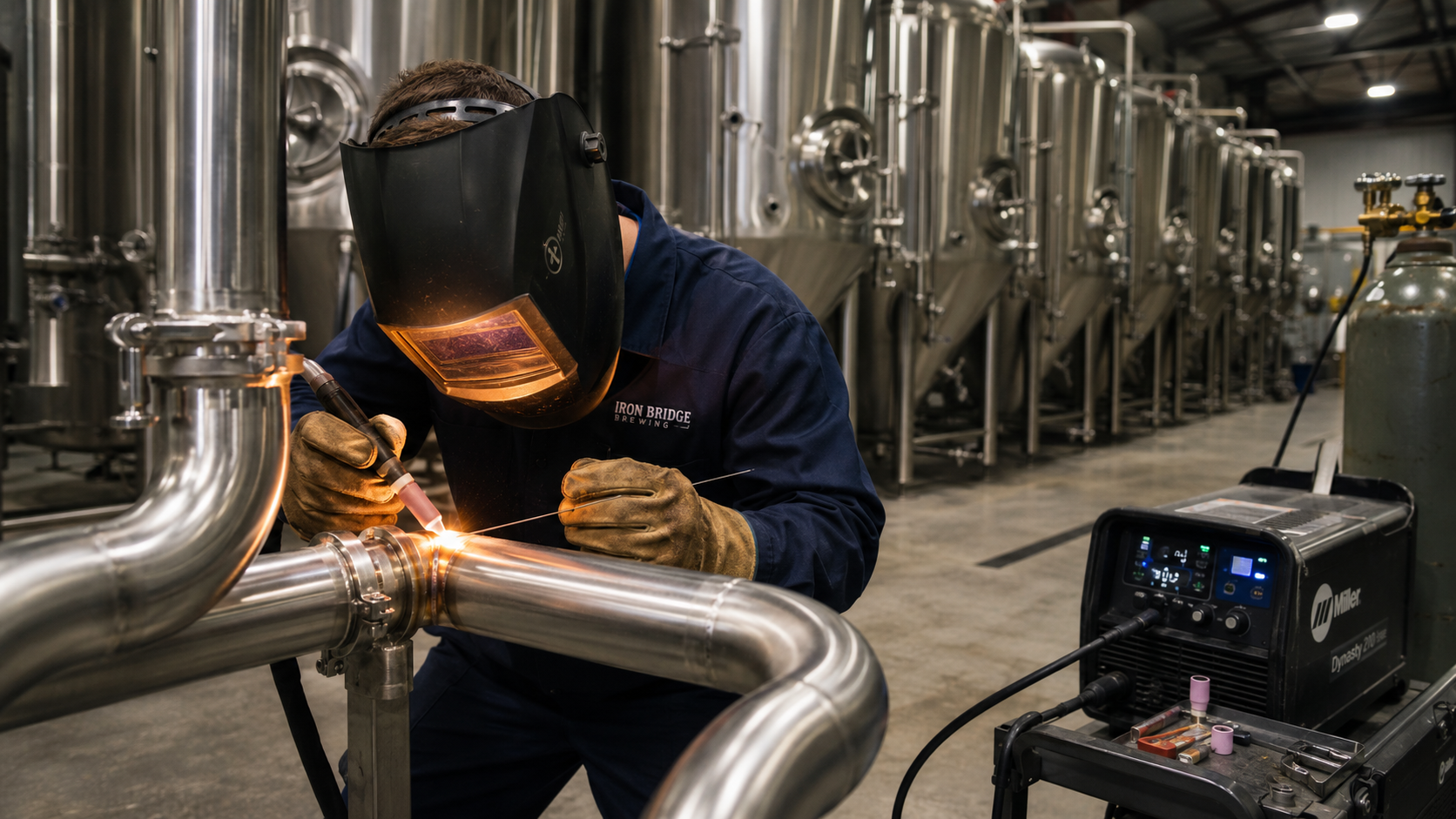

A microbrewery's mechanical systems aren't built for general contractors. Fermentation room chillers, process piping, glycol loops, draft beer lines, and three-phase power for grain mills — each requires someone who has worked inside that kind of facility before.


Using the wrong contractor doesn't just delay a project. It can create food-safety violations, contaminate a production batch, or void equipment warranties.


Virginia's craft beverage and agricultural sectors have grown substantially. The state hosts more than 300 licensed wineries and over 100 craft breweries, plus a dense concentration of poultry plants, dairies, and cold storage operations in the Shenandoah Valley.


These facilities share a common challenge: most regional mechanical contractors aren't equipped for this work. A restaurant walk-in cooler and a glycol-jacketed fermentation tank are not the same service call.


This guide covers the best specialty and industrial contractors serving Virginia's microbreweries, vineyards, and agricultural facilities. Each was evaluated on niche credentials, verified project experience, trade scope, and geographic coverage.


Virginia's Top Specialty Contractors for Breweries, Wineries & Agriculture


VA Commercial Repair Solutions covers the Shenandoah Valley and central Virginia. They are the only contractor in this guide holding active draft beer system certifications alongside in-house stainless steel fabrication for brewery and winery equipment. Southern Air has Virginia's most verifiable food-and-beverage construction record, including a documented brewery installation at Devils Backbone.


Waco, Inc. brings industrial process piping depth to food-and-beverage manufacturing. Their confirmed project work for Virginia Distillery included sanitary stainless steel piping and heat exchanger installation.


PHCVA covers Hampton Roads with industrial refrigeration and foodservice maintenance expertise built across nearly five decades. Shenandoah Refrigeration fills northern Shenandoah Valley commercial refrigeration needs in the Winchester corridor.


Company Service Area Best For Key Differentiator Emergency Service
VA Commercial Repair Solutions Shenandoah Valley & Central VA Brewery/vineyard repair + draft lines Draft-certified, stainless steel fabrication Yes, 24/7
Southern Air Statewide VA Large-scale food & bev MEP Orbital-welded piping, 80-year track record Yes
Waco, Inc. Richmond & statewide Industrial process piping Sanitary SS systems, food & bev clients Confirm directly
PHCVA Hampton Roads & SE Virginia Industrial refrigeration + foodservice 45+ years, custom refrigeration systems Yes, 24/7
Shenandoah Refrigeration Northern Shenandoah Valley Commercial refrigeration 30+ years, walk-in specialist Yes, 24/7


1. VA Commercial Repair Solutions: The Shenandoah Valley's Brewery & Vineyard Specialist

Full disclosure: VA Commercial Repair Solutions is our company. We believe it belongs on this list — but you should know whose list this is.

Most mechanical contractors say they serve breweries and wineries. VA Commercial Repair Solutions holds the certifications to back that claim.


Their draft beer credentials include:


  • Certified Draft Beer Equipment Service Technician
  • InBev Equipment Certification
  • Micromatic Certified
  • Perlick Certified


That combination puts them among a small group of formally credentialed draft system contractors in Virginia.


Based in Fishersville in Augusta County, they cover Charlottesville, Harrisonburg, Staunton, Waynesboro, Lexington, and the Shenandoah Valley. They work exclusively with commercial and industrial clients. A live manager or owner answers every call, 24/7/365 — no voicemail, no automated system.


Niche expertise and credentials


VA Commercial Repair Solutions' microbrewery and vineyard service line goes well beyond generic HVAC. Their brewing equipment scope covers beer fermenters, brite tanks, carbonation systems, heat exchangers, chillers, micro-fermenters, circulation tanks, mixing tanks, stainless steel gauges, valves, yeast propagation tanks, and brewhouse controls. On the winery side: wine bottling and filtering equipment, vineyard equipment, winterized chilling tanks, and transport containers.


In-house TIG and MIG welding means stainless steel brewery tank repair and fabrication doesn't require a subcontractor. That matters for food-grade leak repair and custom fermentation vessel work that needs precision stainless done on-site.


Line cleaning follows a documented cadence: initial deep clean, quarterly acid renewal, and faucet disassembly at every visit. Pour-temperature is monitored throughout.

They also buy and sell used brewing and winemaking equipment — practical for operators managing startup capital. Agricultural operations are within scope too.


Poultry processing, dairy, and cold storage facilities in the Shenandoah Valley often have electrical and refrigeration systems that intertwine. A contractor licensed across both trades removes the coordination gap between two separate vendors.


What they can handle


VA Commercial Repair Solutions holds Virginia Class A mechanical and electrical licenses (VA #2705180394) — the state's highest contractor tier, with no project size cap. On the mechanical side: chillers, Weil-McLain and Lochinvar boilers (preferred-service relationships confirmed), compressed air systems via RapidAir, glycol cooling, and the full range of commercial HVAC equipment types.


On the electrical side: 3-phase power installation, panel upgrades, agricultural refrigeration electrical interlocks, and NEC-compliant commercial wiring. Mobile refrigerator and freezer rentals are available for businesses needing temporary cold storage during equipment repair or seasonal production peaks. S.W.A.M. and eVA certifications make them eligible for Virginia government and institutional contracts.


Getting a quote or service call


Installation quotes are always free. The service call fee is waived when repairs are performed.

New installations carry one year of free labor and free scheduled preventive maintenance — with the company registering all equipment warranties on the client's behalf. Their written guarantee: if they can't fix the equipment, $50 cash and a $500 credit toward replacement.


Ideal clients


Virginia microbreweries and craft vineyards needing ongoing repair, maintenance, and emergency response on brewing and winemaking equipment. Poultry processing plants, dairies, and cold storage operators in the Shenandoah Valley.


Multi-trade facilities where HVAC, refrigeration, and electrical systems connect and where a single licensed contractor is operationally essential. Contact VA Commercial Repair Solutions for a free quote or immediate service.


2. Southern Air: Virginia's Large-Scale Food & Beverage MEP Contractor


Southern Air has operated as a full-spectrum mechanical, electrical, and plumbing contractor since 1946. The company is 100% employee-owned and covers 10 locations across Virginia, West Virginia, and North Carolina. Their track record in food-and-beverage industrial construction is specific and verifiable.


Their most documented brewery project is the Devils Backbone Brewery installation: nearly 1,000 feet of stainless orbital-welded piping. The piping connects the brewhouse to the packaging facility and handles beer transport at 38°F and cleaning solutions reaching 180°F.


Designed expansion offsets absorb 15 inches of thermal growth under temperature cycling. The same project included a 150 HP steam boiler, a 100 HP air compressor, and a custom chilling system that tripled production capacity.


Niche expertise and credentials


Southern Air's 180+ technicians hold Virginia BEST Level 3 certification — a state construction quality and safety credential. Design-build MEP capability means they engineer, permit, and build new mechanical systems in-house rather than simply servicing existing equipment.


That distinction matters for breweries and wineries in expansion phases. A single contractor owning the full mechanical scope from design through startup is an operational advantage most smaller contractors can't provide.


Their portfolio spans university campuses, hotel properties, and healthcare facilities. Southern Air regularly manages complex multi-trade coordination and phased construction timelines. That depth matters when a Virginia winery's expansion involves steam, refrigeration, compressed air, and electrical work running simultaneously.


What they can handle


Southern Air's full MEP scope covers commercial and industrial HVAC installation, maintenance, and emergency repair alongside plumbing, electrical, building automation, and process mechanical systems. Active maintenance contracts cover 3,590 commercial buildings across their network. Design-build project experience ranges from $500,000 single-trade contracts through multi-year large-scale institutional engagements.


Emergency dispatch is available 24/7 for clients on active maintenance agreements. Background checks and drug testing apply to all technicians, and 850+ employees are available across their 10-location network.


Getting a quote or service call


All pricing is project and contract based. Southern Air structures large-scale work around commercial maintenance agreements and design-build engagements.


Reach them through southern-air.com. Smaller repair-and-maintenance-focused operators needing faster turnaround on day-to-day service calls may find better operational fit with a repair-specialist contractor.


Ideal clients


Virginia craft breweries, wineries, and distilleries undertaking new facility construction, production expansion, or capital mechanical installations. Clients where project scale, design-build documentation, and multi-trade coordination drive the contractor selection — rather than speed of response on routine maintenance.


3. Waco, Inc.: Industrial Process Piping for Food & Beverage Manufacturers


Waco, Inc. has provided specialty mechanical contracting across Virginia since 1963. Headquartered in Sandston, VA, they operate project offices and fabrication facilities in Richmond, Charlottesville, Covington, Roanoke, Northern Virginia, and Newport News. Their focus is industrial and process mechanical work — not residential or light commercial HVAC.


Their food-and-beverage track record is confirmed. Virginia Distillery contracted Waco for a steam and condensate system as part of a long-term expansion.


That success led to a second engagement: sanitary stainless steel process piping, copper piping, and heat exchanger installation. That two-phase relationship reflects the trusted-contractor dynamic production facilities need for multi-year mechanical projects.


Niche expertise and credentials


Waco is a certified Swagelok tubing and fittings contractor — a recognized quality standard in precision fluid system components used in food-grade and pharmaceutical piping. Their sanitary systems division handles design and installation of stainless steel piping built to food-safety and process purity standards, including orbital welding where food-grade joint quality is required.


Process piping services cover air and gas systems, glycol distribution, utility piping, ASME R-stamp pressure vessel work, and steam systems. In-house fabrication shops build custom assemblies before delivery to site, reducing field time and quality variance. Building automation and SCADA controls are within scope — relevant for breweries managing precision temperature and pressure across multiple tank systems.


What they can handle


Beyond process piping, Waco covers HVAC installation and maintenance, refrigeration, ductwork fabrication, boilers, mechanical insulation, and industrial cleaning. Their environmental division handles asbestos, lead, and mold remediation — relevant for agricultural facilities in older structures. Multi-office Virginia coverage means central, southwestern, and coastal projects can be staffed without extended mobilization delays.


Getting a quote or service call


Contact Waco through wacoinc.net or their Virginia project offices. Pricing is project-scoped, consistent with industrial mechanical contracting norms.


They primarily serve industrial, institutional, and food-and-beverage manufacturing clients — not routine commercial HVAC service. Emergency response and preventive maintenance availability should be confirmed for the specific project type.


Ideal clients


Virginia food-and-beverage manufacturers — breweries, distilleries, wineries, dairies, food processors — requiring sanitary process piping, steam systems, or multi-trade industrial mechanical work. Particularly strong for new facility build-outs and production expansion where design-build involvement is needed.


4. Professional Heating & Cooling of VA: Hampton Roads' Industrial Refrigeration Specialist


PHCVA (Professional Heating & Cooling of VA) has served the Hampton Roads commercial and industrial market since 1977. Their practice spans commercial HVAC, design-build, industrial refrigeration, and foodservice equipment repair. For Virginia coastal operators — seafood processors, food distributors, and agricultural storage operations — PHCVA brings nearly five decades of regional experience.


Their controls division is a genuine differentiator. Factory-certified technicians handle direct digital controls, computer-based specialty refrigeration controls, PLC systems, and pneumatic system conversions to DDC.


That level of process control depth is what industrial refrigeration in agricultural and food-processing facilities requires. Standard commercial HVAC contractors typically don't maintain this capability.


Niche expertise and credentials


PHCVA's industrial refrigeration practice is built around custom-designed systems for specific process requirements — not catalog equipment. That matters for food storage where temperature uniformity, humidity control, and refrigeration capacity are engineered to the facility's load, not selected from a parts distributor's catalog.


Their HVAC and foodservice preventative maintenance contracts provide 24/7/365 coverage with dedicated account management. Each account gets an assigned lead technician and backup — so the technician who arrives already knows the facility's equipment. That's meaningfully different from a contractor who dispatches whoever is available.


What they can handle


PHCVA's scope covers commercial HVAC design-build, mechanical installation and repair, custom industrial refrigeration, foodservice equipment maintenance, and building automation systems. Preventive maintenance contracts span all three trade categories. Coverage includes Virginia Beach, Norfolk, Chesapeake, Portsmouth, Suffolk, Hampton, Newport News, Williamsburg, and northeastern North Carolina.


24/7/365 emergency service applies across their service territory.


Getting a quote or service call


Contact PHCVA directly at (757) 855-7410 or through phcva.com. All commercial and industrial pricing is project and contract based. Preventive maintenance program terms are developed during an initial consultation.


Ideal clients


Hampton Roads food-service operators, seafood processors, food distribution facilities, institutional foodservice directors, and agricultural cold storage operators in southeastern Virginia and northeastern North Carolina. Particularly relevant for operations that require industrial refrigeration design alongside commercial HVAC and foodservice maintenance under a single vendor contract.


5. Shenandoah Refrigeration, Inc.: Winchester's Commercial Refrigeration Specialist


Shenandoah Refrigeration, Inc. has provided commercial refrigeration services in Winchester, VA and the surrounding Shenandoah Valley for over 30 years. Licensed in Virginia and West Virginia (VA #2705 029521), their practice is focused: commercial refrigeration is their primary trade, not a secondary offering alongside HVAC.


For food-service operators and agricultural storage facilities in the northern Shenandoah Valley, local presence matters. Shenandoah Refrigeration has 30-plus years in that specific market — history that statewide contractors can't replicate locally.


Niche expertise and credentials


Walk-in coolers and freezers are a documented specialization — not an occasional add-on. Shenandoah Refrigeration handles custom ordering, delivery, and installation of walk-in units, not just repair calls on existing equipment. If an aging walk-in cooling system is no longer efficient, they replace the refrigeration system rather than continuing to patch declining performance.


Their ice machine service covers installation, maintenance, and repair — including the high-maintenance flaker and chiplet machines that foodservice increasingly uses. The Winchester area has notably hard water, which accelerates scale buildup. That regional condition shapes their maintenance cadence in ways an outside contractor wouldn't naturally account for.


What they can handle


Shenandoah Refrigeration covers walk-in cooler and freezer installation, system changeouts, maintenance, and repair. Reach-in refrigeration and ice machine service — installation, maintenance, and repair — are also core offerings. Commercial HVAC service is available.


Licensed in Virginia and West Virginia, they serve Winchester and the surrounding Valley communities. 24-hour emergency service applies to commercial refrigeration calls.


Getting a quote or service call


Contact Shenandoah Refrigeration at (540) 678-4933 or through shenref.com. Business hours are Monday through Friday, 8am to 4pm. Emergency service is available outside those hours for commercial refrigeration calls.


Ideal clients


Restaurants, grocery stores, convenience stores, food-service operations, and agricultural cold storage facilities in Winchester, VA and the northern Shenandoah Valley. The narrowly focused refrigeration practice is most appropriate for operators who need a local specialist — not a multi-trade general contractor handling refrigeration as one of several services.


Common Questions About Specialty Contractors for Breweries, Wineries & Agriculture


What equipment in a Virginia microbrewery requires a licensed mechanical contractor?

Several systems require licensed contractor work under Virginia regulations. Chillers and glycol cooling loops are mechanical systems under contractor licensing rules. Boilers require ASME-qualified or licensed boiler contractor work.


Food-grade process piping in pressurized systems often involves pressure vessel standards. For electrical systems — 3-phase power installation, panel upgrades, refrigeration interlocks — a licensed Class A electrician is required.


Draft beer system installation (gas, line, and tap hardware) benefits from formal brand certification even where not legally mandated. Each of these systems is a failure point if the contractor lacks specific experience.


How is refrigeration for fermentation different from standard commercial refrigeration?

Fermentation room cooling requires precision temperature control across a narrow range that a standard walk-in cooler system isn't engineered to provide. Glycol-jacketed fermentation tanks circulate a glycol-water mixture at controlled temperatures to manage fermentation speed and flavor development. That's a closed-loop process cooling system — not a commercial refrigeration circuit.


The contractor must understand both the mechanical side (chiller, pump, glycol system) and the specific temperature tolerances a fermentation schedule requires. Most commercial refrigeration contractors lack this combination.


What does food-grade stainless steel work require from a contractor?

Food-grade stainless steel piping must meet material, surface finish, and joint standards that prevent contamination during cleaning and sanitation cycles. Orbital welding produces the consistent, smooth interior welds that food-grade process piping requires — a capability distinct from standard TIG welding. A contractor without orbital welding capability or food-grade piping experience cannot reliably meet these standards.


Recognized third-party quality benchmarks like Swagelok certification provide a verifiable indicator of precision fluid system competence. Ask any contractor for documentation of their food-grade piping experience before committing.


What electrical challenges are specific to poultry processing or dairy facilities?

Poultry and dairy processing plants require 3-phase power for high-load motors driving conveyors, centrifuges, and compressors. Refrigeration interlocks must coordinate precisely with electrical timing — a conveyor stopping at the wrong moment creates simultaneous food-safety and equipment damage risks.


OSHA food-processing standards require specific safety configurations in wet environments. Equipment in those areas requires appropriate ingress protection ratings. A contractor without food-processing electrical experience routinely misses these requirements.


Can one contractor handle both HVAC and draft beer line service for a brewery?

Few contractors hold both commercial HVAC licenses and formal draft beer system credentials. VA Commercial Repair Solutions is a verified exception: Virginia Class A mechanical and electrical licenses alongside InBev Equipment Certification, Micromatic Certified, and Perlick Certified status. The operational value is significant.


An HVAC failure affecting fermentation room temperature is directly connected to draft system performance downstream. A single contractor managing both removes the coordination problem between two separate vendors diagnosing the same facility's interrelated systems.


How often should fermentation room chillers be serviced?

At minimum twice annually — before the primary fermentation season and before peak summer ambient temperatures. High-production breweries benefit from quarterly preventive maintenance, given the continuous loads fermentation cooling places on chiller systems. Condenser coils in brewery environments accumulate yeast and grain dust faster than typical commercial HVAC applications, compressing maintenance intervals.


A preventive maintenance contract built around a brewery's production calendar is the most cost-effective approach. It avoids the much higher cost of emergency chiller repair during active fermentation.


Conclusion: Match the Contractor to the Facility Type


Virginia breweries, wineries, and agricultural facilities need contractors who understand their specific equipment — not contractors learning it on the job. The right match depends on facility type, geography, and whether the priority is new construction, ongoing maintenance, or emergency response.


In the Shenandoah Valley and central Virginia, VA Commercial Repair Solutions is the purpose-built choice for brewery and vineyard repair, maintenance, and emergency response. They are draft-system certified, Class A licensed, and carry a live 24/7 phone line. For large-scale new construction requiring full MEP design-build, Southern Air has Virginia's most verifiable food-and-beverage industrial track record.


For industrial process piping — sanitary stainless, steam, compressed air — Waco brings 60-plus years of food-and-beverage manufacturing project experience across central and statewide Virginia. In Hampton Roads, PHCVA covers industrial refrigeration, commercial HVAC, and foodservice maintenance with nearly five decades of regional presence. In Winchester and the northern Shenandoah Valley, Shenandoah Refrigeration is the local specialist for commercial refrigeration across food-service and agricultural operations.


Brewery, winery, or agricultural facility in central Virginia? Contact VA Commercial Repair Solutions — live phone 24/7, Class A licensed across mechanical and electrical, and draft-system certified.
September 23, 2026
 A commercial building is a network of mechanical, electrical and refrigeration systems that all have to work together. When one part fails, the symptoms are not always obvious. A walk-in cooler that will not hold temperature might have a refrigerant leak, a failing compressor, a bad controller or an electrical issue feeding the unit. A restaurant exhaust fan that stops pulling air might be a motor problem, a belt issue, a make-up air imbalance or a wiring fault. That is why many businesses search for commercial mechanical contractors near me when they need more than a basic service call. A true commercial mechanical contractor can look across connected systems, diagnose the cause and coordinate the repair without forcing the owner or facility manager to call three separate vendors. For restaurants, breweries, food processing plants, schools, retail buildings and industrial facilities, that multi-trade capability can protect inventory, reduce downtime and help keep operations compliant. What is a commercial mechanical contractor? A commercial mechanical contractor installs, repairs and maintains the mechanical systems that keep a commercial facility operating. In practice, that often includes HVAC, refrigeration, boilers, chillers, ventilation, kitchen exhaust, gas piping, compressed air, equipment controls and related electrical work. The exact scope depends on licensing, training and the contractor’s business model. Some companies focus mainly on HVAC. Others, like VA Commercial Repair Solutions, work across commercial HVAC, restaurant refrigeration, electrical, boilers, chillers, range hoods, fans, ice makers and related facility systems. The difference matters because commercial buildings rarely fail in neat categories. If a rooftop unit trips a breaker, the problem may not be only electrical. If a kitchen line feels hot and smoky, the issue may involve the hood, exhaust fan, make-up air and fire suppression layout. A mechanical contractor with broader commercial experience can trace those overlaps faster. Commercial HVAC systems Commercial HVAC is one of the core areas mechanical contractors handle. This can include heating, air conditioning, ventilation, ductwork, controls and rooftop equipment. Common commercial HVAC work includes: Rooftop unit repair and replacement Split system and packaged unit service Heat pump and furnace repair PTAC and mini-split service for hotels, offices or specialty spaces Ductwork installation, balancing and repair Thermostat and control troubleshooting Preventive maintenance programs Refrigerant leak diagnosis and conversion support For a business, HVAC work is not just about comfort. Poor cooling can drive customers away, affect employee productivity and create unsafe indoor conditions for kitchens or production spaces. Poor ventilation can create odors, humidity issues and code concerns. If your current concern is air conditioning performance, this guide to commercial HVAC repair explains what businesses should look for in a qualified repair provider. Commercial refrigeration and cold storage Commercial refrigeration is a separate skill set from standard comfort cooling. It involves tighter temperature requirements, food safety risk and equipment that often runs around the clock. Mechanical contractors with refrigeration capability can handle walk-in coolers, walk-in freezers, reach-in coolers, prep tables, ice machines, chillers and specialty cold storage. In restaurants and food facilities, even a small temperature drift can become expensive if inventory is lost or health-code compliance is affected. A refrigeration service call may involve checking evaporator coils, condenser airflow, refrigerant charge, door gaskets, defrost timers, drain lines, fan motors, compressor operation and electrical controls. For cold storage and food processing facilities, refrigeration may also be tied to 3-phase power, alarms, backup systems and production schedules. This is one reason a commercial mechanical contractor is often a better fit than a residential HVAC provider. The stakes, equipment types and diagnostic process are different. Restaurant equipment, hoods and exhaust systems Restaurants, institutional kitchens and food-service operations need specialized mechanical support. A contractor working in these environments may handle cooking equipment, exhaust hoods, exhaust fans, make-up air, stainless fabrication, fire suppression coordination and refrigeration. Kitchen exhaust systems deserve special attention. Type 1 hoods are used over grease-producing equipment, while Type 2 hoods handle heat or steam. These systems need proper airflow, fire-safety design and ongoing maintenance. The NFPA 96 standard is one of the major references for ventilation control and fire protection in commercial cooking operations. A hood or exhaust problem can quickly affect an entire kitchen. Smoke, heat, grease vapor and negative air pressure make it hard to operate safely. Sometimes the issue is not the hood itself, but the fan, belts, bearings, make-up air fan, electrical feed or rooftop access. A mechanical contractor can inspect the complete system instead of treating each component in isolation. Boilers, chillers and hydronic systems Many commercial buildings use boilers, chillers or hydronic systems for heating, cooling or process loads. These systems are common in schools, industrial plants, larger commercial buildings, breweries and facilities with high heating or cooling demand. Commercial mechanical contractors may handle: Steam boiler and hot water boiler service Boiler pump and control troubleshooting Chiller repair and replacement Hydronic piping repairs Heat exchanger inspection Combustion and safety checks Preventive maintenance before peak heating or cooling season Boilers and chillers require disciplined diagnostics. A short cycling boiler, unstable chiller pressure or repeated lockout can point to controls, water flow, combustion, heat transfer or electrical issues. Guesswork is expensive, especially when the system supports production or a large occupied building. Commercial electrical work tied to mechanical systems Mechanical equipment depends on safe, reliable electrical infrastructure. Motors, compressors, controls, contactors, transformers, panels and disconnects all affect whether a system runs correctly. This is where the line between mechanical and electrical work becomes practical rather than theoretical. A walk-in freezer compressor may look like a refrigeration problem, but the root cause could be voltage imbalance. An exhaust fan may fail because of a worn motor, but also because of a starter, overload or wiring issue. A processing line may shut down because a breaker trips under load. A contractor licensed for both mechanical and electrical work can reduce the handoff problem. Instead of having one company say “call an electrician” and the electrician say “call the HVAC company,” the same team can evaluate the complete equipment circuit. For businesses comparing electrical support options, this overview of commercial electric repair service covers preventive maintenance, troubleshooting and licensing considerations.
September 23, 2026
 Commercial AC problems are not all equal. A slightly warm conference room is annoying; a failed rooftop unit over a dining room on a 92°F afternoon can cut sales, create staff safety concerns and strain refrigeration equipment that is already working hard. If you are searching for same day AC repair, the practical question is simple: will waiting until tomorrow put people, inventory, equipment, revenue or compliance at risk? If the answer is yes, treat it as a same-day service call. If the system is still controlling temperature and the issue is stable, scheduled service may be the smarter choice. This guide is written for business owners, facility managers, restaurant operators and property managers in Virginia who need to decide whether an AC problem can wait. The simple rule: call the same day when waiting changes the outcome Same-day AC repair is not only for a total shutdown. It is for any cooling issue where delay is likely to make the problem more expensive or disruptive. Commercial HVAC systems serve larger spaces, longer operating hours and more demanding loads than residential systems. A problem that looks small at 9 a.m. can turn into a business interruption by the lunch rush or late afternoon. Use this quick triage table before deciding whether to call now or schedule later.
September 17, 2026
 Commercial buildings depend on systems that rarely operate in isolation. A rooftop HVAC unit affects airflow and comfort, but it may also tie into electrical panels, ductwork, controls, gas piping and building ventilation. A walk-in cooler is refrigeration equipment, but a temperature failure can involve compressors, relays, evaporator fans, drain lines, door gaskets or the electrical circuit feeding the unit. That is where a mechanical contractor becomes different from a single-trade repair vendor. For facility managers, restaurant owners, food processing operators and property managers, knowing when to call a mechanical contractor can prevent downtime, protect inventory and reduce the risk of unsafe repairs. If you are searching for a “mechanical contractor near me,” the real question is not only who is closest. It is whether the contractor can diagnose the full building system, not just the first failed part they notice. What a mechanical contractor does for commercial buildings A mechanical contractor works on the systems that move air, water, refrigerant, heat, gas and sometimes compressed air through a commercial facility. In practical terms, that can include commercial HVAC, refrigeration, boilers, chillers, kitchen exhaust, ductwork, gas piping, air compressors and related controls. In a small office, the issue might be a rooftop unit that is short cycling. In a restaurant, it might be a make-up air problem causing the kitchen hood to pull poorly. In a dairy, cold storage facility or brewery, it might be a refrigeration and electrical issue happening at the same time. The value of a mechanical contractor is that they look at the system as a connected whole. That matters because the visible symptom is often not the root cause. A warm dining room may come from a failing compressor, but it may also come from a clogged coil, low airflow, a thermostat issue, undersized ductwork or an exhaust imbalance. A freezer that cannot hold temperature may not need a new box. It may need a defrost repair, door adjustment, refrigerant diagnosis or electrical troubleshooting. For commercial facilities, this broader view is especially important because downtime usually costs more than the service call. Lost product, unhappy tenants, failed inspections, canceled service and emergency replacement decisions can all stem from waiting too long or calling the wrong type of contractor. Call a mechanical contractor immediately for safety-critical symptoms Some building system problems should be treated as urgent, even if the equipment has not fully failed yet. Safety comes first. If there is an active fire, suspected carbon monoxide exposure, a strong gas odor or an immediate electrical hazard, evacuate as appropriate and call emergency services or the utility before calling a repair contractor. Once the immediate life-safety concern is addressed, a qualified mechanical contractor should inspect the affected system before it is returned to service. That is especially true for boilers, gas-fired equipment, commercial kitchens, electrical panels and mechanical rooms. Gas, combustion or boiler warning signs Call right away if you notice unusual burner behavior, rollout, soot, repeated boiler lockouts, pressure problems, banging pipes, water around boiler equipment or a combustion smell. Commercial boilers and gas-fired appliances should not be treated as trial-and-error repairs. A cracked boiler combustion chamber, failed heat exchanger or unsafe combustion condition can put occupants and staff at risk. A contractor should be able to test and show the evidence, not simply say that replacement is needed. For commercial buildings, documentation matters because owners, managers and inspectors may need a clear record of what failed and why. Electrical symptoms tied to mechanical equipment Repeated breaker trips, hot disconnects, burning odors, buzzing panels, motor failures or flickering lights near equipment should not be ignored. Mechanical systems often fail because of electrical conditions, and electrical systems can be damaged by failing motors, compressors or controls. The National Electrical Code , published by NFPA as NFPA 70, is the core safety standard for electrical installation in the United States. In a commercial setting, repair work needs to respect both equipment requirements and code requirements. If a freezer, RTU, exhaust fan or air compressor keeps tripping a breaker, replacing the breaker without diagnosing the load can create a larger hazard. For issues involving panels, circuits, motors or power distribution, a contractor with commercial mechanical and electrical capability can reduce finger-pointing between separate vendors. VA Commercial Repair Solutions covers this kind of overlap through its commercial electric repair service , which is useful when the symptom sits between the equipment and the electrical infrastructure. Refrigeration temperature failures Restaurants, grocery operations, cafeterias, breweries, wineries, dairies and cold storage facilities should call quickly when refrigeration equipment cannot hold temperature. Waiting overnight can turn a repair into a product-loss event. The FDA Food Code uses 41 degrees Fahrenheit or below as the cold-holding standard for many time and temperature control foods. Facility teams should follow their own food safety procedures and local health department requirements, but a walk-in cooler trending upward should be treated as urgent before it becomes a failed inspection or discarded inventory. A mechanical contractor should inspect the entire refrigeration system, including evaporator fans, condenser condition, drain problems, defrost controls, door seals, refrigerant level and electrical components. Refrigerant work should be handled by properly certified technicians. The EPA’s Section 608 technician certification requirements apply to technicians who maintain, service, repair or dispose of equipment that could release refrigerants. Kitchen exhaust and make-up air problems Commercial kitchens rely on balanced ventilation. If the hood is not capturing smoke, grease vapor or heat properly, the issue may involve exhaust fans, make-up air, belts, ductwork, controls or the design of the hood system itself. Warning signs include smoke spilling into the kitchen, doors becoming hard to open, pilot lights being affected by airflow, hot kitchen conditions, grease odors outside the hood area or fan noise that changes suddenly. These are not just comfort problems. They can affect fire safety, employee working conditions and health inspection readiness. A mechanical contractor experienced with commercial kitchens can evaluate the hood, exhaust fan, make-up air and related electrical controls together instead of treating each component separately. Call before performance problems become shutdowns Not every mechanical issue looks like an emergency at first. Many failures begin as small changes in performance. The system still runs, but it takes longer to recover, makes more noise, uses more energy or needs frequent resets. For commercial HVAC systems, early signs include hot and cold zones, weak airflow, short cycling, recurring thermostat complaints, unusual odors, rising utility use or water around equipment. If the issue is specifically with air conditioning, this guide to commercial HVAC repair covers how maintenance and timely diagnosis can prevent larger failures. For refrigeration, pay attention to frost buildup, longer compressor run times, water on the floor, fluctuating case temperatures, noisy fan motors and repeated ice maker faults. For boilers and chillers, warning signs include slow recovery, alarms, leaks, pump noise, water treatment concerns or pressure changes. The best time to call is often when the pattern changes, not when the unit stops. Facility staff usually know what normal looks and sounds like. If something feels different for two or three shifts in a row, document it and have it checked.
September 17, 2026
If you are trying to budget for a commercial HVAC visit in Virginia, the simplest answer is this: a standard business-hours diagnostic service call commonly falls somewhere around $150 to $350 before repair work, parts, refrigerant or specialty equipment . Emergency, weekend or after-hours calls can cost more, especially when the technician is responding to a no-cooling, no-heat or food-safety emergency. That number is only the starting point. A commercial HVAC service call cost can change quickly based on the type of equipment, rooftop access, the amount of troubleshooting required, travel time, electrical complexity and whether the repair can be completed on the first visit. VA Commercial Repair Solutions does not publish a flat online service-call menu, because commercial systems vary widely. The company does, however, offer no service call fee when repair work is performed and free installation quotes.  For business owners and facility managers, that distinction matters: the lowest diagnostic fee is not always the lowest total cost if the contractor cannot diagnose the system correctly or has to come back with parts that should have been stocked. Typical commercial HVAC service call cost in Virginia Use the ranges below as planning estimates, not a guaranteed quote. A small office heat pump in Waynesboro, a rooftop unit serving a restaurant in Charlottesville and a larger packaged unit on a school or production facility in Harrisonburg can all require different time, access and parts.
September 11, 2026
 A tripped breaker at 6 p.m. on a Friday doesn't wait for Monday. Neither does a burning smell from a panel, or a kitchen circuit that goes dark mid-shift. Electrical failures don't check your business hours first. Electrical malfunction is a real cause of building fires, not just an inconvenience. It accounts for 7.2% of nonresidential building fires nationally, per the U.S. Fire Administration . Not every electrician who advertises "24/7 service" staffs it the same way. Some route after-hours calls to an answering service. Others keep a live dispatcher and a truck ready to move. That gap matters more than it looks. A message left with an answering service might not reach a technician until morning. For a walk-in freezer losing power, that delay can cost far more than the repair itself. Coverage area matters just as much. A contractor with a fast response time three counties away is still a slow response time for you. This guide covers five Virginia companies built around commercial and industrial emergency electrical repair. Each was evaluated on response model, service area, and the kind of facility their work actually fits. None of them serve every corner of the state. Matching location to need matters just as much as picking a familiar name. This list is narrower than general electrical contracting, too. For panel-upgrade costs, breaker troubleshooting, and 3-phase power basics, our commercial electrical guide and cost estimates covers that broader ground. Which Virginia Companies Handle Emergency Electrical Repair? VA Commercial Repair Solutions answers every call with a live manager, 24/7, across the Shenandoah Valley. NIMPRO Electrical brings ISNetworld-certified commercial and industrial service to the Richmond area. Chewning + Wilmer has served Central Virginia's industrial base since 1924. White Electric Company covers Hampton Roads from Virginia Beach, and CMI Companies rounds out the list from Northern Virginia.
September 11, 2026
For a restaurant, food loss rarely starts with a cooler that is completely dead. It often starts with a few degrees of drift, a door gasket that no longer seals, a fan motor that slows down during dinner rush or a walk-in freezer that takes too long to recover after deliveries. That is why restaurant refrigeration repair is not just an equipment expense. It is inventory protection, food safety support and revenue protection for the kitchen. When a reach-in, walk-in cooler, prep table, freezer or ice machine fails, the cost is rarely limited to parts and labor. The bigger loss may be the product you have to throw away, the menu items you cannot sell and the staff time spent scrambling to move food. Why refrigeration problems create food loss so quickly Restaurants hold high-value ingredients in equipment that runs all day, every day. Meat, seafood, dairy, sauces, produce, dough, desserts and prepared foods depend on consistent temperature control. If one box warms up during a busy shift, a kitchen can lose hundreds or thousands of dollars in product before anyone sees a puddle on the floor or hears an alarm. The FDA Food Code uses 41°F or below as the cold-holding standard for time and temperature control for safety foods. The USDA Food Safety and Inspection Service also advises that perishable foods held above 40°F for more than 2 hours may need to be discarded in emergency situations.  Restaurants should follow their food safety plan, local health department guidance and internal temperature logs, but the practical lesson is simple: time and temperature determine whether product can be saved. Food loss usually comes from four connected problems: Inventory spoilage from unsafe product temperatures Service disruption when menu items cannot be prepared or sold Labor waste from moving, checking, labeling and discarding food Reputation risk if quality drops or a food safety issue occurs A cooler that is “almost holding” can still create a loss. If the air temperature reads 39°F near the thermostat but pans of chicken, cream sauce or sliced tomatoes are sitting at 45°F after a rush, the equipment is no longer doing its job for the kitchen. What restaurant refrigeration repair actually protects Good repair work does more than restart a unit. A restaurant refrigeration technician looks for the reason the equipment lost control in the first place, then restores the system’s ability to hold temperature under real operating conditions. That may mean cleaning a blocked condenser, replacing a failing evaporator fan motor, correcting a defrost issue, repairing a refrigerant leak, replacing a control sensor or fixing an electrical fault. In some cases, the repair is not inside the refrigeration circuit at all. A loose connection, bad contactor, tripped breaker or overloaded circuit can shut down a system that looks like a refrigeration failure to the kitchen team. This matters because quick fixes can hide the real threat. Adding refrigerant without finding a leak, resetting a breaker without identifying the cause or chipping ice off an evaporator coil without solving the airflow problem may get the box cold for a few hours. It may also lead to the same failure during the next service period, when the walk-in is full and the kitchen has no time to react. If your team is trying to reduce recurring losses, it helps to pair timely repairs with documented maintenance. VA Commercial Repair Solutions covers practical steps in its guide to maintaining commercial refrigeration equipment , including coil care, gasket checks, leak detection and temperature monitoring. Common refrigeration failures that put inventory at risk Not every failure looks urgent at first. Some of the most expensive food loss events begin with small symptoms that were easy to overlook.
September 11, 2026
 A cracked glycol line at 2 a.m. doesn't wait for business hours. Neither does a stuck bottling line the morning before a release. Microbreweries and vineyards run equipment most general repair shops have never opened up. Calling the wrong contractor costs more than a delayed service call. A tech who doesn't understand food-grade sanitation can contaminate a batch. One who doesn't understand glycol cooling can leave a fermentation room warm for days. Virginia's craft beverage sector has grown into one worth protecting. The state counts 344 craft breweries, good for 11th nationally, per the Brewers Association . Virginia Wine tracks more than 300 wineries on top of that. That's a lot of fermentation tanks, draft lines, and vineyard tractors. Each one eventually needs a technician who has actually worked on it before. None of these are one-trade problems, either. A brewery's chiller failure could be electrical, mechanical, or purely refrigeration. Figuring out which one it is first often wastes the hours that matter most. A vineyard's tractor breakdown is a completely different discipline from a bottling line jam. Both show up under the same "equipment repair" search, but almost nobody fixes both well. This guide covers five Virginia companies that repair microbrewery and vineyard equipment. Each was evaluated on trade scope, certifications, and service area. We also weighed how directly their daily work touches this niche, not just how they market themselves. Who Repairs Brewery and Vineyard Equipment in Virginia? VA Commercial Repair Solutions covers the Shenandoah Valley with certified draft technicians and in-house steel fabrication. Valley Restaurant Repair works the same corridor as a broader multi-trade shop. Welding Processes & Mechanical brings statewide boiler, chiller, and steel fabrication coverage. AC Beverage specializes narrowly in draft beer systems across the DC-Maryland-Virginia region. Amos Equipment Repair keeps Goochland County vineyards' tractors running. Together, the five cover a wider slice of the niche than any single company could alone. Pick based on which piece of equipment is actually down, not which name sounds most familiar.
September 4, 2026
 A power outage does more than turn off the lights for a Virginia business. Production lines stop, refrigerated inventory spoils, and servers can lose data in seconds. Berkeley Lab's interruption-cost research puts the toll on U.S. businesses in the billions every year. Virginia's commercial generator market splits between two kinds of installers. Some are electrical contractors who added generators to a broader service list. Others are dedicated power specialists who sell, size, and service backup systems full time. The average U.S. electricity customer already loses about 341 minutes a year to non-momentary outages, per EIA reliability data . For a commercial kitchen or a cold storage facility, that adds up to real, repeated risk. This guide covers the eight best commercial generator installation companies in Virginia. Each was evaluated on service area, brand relationships, installation depth, and commercial support. Virginia's Top Commercial Generator Installers, At a Glance VA Commercial Repair Solutions engineers and installs standby power for commercial and industrial clients across central Virginia. The Power Connection is a Harrisonburg-based generator specialist serving the Shenandoah Valley and beyond. Carter Power Systems, the Caterpillar dealer's power division, handles industrial-scale generators statewide. Elite Power & Energy Corporation is a veteran-owned, multi-brand dealer serving Northern Virginia, Maryland, and DC. RECORE specializes in Energy-as-a-Service standby power for Hampton Roads businesses. Prestige Electric handles Generac-certified generator installation across the Tidewater region. SS Electrical Solutions installs and maintains Generac systems for Richmond-area homes and businesses. McGrady-Lambert Electric brings generator installation to Roanoke's commercial and industrial facilities.
September 4, 2026
 Choosing between HVAC maintenance companies is not the same as choosing who can replace a belt or change filters. For a commercial facility, the right partner affects operating costs, comfort complaints, food safety, production uptime and how quickly your team gets help when a rooftop unit quits during peak hours. The best comparison starts before you ask for a quote. You need a clear view of your equipment, your risk level and the response you expect when something breaks. A small office, a restaurant with walk-in coolers and a poultry processing facility do not need the same maintenance scope, even if all three have packaged HVAC equipment on the roof. Use the following framework to compare vendors with less guesswork and fewer surprises after the contract is signed. Start with your facility's risk profile A maintenance company can only price and plan accurately if it understands what failure means for your operation. In a retail office, a comfort cooling issue may trigger tenant complaints. In a restaurant, the same cooling problem can overload kitchen ventilation and refrigeration systems. In a cold storage facility, a mechanical or electrical failure can threaten inventory within hours. Before comparing proposals, build a simple equipment and risk profile. Include the age, brand, model and location of major equipment, along with any recurring issues. Rooftop units, split systems, make-up air units, exhaust fans, boilers, chillers, walk-in coolers, ice machines and control systems should all be documented if they are part of the contractor's scope. If you are not sure where your current system stands, a structured review like this guide to evaluating a commercial HVAC system can help you separate normal wear from signs that your maintenance program is falling behind. Compare scope, not just visit frequency Many proposals look similar at first glance: two visits per year, quarterly inspections or seasonal tune-ups. The real difference is what happens during those visits. One company may perform a quick visual inspection and filter change, while another checks electrical connections, drain lines, coils, belts, bearings, controls, economizers and temperature split readings. ASHRAE publishes Standard 180, a recognized maintenance standard for commercial HVAC systems. You do not need to memorize it, but it gives facility managers a useful principle: preventive maintenance should be equipment-specific, documented and tied to actual inspection tasks rather than vague promises. A proposal should make clear which systems are covered, what tasks are included and what is excluded. If it uses broad language like "inspect HVAC equipment" without a checklist, ask for detail before signing.
August 31, 2026
 A leaking walk-in cooler, a tripped panel, and a failed rooftop unit rarely fail in the same week. But when a facility manager needs three vendors for three trades, downtime stacks up fast. Commercial facility maintenance solves that: one licensed contractor across multiple trades who already knows the building. Virginia's commercial market has plenty of single-trade HVAC shops. Some also dabble in refrigeration or electrical work. Far fewer are staffed to run a full facility maintenance program under one contract. That means HVAC, refrigeration, electrical, kitchen equipment, and boilers, all from one vendor. This guide covers the five best commercial facility maintenance companies in Virginia. We evaluated each on trade coverage, contractor licensing, service area, and what happens when equipment fails at 2 a.m. Virginia's Top 5 Facility Maintenance Companies at a Glance VA Commercial Repair Solutions runs a full facility maintenance program for commercial clients across the Shenandoah Valley and central Virginia. That means HVAC, refrigeration, kitchen equipment, electrical, and boilers, backed by 24/7 live-person answering. Southern Air is a 100% employee-owned MEP contractor operating statewide since 1946, with thousands of buildings under active maintenance contracts. James River Air has covered Richmond-area facilities since 1967 across HVAC, plumbing, and electrical. Elite Service & Enterprises handles six trades for Hampton Roads clients under one Class A license. Oasis Heating, A/C & Refrigeration pairs HVAC with commercial refrigeration for Northern Virginia businesses since 1998.