
Harrisonburg VA Commercial AC Installation & Energy Efficiency Tips
Expert HVAC Solutions for JMU Area Businesses, Downtown Historic Districts, and Industrial Facilities - Maximizing Comfort While Reducing Energy Costs in the Shenandoah Valley

Key Takeaways
- Properly sized commercial AC systems in Harrisonburg can reduce energy costs by 20-30% compared to incorrectly sized units, maximizing both comfort and operational efficiency.
- Harrisonburg's mixed-humid climate zone demands specialized commercial cooling solutions that can handle both extreme summer heat and variable shoulder seasons.
- Energy Star certified commercial HVAC systems deliver minimum efficiency ratings of 12.0-12.7 EER, translating to significant savings on Harrisonburg Electric Commission utility bills.
- VA Commercial Repair Solutions brings 17+ years of local expertise to commercial AC installations throughout Rockingham, Albemarle, and Augusta counties.
- Historic downtown Harrisonburg buildings benefit most from specialized VRF systems that accommodate older structures while delivering modern efficiency.
Why Your Harrisonburg Business Needs Professional AC Installation
In Harrisonburg's competitive business landscape, your commercial cooling system does far more than just keep customers comfortable. Professional commercial AC installation delivers the foundation for operational efficiency, employee productivity, and sustainable energy management that directly impacts your bottom line. With Harrisonburg's growing commercial districts facing increasingly demanding climate conditions, proper AC installation has become a critical business investment rather than a simple utility concern.
VA Commercial Repair Solutions brings over 17 years of expertise in commercial AC installation throughout Rockingham, Albemarle, and Augusta counties, understanding the unique challenges that Harrisonburg's dynamic business environment presents. Our team specializes in designing and implementing cooling solutions that address both immediate comfort needs and long-term operational efficiency goals, helping businesses thrive in all seasons. Whether you operate in Harrisonburg's historic downtown, near James Madison University, or in the expanding commercial corridors, professional installation ensures your system meets the specific demands of your space and business model.
"The difference between amateur and professional commercial AC installation in Harrisonburg isn't just about comfort—it's about capturing 20-30% potential energy savings while extending system lifespan by 5-7 years through proper sizing, installation, and commissioning." - VA Commercial Repair Solutions
The Real Cost of Improper Commercial AC Installation
When commercial AC installation cuts corners, Harrisonburg businesses pay the price for years to come. Improper installation leads to immediate issues like uneven cooling, excessive noise, and frequent breakdowns—all of which impact customer experience and employee productivity. The hidden costs compound over time with energy bills running 20-40% higher than necessary due to inefficient operation, while improperly installed systems typically fail 3-5 years earlier than their expected lifespan.
Even more concerning for Harrisonburg business owners are the regulatory and safety implications. Commercial HVAC installations must comply with Virginia's building codes and energy efficiency standards, with non-compliant systems potentially triggering fines, failed inspections, or even business interruption. Professional installation from VA Commercial Repair Solutions ensures all code requirements are met while providing documentation essential for warranty protection, insurance compliance, and future property transactions.
How Harrisonburg's Climate Demands Specialized Commercial Cooling
Harrisonburg's unique position in Virginia's Shenandoah Valley creates distinctive climate challenges that generic AC solutions simply can't address effectively. The city experiences hot, humid summers with temperatures regularly exceeding 90°F, yet also faces significant seasonal transitions that demand system flexibility. This mixed-humid climate zone requires commercial cooling systems capable of managing both temperature and humidity control throughout varying conditions, all while maintaining energy efficiency.
Local weather patterns further complicate commercial cooling needs, with Harrisonburg's elevation and valley position creating microclimates that affect different parts of the city differently. Professional installation accounts for these location-specific factors, with VA Commercial Repair Solutions leveraging detailed climate data to recommend systems that perform optimally in your specific Harrisonburg business location. Our experience with the local climate ensures your commercial AC system delivers consistent performance regardless of seasonal extremes or challenging transition periods.
5 Critical Differences Between Commercial and Residential AC Systems
Understanding why commercial AC installation requires specialized expertise starts with recognizing the fundamental differences between residential and commercial cooling systems. Unlike home AC units designed for relatively simple, consistent operation, commercial systems must adapt to variable occupancy, diverse usage patterns, and complex building layouts. These differences extend beyond mere size, encompassing installation approaches, control capabilities, energy management, and maintenance requirements that directly impact your Harrisonburg business operations.
1. Size and Capacity Requirements
Commercial AC systems in Harrisonburg must handle substantially larger spaces, higher occupancy loads, and more variable heat sources than residential units. While a typical home might require 1-5 tons of cooling capacity, commercial spaces often need 10-50+ tons depending on size and usage. This massive scaling difference means commercial installation requires precise load calculations that account for business-specific factors like equipment heat output, customer traffic patterns, and operational hours.
VA Commercial Repair Solutions employs advanced software modeling specifically calibrated for Harrisonburg's climate to determine exact capacity requirements for your business. This precision prevents both undersizing (which causes inadequate cooling and system strain) and oversizing (which wastes energy through short-cycling and poor humidity control). Our commercial-grade load calculations incorporate building envelope analysis, occupancy patterns, and business-specific requirements to deliver perfectly sized solutions.
2. Installation Complexity
Commercial AC installation in Harrisonburg involves significantly greater complexity than residential projects, requiring specialized equipment, multiple technicians, and often crane operations for rooftop unit placement. While residential installations typically take 1-2 days, commercial projects can extend from several days to weeks depending on system size and building configuration. This complexity demands meticulous project management to minimize business disruption while ensuring all components integrate properly.
The mechanical room requirements, ductwork design, and electrical systems for commercial installations also present unique challenges. VA Commercial Repair Solutions handles these complexities by employing dedicated commercial installation teams with specific expertise in Harrisonburg's commercial building stock, including the historic downtown structures and modern retail developments. Our comprehensive planning process addresses access limitations, structural considerations, and operational continuity to deliver smooth installations even in occupied buildings.
3. Zoning and Control Systems
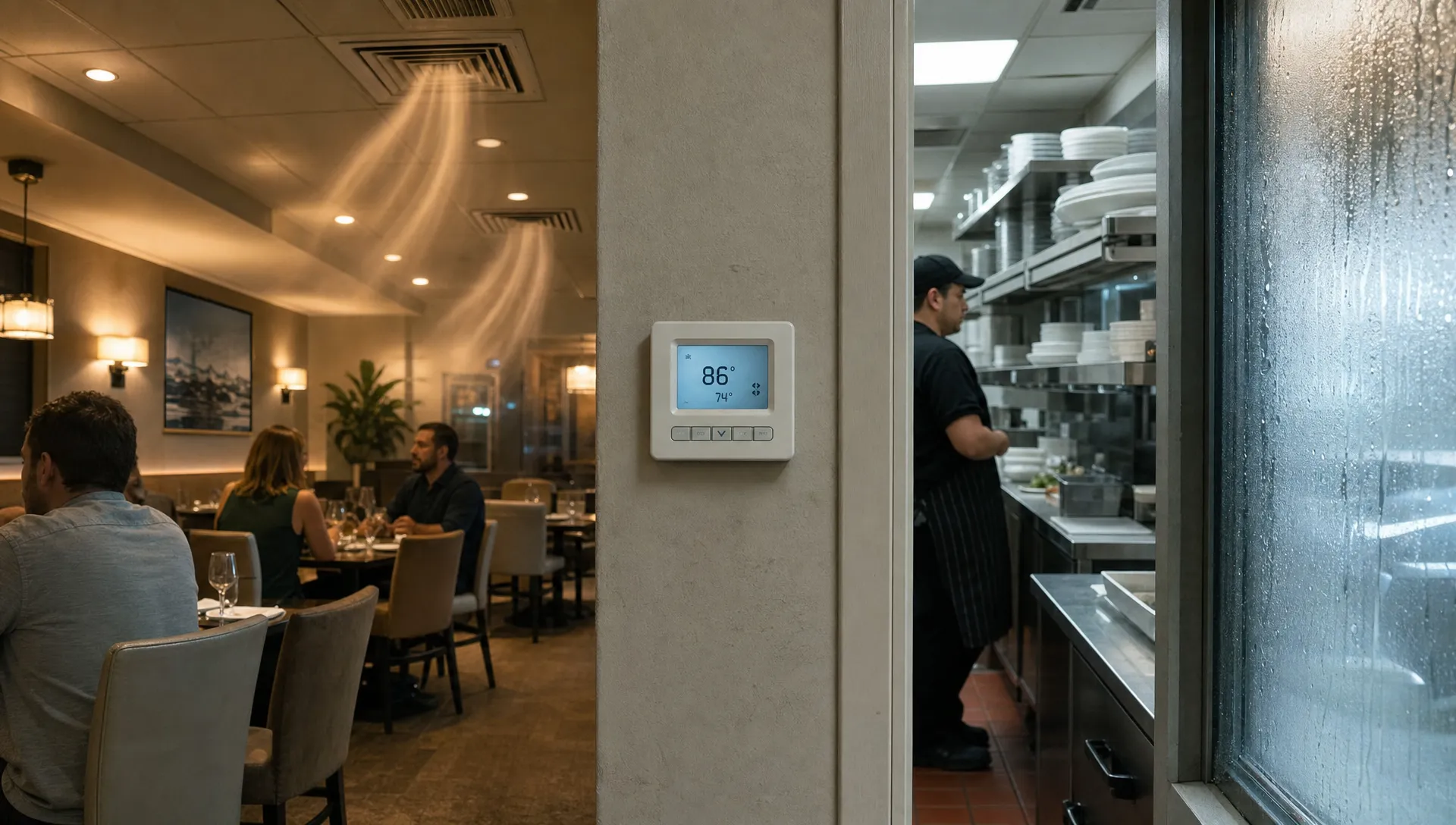
Commercial spaces in Harrisonburg typically require sophisticated zoning systems that allow different areas to maintain independent temperature settings based on usage patterns, occupancy, and sun exposure. Unlike residential systems with simple one-zone controls, commercial installations must integrate multiple thermostats, damper systems, and building automation interfaces to deliver consistent comfort throughout diverse spaces. This zoning complexity requires expert design and integration during the installation process.
Modern commercial AC installations increasingly incorporate building management systems (BMS) that coordinate HVAC operation with lighting, security, and other building functions. VA Commercial Repair Solutions specializes in designing and implementing these integrated control systems, helping Harrisonburg businesses achieve both energy efficiency and operational simplicity. Our approach ensures that even complex zoning configurations remain user-friendly for staff while providing the detailed performance data necessary for ongoing optimization.
4. Energy Consumption Patterns
Commercial AC systems in Harrisonburg operate under fundamentally different energy consumption patterns than residential units, with many businesses running cooling systems continuously during business hours regardless of outdoor temperatures. This operational profile creates unique energy management challenges that must be addressed during system design and installation. Commercial systems must deliver consistent performance under high-demand conditions while still maintaining efficiency during partial-load operation.
Understanding Harrisonburg Electric Commission's commercial rate structures becomes essential when designing an efficient commercial cooling solution. VA Commercial Repair Solutions analyzes your business's operational schedule, peak demand periods, and energy consumption history to recommend systems specifically engineered to minimize costs under commercial utility pricing. Our installation approach includes strategic equipment placement and configuration to optimize energy consumption patterns without compromising comfort or functionality.
5. Maintenance and Service Needs
Commercial AC systems require substantially different maintenance protocols than residential units, with more frequent service intervals, specialized diagnostic procedures, and stricter documentation requirements. Professional installation establishes the foundation for effective maintenance by ensuring proper access, providing accurate system documentation, and setting up monitoring systems that facilitate preventive care. VA Commercial Repair Solutions designs installations with maintenance in mind, positioning components for easy access and incorporating service-friendly features.
Harrisonburg's commercial buildings also face unique environmental challenges that affect system maintenance, from rooftop units exposed to valley weather patterns to downtown systems contending with historic building constraints. Our installation process includes customized maintenance planning that addresses these location-specific factors, helping businesses establish appropriate service schedules and procedures. This forward-thinking approach extends system lifespan while maintaining peak efficiency throughout years of operation.
Commercial AC Options Perfect for Harrisonburg Businesses
Selecting the ideal commercial AC system for your Harrisonburg business requires balancing multiple factors including building construction, business operations, energy efficiency goals, and budget constraints. The diverse commercial landscape across Harrisonburg means that no single solution works for every business. From the historic buildings downtown to modern retail developments along East Market Street, each commercial space presents unique cooling challenges that demand specialized solutions.
VA Commercial Repair Solutions evaluates each Harrisonburg business individually, recommending customized cooling approaches based on comprehensive site analysis and business requirements. Our deep understanding of local commercial properties allows us to match businesses with the most appropriate systems from among several proven commercial cooling technologies. This consultative approach ensures your investment delivers optimal performance for your specific situation rather than forcing a generic solution.
The following commercial AC options have demonstrated particularly strong performance in Harrisonburg's climate and business environment, each offering distinct advantages for specific applications. When professionally installed and properly maintained, these systems provide the reliability, efficiency, and comfort that Harrisonburg businesses demand.
Rooftop Package Units: The Harrisonburg Standard
Rooftop package units have become the standard commercial cooling solution for many Harrisonburg businesses, particularly retail spaces, restaurants, and office buildings with adequate roof access. These self-contained systems house all components in a single cabinet mounted on the roof, eliminating the need for indoor mechanical rooms while simplifying installation and maintenance. For Harrisonburg businesses with limited interior space, rooftop units provide powerful cooling without sacrificing valuable floor area.
Modern commercial rooftop systems offer impressive efficiency ratings, with Energy Star certified models delivering EER ratings of 12.0 or higher depending on capacity. VA Commercial Repair Solutions specializes in professional rooftop installations that maximize these efficiency benefits through proper mounting, ductwork design, and control integration. Our installation process addresses Harrisonburg-specific challenges including roof load distribution, weather sealing for valley precipitation patterns, and aesthetic considerations for visible installations.
VRF Systems for Historic Downtown Buildings
Variable Refrigerant Flow (VRF) systems have revolutionized commercial cooling options for Harrisonburg's historic downtown buildings where traditional installations face significant constraints. These advanced systems use refrigerant as the cooling medium instead of air, requiring only small-diameter insulated piping rather than bulky ductwork. For downtown businesses operating in centuries-old structures with limited modification options, VRF technology offers modern cooling performance while preserving architectural integrity.
Beyond their installation advantages, VRF systems deliver exceptional energy efficiency with IEER ratings reaching 18.5-20, significantly outperforming conventional systems. This efficiency stems from variable-speed compressors that precisely match cooling output to current demands, eliminating the energy waste of traditional on/off cycling. VA Commercial Repair Solutions has successfully implemented VRF solutions throughout Harrisonburg's downtown district, helping businesses in historic properties achieve modern comfort without compromising their distinctive character or undertaking disruptive renovations.
Split Systems for Smaller Commercial Spaces
Split system air conditioners offer an excellent middle-ground solution for Harrisonburg's smaller commercial spaces like professional offices, boutique retail stores, and service businesses. These systems separate the components between indoor air handlers and outdoor condensing units, providing installation flexibility while maintaining strong performance. For businesses with limited roof access or aesthetic concerns about rooftop equipment, split systems deliver professional cooling without compromising appearance. As Harrisonburg's business landscape continues to flourish, the demand for efficient and flexible cooling solutions like split systems is likely to grow.
The modular nature of commercial split systems makes them particularly valuable for businesses with unusual layouts or phased expansion plans. VA Commercial Repair Solutions can design multi-zone split system installations that grow with your business, allowing strategic investment in current cooling needs while facilitating future expansion. This scalability has made split systems increasingly popular among Harrisonburg's growing businesses that anticipate changing space requirements.
Energy Efficiency Strategies That Cut Harrisonburg Cooling Costs
Beyond equipment selection, strategic energy efficiency measures can dramatically reduce commercial cooling costs for Harrisonburg businesses. With the Harrisonburg Electric Commission's commercial rates averaging 8.5-10.5 cents per kWh, efficiency improvements translate directly to bottom-line savings. Professional commercial AC installation should incorporate these efficiency strategies from the beginning, establishing the foundation for long-term energy performance.
VA Commercial Repair Solutions approaches each commercial installation with efficiency as a core objective, implementing proven strategies that deliver measurable results for Harrisonburg businesses. Our comprehensive approach addresses equipment selection, system design, control integration, and building envelope considerations to maximize efficiency without compromising comfort or operational requirements.
Energy Star Certification: What It Means for Your Bottom Line
Energy Star certified commercial HVAC systems deliver significant efficiency improvements particularly valuable in Harrisonburg's mixed-humid climate zone. Commercial air conditioners must meet minimum efficiency requirements of 12.0-12.7 EER and 14.0-18.0 IEER depending on capacity, with VRF systems achieving even higher ratings of 18.5-20 IEER. These certification standards ensure equipment performs at levels substantially above conventional systems, creating immediate and ongoing operational savings. As Harrisonburg's business landscape continues to flouris, investing in energy-efficient systems can contribute to both environmental sustainability and financial health.
For Harrisonburg businesses, Energy Star certification typically translates to 15-30% lower cooling costs compared to standard-efficiency equipment. This efficiency advantage becomes even more significant during Harrisonburg's hot, humid summer months when cooling systems operate continuously. VA Commercial Repair Solutions prioritizes Energy Star certified equipment in commercial installations, helping businesses qualify for available incentives while securing long-term operational savings.
SEER Ratings Explained: Finding Your Efficiency Sweet Spot
Understanding commercial efficiency ratings helps Harrisonburg business owners make informed decisions about system investments. While residential systems use SEER (Seasonal Energy Efficiency Ratio) ratings, commercial systems employ EER (Energy Efficiency Ratio) and IEER (Integrated Energy Efficiency Ratio) metrics that more accurately reflect commercial usage patterns. Higher ratings indicate greater efficiency, with each point increase typically reducing energy consumption by approximately 3-5%.
The efficiency sweet spot for Harrisonburg businesses generally falls between 14.0-18.0 IEER, balancing initial equipment costs against long-term energy savings. Systems below this range sacrifice significant operational savings, while ultra-high-efficiency models may have extended payback periods beyond typical equipment lifespans. VA Commercial Repair Solutions conducts detailed return-on-investment analyses for each installation, helping businesses identify the optimal efficiency level for their specific situation and financial objectives.
Smart Thermostat Integration for Commercial Settings
Advanced control technologies represent one of the most cost-effective efficiency upgrades for Harrisonburg commercial AC systems. Smart thermostats and building automation systems can reduce cooling energy consumption by 10-20% through precise scheduling, occupancy-based adjustments, and operational optimization. For businesses with variable occupancy or predictable usage patterns, these intelligent controls eliminate wasted cooling during unoccupied periods while ensuring comfort when needed.
VA Commercial Repair Solutions specializes in commercial control system integration, implementing solutions ranging from networked smart thermostats to comprehensive building management systems. Our installation process includes proper sensor placement, control logic programming, and staff training to maximize the efficiency benefits of these technologies. For multi-zone commercial installations, integrated controls ensure all system components work harmoniously to maintain comfort while minimizing energy consumption.
Building Envelope Improvements That Maximize AC Efficiency
Many of Harrisonburg's commercial buildings, particularly in the historic downtown core, were constructed before modern insulation standards. Building envelope improvements can reduce AC loads by 20-30%, making smaller, more efficient systems viable while delivering substantial operational savings. Professional commercial AC installation should begin with envelope assessment to identify improvement opportunities that enhance system performance.
Simple measures like weatherstripping, door sweeps, and window films often deliver impressive returns for Harrisonburg businesses, addressing the specific infiltration challenges common in valley buildings exposed to seasonal wind patterns. More comprehensive approaches including insulation upgrades, air sealing, and high-performance glazing may qualify for energy efficiency incentives while dramatically reducing cooling requirements. VA Commercial Repair Solutions partners with building performance specialists to help businesses implement these complementary improvements during system upgrades.
Harrisonburg Commercial AC Installation: Step-by-Step Process
Professional commercial AC installation follows a structured process designed to ensure optimal system performance, regulatory compliance, and customer satisfaction.
Understanding this process helps Harrisonburg business owners prepare for installation projects, set appropriate expectations, and recognize the value of professional expertise. While each installation presents unique characteristics, the following framework guides successful commercial cooling projects throughout the Harrisonburg area. As Harrisonburg's business landscape continues to flourish with James Madison University's $793 million investment, ensuring efficient and reliable cooling systems becomes increasingly vital.
VA Commercial Repair Solutions has refined this process through hundreds of successful commercial installations across Harrisonburg and surrounding communities. Our structured approach minimizes business disruption while maximizing system performance, ensuring your commercial cooling investment delivers optimal results from day one. From initial assessment through final commissioning, each step builds toward a cooling solution precisely tailored to your business needs.
1. Professional Load Calculation and System Sizing
Accurate load calculation forms the critical foundation of successful commercial AC installation, determining the precise cooling capacity required for your Harrisonburg business. This comprehensive analysis examines building dimensions, construction materials, window specifications, occupancy patterns, equipment heat loads, lighting systems, and orientation-specific solar gain. For commercial spaces, these calculations must account for business-specific factors like customer traffic patterns, operating hours, and process equipment that residential calculations ignore.
VA Commercial Repair Solutions employs ACCA-approved Manual N commercial load calculation procedures specifically calibrated for Harrisonburg's climate conditions. This precision ensures your system delivers sufficient cooling capacity without wasteful oversizing that increases costs and reduces humidity control. Our detailed load analysis becomes particularly valuable for mixed-use commercial spaces with varying cooling demands across different zones or operating times.
2. Equipment Selection Based on Business Needs
Once cooling requirements are precisely defined, equipment selection focuses on matching system capabilities to specific business needs while optimizing efficiency, reliability, and value. This process evaluates factors including space constraints, noise considerations, zoning requirements, control preferences, maintenance expectations, and budget parameters. For Harrisonburg businesses, equipment selection must also address local climate factors like humidity management during valley temperature inversions and shoulder-season performance needs.
VA Commercial Repair Solutions maintains relationships with leading commercial HVAC manufacturers, allowing us to recommend the ideal equipment combination for each Harrisonburg business without brand bias. Our selection process prioritizes proven reliability in commercial applications, appropriate efficiency ratings for your operational profile, and system compatibility with your building infrastructure. This consultative approach ensures your investment delivers optimal performance for your specific business requirements rather than forcing standardized solutions.
3. Proper Installation Procedures
The physical installation phase transforms plans into reality, requiring specialized expertise in commercial equipment handling, structural integration, and system assembly. Commercial installations involve significantly greater complexity than residential projects, including rooftop rigging, mechanical room construction, extensive ductwork modifications, and commercial electrical service integration. VA Commercial Repair Solutions has developed specialized techniques for commercial HVAC installations that minimize business disruption, understanding that many Harrisonburg businesses cannot afford extended closures during installation periods.
Our commercial installation teams follow manufacturer-specified procedures while implementing industry best practices that exceed minimum requirements. This attention to detail includes proper refrigerant line sizing and installation, vibration isolation to prevent noise transmission, condensate management systems designed for commercial-scale operation, and secure mounting systems engineered for Harrisonburg's weather conditions. The result is a professionally installed system that operates reliably, efficiently, and quietly throughout its extended service life.
4. System Testing and Commissioning
Professional commissioning transforms a newly installed system into a properly functioning cooling solution, verifying performance across all operational parameters. This comprehensive process includes refrigerant charge verification, airflow balancing across all zones, control system programming, electrical load testing, and performance documentation. For commercial systems, proper commissioning can improve efficiency by 5-10% while significantly reducing first-year service issues.
VA Commercial Repair Solutions follows ASHRAE-recommended commissioning procedures for all commercial installations, documenting system performance across multiple operating conditions. This thorough approach ensures your system delivers the expected cooling capacity, efficiency, and comfort from the beginning. Our commissioning process includes detailed performance verification that establishes baseline measurements for future reference, helping maintain optimal operation throughout the system's lifespan.
Local Regulations and Incentives for Commercial AC Installation
Navigating Harrisonburg's regulatory requirements and capturing available efficiency incentives requires local expertise that general contractors often lack. Commercial AC installations must comply with Virginia's Uniform Statewide Building Code, Harrisonburg city permitting processes, and energy efficiency standards that continue evolving toward higher performance requirements. Understanding these regulations helps businesses avoid compliance issues while taking advantage of financial incentives that reduce project costs.
VA Commercial Repair Solutions maintains current knowledge of all Harrisonburg and Virginia commercial HVAC regulations, handling permitting processes and inspections as part of our comprehensive installation service. Our established relationships with local code officials and utility representatives streamline these processes, removing administrative burdens from business owners while ensuring full compliance. This regulatory expertise becomes particularly valuable when upgrading systems in older commercial buildings that may require additional code-related modifications.
Harrisonburg Building Permits and Inspection Requirements
Commercial AC installations in Harrisonburg require proper permits and inspections to ensure compliance with building, mechanical, electrical, and energy codes. The permitting process typically involves submission of detailed plans, equipment specifications, load calculations, and electrical service information for review by city officials. For larger commercial projects, additional requirements may include structural analysis for rooftop units, fire safety integration, and accessibility compliance documentation.
VA Commercial Repair Solutions handles the entire permitting process for commercial installations, preparing and submitting all required documentation while scheduling necessary inspections. Our detailed knowledge of Harrisonburg's specific requirements ensures smooth approval processes without costly delays or revision requests. This comprehensive permit management removes administrative burdens from business owners while ensuring all installations meet or exceed code requirements.
Virginia Energy Efficiency Rebates Available Now
Virginia offers several energy efficiency programs that can significantly reduce the cost of high-efficiency commercial AC installations for Harrisonburg businesses. The Virginia Energy Efficiency Rebate Program provides incentives up to $0.15 per kWh saved annually for qualifying commercial HVAC upgrades, potentially covering 15-25% of project costs for highly efficient systems. Additional utility-specific programs through the Harrisonburg Electric Commission offer complementary rebates for commercial customers implementing comprehensive efficiency improvements.
Navigating these incentive programs requires detailed documentation, specific application procedures, and sometimes pre-approval before installation begins. VA Commercial Repair Solutions guides Harrisonburg businesses through this process, identifying all applicable incentive opportunities while preparing the necessary documentation to maximize financial benefits. Our comprehensive approach ensures your business captures all available incentives while meeting program requirements for equipment selection, installation quality, and performance verification.
Federal Tax Incentives for Commercial HVAC Upgrades
Federal tax incentives provide additional financial benefits for energy-efficient commercial AC installations, with current programs offering deductions up to $1.80 per square foot for qualifying improvements. These incentives operate through accelerated depreciation provisions and tax credits that significantly improve project economics while encouraging adoption of high-efficiency systems. For Harrisonburg businesses, combining these federal incentives with state and local programs can reduce effective project costs by 30-40% in optimal scenarios.
How to Maintain Your New Commercial AC System for Maximum Efficiency
Protecting your commercial AC investment requires consistent, professional maintenance tailored to your specific system and usage patterns. While proper installation establishes the foundation for efficient operation, ongoing maintenance preserves this performance throughout the system's lifespan. For Harrisonburg businesses, structured maintenance programs prevent costly downtime during peak business periods while extending equipment life and maintaining energy efficiency.
VA Commercial Repair Solutions designs customized maintenance programs for every commercial installation, establishing appropriate service intervals and procedures based on equipment type, usage patterns, and business requirements. Our proactive approach identifies potential issues before they cause business disruption, maintaining system performance while preventing costly emergency repairs. This structured maintenance strategy typically delivers 5-8 additional years of system life while preserving initial efficiency levels.
Essential Monthly Maintenance Tasks
Monthly maintenance tasks form the first line of defense against performance degradation and system failures in commercial cooling systems. These routine procedures include filter inspection and replacement, condensate drain clearing, control system verification, and visual inspection of accessible components. For Harrisonburg businesses, consistent performance of these basic tasks prevents approximately 70% of common cooling system issues while maintaining airflow and efficiency.
Quarterly Professional Service Recommendations
Quarterly professional maintenance addresses deeper system components that require specialized knowledge and equipment to properly evaluate and service. These comprehensive inspections include refrigerant level verification, electrical system testing, coil cleaning, mechanical component lubrication, and performance measurement against baseline standards. For commercial systems operating in Harrisonburg's variable climate, these quarterly services ensure proper system function during seasonal transitions while identifying developing issues before they cause failures.
VA Commercial Repair Solutions offers commercial maintenance agreements that structure these quarterly services around your business schedule, ensuring thorough system care without operational disruption. Our certified technicians use advanced diagnostic equipment to evaluate system performance, documenting all findings and service actions for warranty protection and operational records. This professional approach maintains your system at peak efficiency while providing the documentation necessary for warranty claims and property transactions.
Seasonal Preparation for Peak Performance
Seasonal maintenance preparation helps commercial cooling systems manage Harrisonburg's distinct climate challenges, from humid summer heat to variable spring and fall conditions. These specialized procedures include pre-season condenser coil cleaning, control recalibration for seasonal demands, economizer adjustment, and cooling tower treatment for applicable systems. Proper seasonal preparation ensures your system delivers consistent comfort during peak demand periods while operating at maximum efficiency.
Smart Investments Now Mean Lower Costs Later
Professional commercial AC installation represents a strategic investment in your Harrisonburg business's operational efficiency, customer experience, and long-term profitability. While quality installation may require greater initial investment than budget alternatives, the financial benefits accumulate throughout the system's extended lifespan. Properly installed commercial cooling systems typically deliver 15-20% lower lifetime operating costs while providing 30-40% longer service life before replacement becomes necessary.
VA Commercial Repair Solutions helps Harrisonburg businesses make informed investment decisions based on comprehensive lifetime cost analysis rather than focusing solely on initial price. Our transparent approach illustrates how quality installation, appropriate equipment selection, and professional maintenance combine to deliver superior long-term value compared to seemingly less expensive alternatives. For growing Harrisonburg businesses, this strategic perspective aligns cooling infrastructure with broader business objectives while optimizing both short-term and long-term financial outcomes.
Frequently Asked Questions
Throughout our years serving Harrisonburg's commercial cooling needs, certain questions consistently arise from business owners evaluating commercial AC installation options. These frequently asked questions reflect common concerns about project scope, business impact, financial considerations, and performance expectations. The following responses address these core questions based on our extensive experience with commercial cooling projects throughout the Harrisonburg area.
If your specific questions aren't addressed below, VA Commercial Repair Solutions welcomes direct inquiries about your unique commercial cooling requirements. Our consultative approach ensures you receive accurate, relevant information specific to your business situation rather than generic responses that may not apply to your circumstances.
How long does a commercial AC installation typically take in Harrisonburg?
Commercial AC installation timelines in Harrisonburg typically range from 3-10 business days depending on system size, building complexity, and whether the project involves replacement of existing equipment or new construction installation. Small to medium commercial systems (under 20 tons) in straightforward applications generally require 3-5 days, while larger systems or those requiring significant infrastructure modifications may extend to 7-10 days or longer. VA Commercial Repair Solutions develops detailed project timelines for each installation, identifying critical path elements while establishing realistic completion expectations based on your specific circumstances.
What size commercial AC system does my Harrisonburg business need?
Commercial AC sizing depends on multiple factors specific to your Harrisonburg business, including square footage, ceiling height, insulation levels, window specifications, occupancy patterns, equipment heat loads, and building orientation. As a general guideline, Harrisonburg commercial spaces typically require approximately 1 ton of cooling capacity per 400-500 square feet, but this ratio varies significantly based on the factors mentioned above. Heat-generating businesses like restaurants or those with high customer traffic may require substantially greater capacity, while well-insulated office spaces with limited occupancy might need less.
The only way to accurately determine proper system sizing is through professional load calculation performed by experienced commercial HVAC specialists. VA Commercial Repair Solutions conducts comprehensive Manual N commercial load calculations for all installation projects, ensuring your system perfectly matches your specific business requirements without wasteful oversizing or inadequate undersizing that compromises comfort.
How much can I expect to save with an energy-efficient commercial AC system?
Typical Energy Savings for Harrisonburg Commercial AC Upgrades
Standard Efficiency to Energy Star Certified: 15-30% reduction in cooling costs
10+ Year Old System to Modern Standard Efficiency: 20-35% reduction in cooling costs
10+ Year Old System to High-Efficiency System: 30-50% reduction in cooling costs
Adding Building Automation Controls: Additional 10-20% reduction in cooling costs
Actual savings depend on your current system's condition, operational patterns, and utility rates. For a typical Harrisonburg commercial property operating during standard business hours, upgrading from an aging system to modern high-efficiency equipment often delivers $0.50-$1.00 per square foot in annual energy savings at current utility rates. These savings increase for businesses with extended operating hours or in buildings with challenging cooling requirements.
As Harrisonburg's business landscape continues to flourish with James Madison University's $793 million expansion, understanding these potential savings becomes even more critical.
Beyond direct energy savings, efficient commercial cooling systems often deliver additional financial benefits through reduced maintenance costs, fewer emergency repairs, and extended equipment lifespan. When combined with available incentives and tax benefits, these comprehensive savings significantly improve return on investment for quality system upgrades. As Harrisonburg's business landscape continues to flourish, businesses can further capitalize on these advantages.
VA Commercial Repair Solutions provides detailed savings projections based on your specific business situation, helping quantify the expected financial benefits of various efficiency options. This analysis includes consideration of Harrisonburg Electric Commission's rate structures, your business's operational patterns, and historical cooling costs to deliver realistic savings estimates.
Do I need to shut down my business during commercial AC installation?
Most commercial AC installations in Harrisonburg can be completed with minimal or no business interruption through careful planning and phased implementation. VA Commercial Repair Solutions specializes in working around business operations, scheduling critical system transitions during off-hours or slower business periods while maintaining temporary cooling as needed. Our installation teams understand that business continuity remains essential during HVAC projects, developing customized installation plans that respect your operational requirements while ensuring proper system installation.
How often should I schedule maintenance for my commercial AC system in Harrisonburg?
Commercial AC systems in Harrisonburg typically require quarterly professional maintenance to maintain optimal performance, with most businesses scheduling comprehensive service visits in early spring (pre-cooling season), mid-summer (peak season verification), early fall (transition preparation), and winter (off-season deep maintenance). This quarterly schedule ensures systems remain properly adjusted for Harrisonburg's seasonal conditions while identifying developing issues before they cause business disruption.
Between these professional service visits, monthly maintenance tasks should be performed either by trained facility staff or through contracted maintenance services. These monthly procedures focus on filter changes, condensate system inspection, and basic operational verification that prevent common performance issues. VA Commercial Repair Solutions offers customized maintenance agreements that structure these services around your specific system requirements and business schedule.
For critical business operations where cooling interruption would cause significant financial impact, more frequent maintenance intervals may be appropriate. Restaurants, medical facilities, technology businesses, and high-end retail establishments often benefit from monthly professional service to ensure continuous, reliable operation during all business hours.
VA Commercial Repair Solutions helps Harrisonburg businesses position themselves for long-term success through expert commercial AC installation, proactive maintenance, and ongoing support. Contact us today to discuss how our specialized commercial cooling solutions can enhance your business operations while reducing energy costs and environmental impact.