
How to Handle Commercial Heat Pump Repairs Like a Pro
Understanding Your Commercial Heat Pump and Its Components
Telltale Signs Your System Needs Commercial Heat Pump Repair
Keeping a close eye on your commercial heat pump prevents small hiccups from turning into costly breakdowns and keeps everyone in the building comfortable. For additional HVAC troubleshooting tips, see our guide on How to Tell if Your HVAC System Needs Repair. If you want a quick primer on the basic science behind heat pumps, this concise overview from Wikipedia is handy.
Common Warning Signs
Your heat pump rarely fails without warning. Watch for these red flags that signal the need for commercial heat pump repair :
- Unusual noises – banging, grinding, squealing, buzzing, clicking, or rattling often point to loose or worn parts.
- Sudden energy-bill spikes – an inefficient unit works overtime and drives up costs.
- Inconsistent temperatures – some rooms too hot, others too cold, may indicate airflow or duct issues.
- Reduced airflow – weak output from vents can stem from clogged filters or dirty coils.
- Short cycling – frequent on/off cycles waste energy and strain components.
- Outdoor unit icing – ice in mild weather suggests refrigerant or defrost problems.
- Failure to switch modes – stuck in heating or cooling can signal reversing-valve or thermostat trouble.
- Foul odors – burning or musty smells require immediate professional attention.
What Causes These Issues?
Many problems trace back to just a few culprits:
- Clogged filters choke airflow and force the system to work harder.
- Refrigerant leaks rob the unit of its cooling and heating “lifeblood.”
- Electrical faults in wiring, capacitors, or contactors can prevent startup or cause short cycling.
- Compressor wear lowers efficiency or stops operation entirely.
- Thermostat malfunctions send incorrect signals and cause erratic cycling.
- Dirty coils block heat transfer and reduce capacity.
Need expert help fast? Our Air Conditioning Repair team can get your system back to peak performance.
The Step-by-Step Professional Repair Process
When your commercial heat pump decides to take an unexpected break, we know it's more than just an inconvenience – it can impact your entire business. That's why when you need commercial heat pump repair , you deserve a process that's clear, efficient, and completely reliable. At VA Commercial Repair Solutions, our goal is always to get your system purring again as quickly and effectively as possible, minimizing any disruption to your operations. We believe in transparency and thoroughness from the moment we arrive, and we always prioritize repairing your existing equipment over replacing it, whenever it makes good financial sense. Curious about all the ways we can help? Take a look at Our Services.
Step 1: Thorough Diagnosis
The very first step, and arguably the most crucial, in any successful commercial heat pump repair is getting to the bottom of the problem. You can't fix what you don't fully understand, right? That's where our NATE-certified technicians truly shine. What does NATE-certified mean? It means they've undergone rigorous training and passed tough exams, proving their exceptional expertise in HVAC systems. Simply put, they really know their stuff!
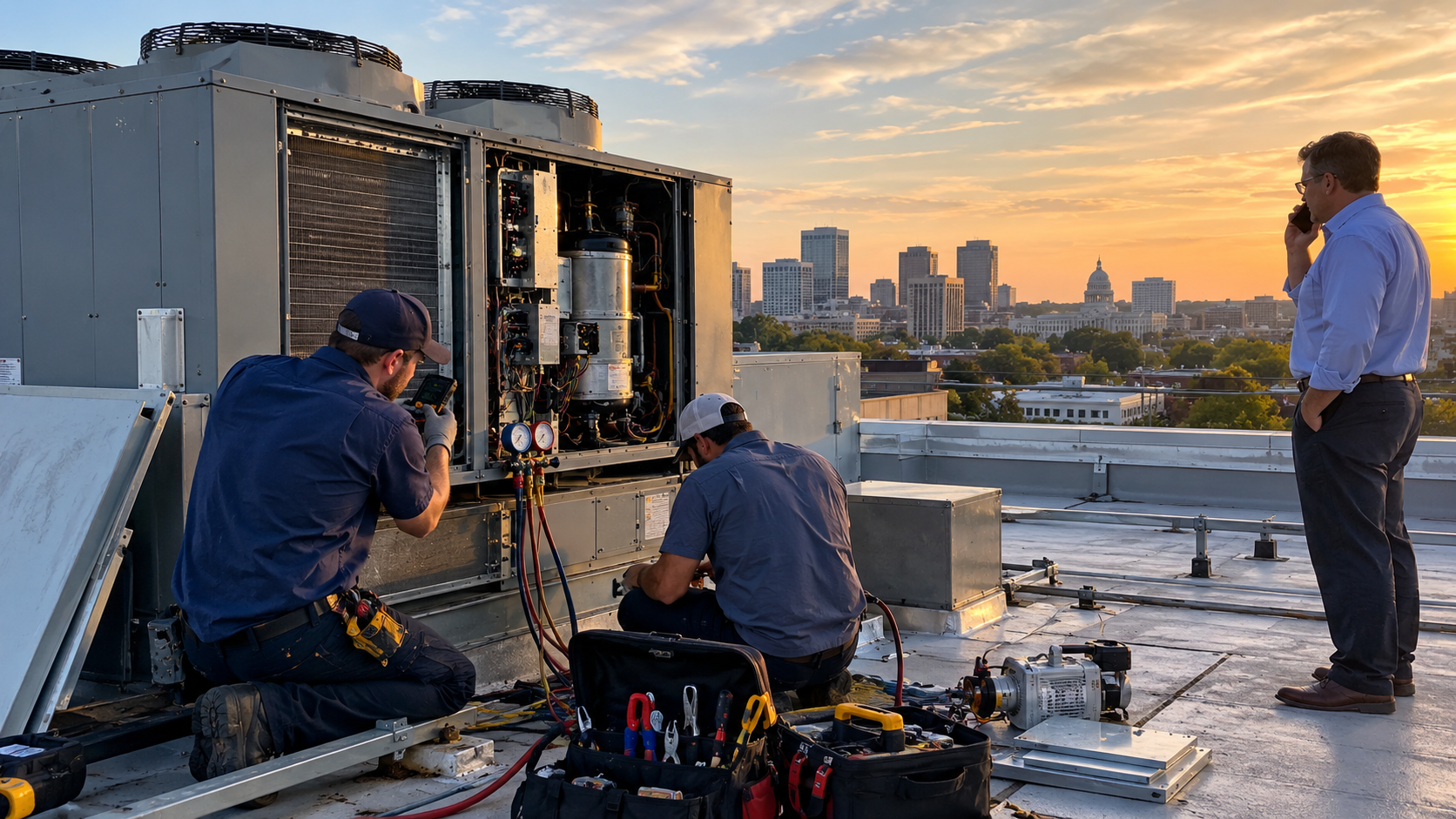
During our diagnostic phase, we don't just guess; we methodically investigate. We begin with a thorough visual inspection and chat with you about what issues you've been noticing. Then, we dive into the technical details: we perform detailed electrical tests on all components, connections, and wiring to check for proper voltage or any signs of wear. We accurately measure refrigerant levels using specialized gauges, because if they're low, it's a clear sign of a leak that needs our attention. We also carefully measure airflow through your system and ductwork to catch any blockages or inefficiencies. Finally, we conduct operational tests , observing your heat pump working in both heating and cooling modes, listening for unusual sounds and monitoring its performance. This systematic approach ensures we pinpoint the root cause of the problem, not just its symptoms.
Step 2: Quoting and Approval
Once our NATE-certified technicians have thoroughly diagnosed the issue, we believe in complete transparency. We'll present you with a detailed, upfront pricing estimate for your commercial heat pump repair . There are no hidden fees or surprises with us – what you see is truly what you get. We want you to feel comfortable and confident every step of the way.
We'll take the time to explain everything clearly:
- The exact problem we've identified with your heat pump.
- Our recommended repair solutions , and we'll even offer multiple options if they're available.
- A clear, easy-to-understand breakdown of parts and labor costs .
- All the important details about any applicable warranties on parts, plus information about our unique repair guarantees on our labor.
We'll never start any work until you fully understand and approve the proposed solution and its cost. Your peace of mind matters to us.
Step 3: Executing the Commercial Heat Pump Repair
With your approval, our skilled technicians waste no time getting to work. We use only quality replacement parts that are built to last, ensuring the longevity and reliability of your repair. Our team adheres to the highest industry standards, applying best practices to every single job, just as we do when we handle Furnace Repair.

We understand that time is money for businesses like yours in Charlottesville, Harrisonburg, and the Shenandoah Valley. That's why we work incredibly efficiently to minimize any disruption to your daily operations. Our aim is often to resolve the issue in just one visit, getting you back to business as usual as quickly as possible. Once the repair is complete, we perform final system testing to ensure everything is working perfectly, restoring comfort and efficiency to your commercial space.
The Big Decision: Repair or Replace Your Commercial Heat Pump?
Ah, the age-old question that keeps many business owners up at night: to repair or to replace your commercial heat pump? It's a tricky one, isn't it? You're weighing the immediate cost of a fix against the potential long-term benefits of a brand-new, shiny system. It’s a classic balancing act between today's budget and tomorrow's peace of mind. Here at VA Commercial Repair Solutions, our heart is always with repair first, if it makes good business sense for you. But we're also here to give you all the facts, so you can make the absolute best choice for your unique situation. Sometimes, a new system, like the ones we talk about in our guide on Choosing Ductless Mini-Split Heat Pump Systems, is truly the smarter long-term move.
When to Choose Repair
So, when does fixing your current system make the most sense for commercial heat pump repair ? Generally, repair is a fantastic option if your heat pump is under 10 years old . Most commercial heat pumps are built to last a good 10 to 15 years, so a relatively young system with a minor issue can often get many more years of faithful service. This is especially true if it's just a minor component failure , like a capacitor, a fan motor, or a reversing valve. These fixes are usually quite affordable compared to the cost of a whole new system. We often recommend repair if the cost is less than 50% of what a new unit would cost . This is a golden rule to consider! And, if your system has been reliable overall and this is an isolated incident, a targeted fix can easily extend its lifespan for several more comfortable years.
When to Consider Replacement
Sometimes, as much as we love to repair, patching up an old system just isn't the best financial move. It can be like throwing good money after bad. So, when should you seriously consider replacing your commercial heat pump?
This table can help you weigh your options:
| Factor | Repair (Often Preferred) | Replacement (Often Better Investment) |
|---|---|---|
| Age of System | Under 10 years old | Over 10-15 years old (or 8-12 years for consistent issues) |
| Frequency of Breakdowns | Infrequent, isolated issues | Frequent service calls, recurring problems |
| Energy Costs | Stable or minor fluctuations | Unexplained, consistent spikes in monthly operating costs |
| Major Component Failure | Minor part (e.g., capacitor, contactor) | Compressor failure, coil leaks, or multiple major parts failing |
| Performance | Consistent heating/cooling, good airflow | Reduced performance, inconsistent temperatures, poor air distribution |
| Efficiency Standards | Still meets acceptable efficiency for its age | Current system lacks modern solutions for efficiency, outdated refrigerant |
| Repair Cost vs. New | Repair cost less than 50% of new system price | Repair costs approach or exceed 50% of new system price |
If your heat pump is already getting up there in years—say, older than 8-12 years—and you're constantly calling us for commercial heat pump repair , or you're facing a really big issue like a compressor failure, a new system often makes more sense. Think of it as an investment! A newer, more energy-efficient heat pump can slice down those monthly energy bills significantly. Plus, it brings improved comfort and reliability, meaning fewer surprises and smoother operations for your business. Modern heat pumps also perform better and meet today's stricter energy standards, which can be a game-changer for your bottom line.
Prevention and Choosing the Right Repair Partner
You know the old saying: "An ounce of prevention is worth a pound of cure!" This couldn't be truer when it comes to your commercial heat pump. Taking proactive steps can truly extend your equipment's lifespan and save your business from those unexpected, budget-busting commercial heat pump repair emergencies. But let's be real, sometimes repairs are just unavoidable. When that happens, knowing how to pick the right partner to help you is just as important as the repair itself. If you're looking for more general advice on keeping your HVAC systems happy, check out our Proactive Commercial HVAC Maintenance Tips.
How to Prevent Costly Repairs
Think of your heat pump like a vital member of your business team – it needs regular care to perform at its very best.

Here's how you can play a big role in preventing costly commercial heat pump repair needs:
First off, regular filter changes are incredibly important. This is probably the easiest and most impactful step you can take! Your heat pump's filters should be swapped out at least every three months. If your business is in a dustier environment, you might even need to change them more often. A clean filter isn't just about cleaner air; it ensures proper airflow, letting your system work efficiently and preventing unnecessary strain on its parts.
Next, make sure you're keeping the outdoor unit clear of debris . Your outdoor unit needs to breathe freely! Take a peek at it regularly and clear away any leaves, dirt, grass clippings, or anything else that might be blocking it. And here's a little tip: don't cover your outdoor heat pump unit. They're designed to handle all sorts of weather, and covering them can actually mess with their operation.
Perhaps the most crucial step is annual professional maintenance . This isn't just a suggestion; it's non-negotiable for the health of your heat pump. We recommend having professional maintenance done at least once a year, and ideally twice (once before the heating season and again before cooling season). During these visits, our expert technicians perform thorough inspections, carefully clean the coils, check all electrical connections, lubricate moving parts, and make sure your refrigerant levels are just right. Regular maintenance isn't just about preventing sudden breakdowns; it also cuts down on costly repairs, boosts efficiency, extends your unit's overall lifespan, improves your indoor air quality, and even helps keep your warranty valid. We can even create custom maintenance plans custom specifically for your property's unique needs.
Finally, don't forget to check your thermostat settings . It sounds simple, but it's super effective! Make sure your thermostat is set correctly and working as it should. A thermostat that's off-kilter can cause your heat pump to run inefficiently or unnecessarily, leading to discomfort and higher energy bills.
How to Choose a Commercial Heat Pump Repair Company
When your business's comfort and operations are on the line, you absolutely need a commercial heat pump repair partner you can trust completely. So, what should you look for when picking the right company?
First, look for a company that offers 24/7 emergency service . Heat pump breakdowns rarely happen during convenient business hours, right? You want a team that's ready to jump into action any time, day or night, with lightning-fast response times. For commercial clients, where every minute of downtime can mean lost revenue, this is absolutely critical.
Another big plus is live call answering . We firmly believe you shouldn't have to leave a voicemail when you're facing an urgent issue! That's why we always answer our calls live, ensuring you get immediate attention and peace of mind.
Always make sure the technicians are NATE-certified . As we mentioned earlier, NATE certification is a big deal in the HVAC world. It means the technicians have undergone rigorous training and proven their high level of expertise in heating, ventilation, and air conditioning systems. It's a true mark of quality.
It's also essential that the company you choose is licensed and insured . This protects both you and your business in case anything unexpected happens during the repair process.
Don't forget to check out their positive online reviews . What are other businesses saying about them? Platforms like Google, Yelp, and the Better Business Bureau can give you a fantastic sense of a company's reputation for great service, reliability, and professionalism.
Look for a company with a strong repair-first philosophy . This means they'll prioritize fixing your existing system before pushing for a full replacement, especially if your unit is relatively new. This shows they're truly committed to your long-term best interests, rather than just trying to make a quick sale.
Lastly, choosing a company with a local presence in the service area is a smart move. Local companies often offer quicker response times, and their technicians are familiar with the specific climate conditions and building codes in your area. We proudly serve businesses right here in Charlottesville, Harrisonburg, Waynesboro, Staunton, Lexington, Fishersville, and all the surrounding areas like Rockingham County, Albemarle County, Afton, Crozet, Earlysville, Bridgewater, Broadway, Elkton, Mount Crawford, Stuarts Draft, Augusta County, Verona, Weyers Cave, Lovingston, Nellys Ford, and Roseland, VA. We're your neighbors, and we're here to help!
Frequently Asked Questions about Commercial Heat Pump Repair
We get a lot of questions about commercial heat pump repair , and we're always happy to answer them! We understand that when your business's comfort system is on the fritz, you want clear answers. Here are some of the most common questions we hear, and our straightforward responses.
What factors influence the cost of a commercial heat pump repair?
The cost of commercial heat pump repair can swing quite a bit, from a small fix costing a few hundred dollars to a major component replacement that might run into the thousands. It really depends on a few key things.
First, the system size and age play a big role. Larger, more complex commercial systems naturally have a higher repair cost. Older units, while often repairable, might need specialized parts or could be more prone to multiple issues popping up.
Then, there's the type of repair needed . A simple thermostat adjustment or a minor electrical fix will be much less expensive than replacing a major part like a compressor or a coil. Speaking of parts, the component cost varies wildly. While many common parts might be in the $100-$400 range, a new compressor, for example, can cost $3,000 or more. (Good news: they rarely fail!) Our labor rates are typically included in the flat-rate pricing we provide, so you'll know the full cost upfront.
Finally, system accessibility can influence the price. If your unit is tucked away in a really hard-to-reach spot, like a cramped attic or a difficult rooftop, it might take extra time and effort for our technicians, which could add to the labor costs. Don't forget valid warranties ! If your system or the specific part that's broken is still under a manufacturer's warranty, it can significantly cut down your out-of-pocket expenses. Many critical components are covered for 10 years or even longer if an extended warranty was purchased.
How long is the life expectancy of a commercial heat pump?
Commercial heat pumps are built to last, and you can generally expect them to have a life expectancy of 10 to 15 years . But, just like any important piece of equipment, this can vary a bit based on how it's cared for and how hard it works.
One of the biggest factors in extending that lifespan is regular maintenance . Systems that get annual professional check-ups tend to last longer and experience fewer unexpected breakdowns. How much your system is used also matters. A heat pump that's running almost non-stop in a super demanding commercial environment might have a slightly shorter lifespan than one in a space that doesn't need constant heating or cooling. The climate can also play a part; while modern heat pumps are fantastic even in colder regions, extreme temperatures can put more strain on the system over time.
With diligent care and proper installation from the start, we've even seen some well-maintained commercial heat pumps happily exceed the 15-year mark!
Is it worth fixing an older heat pump?
Ah, the age-old question! This is a really common dilemma for business owners, and it's where our "repair prioritized over replacement" philosophy truly shines.
The honest answer is: it depends on the issue . If your heat pump is older but just has a minor, inexpensive problem (like a faulty thermostat or a small electrical glitch), it's often absolutely worth fixing. This is especially true if the unit has been otherwise reliable and well-maintained over the years. We often find that minor repairs on a well-maintained 10-year-old unit are worthwhile . Things like replacing a capacitor or a fan motor cost significantly less than a full system replacement.
However, there's a key guideline we like to share: if commercial heat pump repair costs approach 50% of a new system's price, replacement is a better investment. If your system is older (say, over 10-12 years) and you're looking at a major repair bill that's nearly half the cost of a brand-new unit, investing in a new, more energy-efficient system will almost certainly provide better long-term value. You'll likely see lower operating expenses and enjoy improved reliability for years to come. We'll always give you an honest assessment and help you weigh all the pros and cons based on your specific situation, so you can make the smartest choice for your business.
Conclusion
When your commercial heat pump repair needs arise, you're now equipped with the knowledge to handle them confidently. We've walked through the essential components of your system, those telltale warning signs that demand attention, and the professional repair process that gets you back up and running efficiently.
The key takeaway? Don't wait. Those unusual noises, inconsistent temperatures, or rising energy bills aren't just minor inconveniences—they're your heat pump's way of asking for help. Timely repairs prevent small issues from becoming major headaches that could shut down your business operations entirely.

Professional service makes all the difference. While it might be tempting to tackle repairs yourself or hire the cheapest option, commercial heat pump repair requires specialized knowledge, proper tools, and quality parts. Our NATE-certified technicians bring years of experience to every job, ensuring your system gets the expert care it deserves.
Repair-versus-replace decision we discussed? It's not always black and white, but with the right guidance, you can make choices that benefit your bottom line for years to come. Whether it's a simple filter change or a major component replacement, the goal is always the same: keeping your business comfortable and operational.
For businesses throughout Charlottesville, Harrisonburg, Waynesboro, Staunton, Lexington, Fishersville, and the surrounding Shenandoah Valley, VA Commercial Repair Solutions, LLC stands ready to help. We believe in repair-first solutions that extend your equipment's life while keeping costs reasonable. When you call us, you'll always reach a real person—no frustrating voicemail tag when your heat pump is down.
Your employees deserve a comfortable workplace. Your customers expect a pleasant environment. And your business needs reliable climate control to operate smoothly. Don't let a failing heat pump compromise any of these priorities.
Ready to get your system back on track? Get reliable Commercial HVAC Repair from the team that puts your business first.
Opening a Restaurant in Virginia: Kitchen Design, Hood, Fire Suppression and Refrigeration Checklist